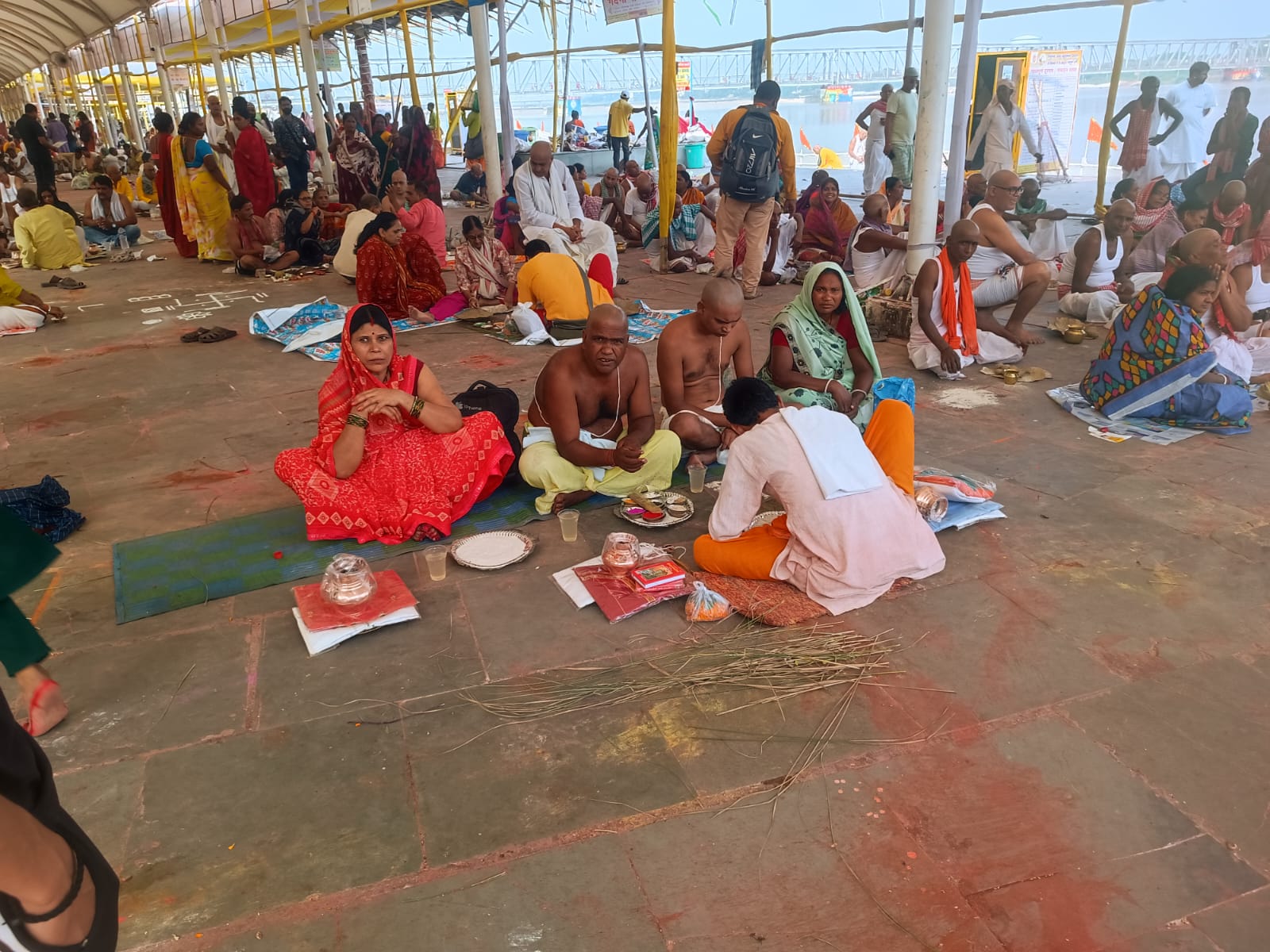
Pind Daan Rules for Sons, Daughters, Wives & Grandsons
According to Hindu Shastras and the Garuda Purana, the eldest son holds primary authority to perform Pind Daan. However, if a son is unavailable, deceased, or absent, the ritual can be rightfully performed by younger sons, daughters, wives, grandsons, brothers, or designated relatives.
Shastras explicitly ensure no departed soul is left without spiritual liberation (moksha), permitting female heirs and lineage descendants to complete ancestral rites with equal scriptural validity and sanctified devotion.
In this comprehensive guide, we will explore the detailed eligibility rules for female and male heirs, and essential ritual prerequisites for ancestral offerings.
Understand The Spiritual Significance of Pind Daan
Pind Daan is a sacred Vedic ceremony where rice balls, barley flour, sesame seeds, and sacred water are offered to deceased ancestors (Pitrus). This ritual helps lingering spirits untangle from the earthly realm (Preta Loka) and transition smoothly toward peace or Moksha. Many families arrange pind daan at Kashi along the holy banks of the Ganges, believing sacred pilgrimage centers multiply ancestral merit.
Hierarchy of Authority: Who Has The Right to Perform?
The Garuda Purana, Dharma Sindhu, and Nirnaya Sindhu set a clear order of succession (Adhikara Nirnaya) to determine who carries out ancestral rites.
Can Sons Perform Pind Daan? (Eldest vs. Younger)
In Hindu tradition, the word for son, Putra, comes from Puth (a hellish realm) and Tra (to deliver or protect). A son's fundamental duty is delivering parents from spiritual distress.
The Eldest Son: The eldest holds the foremost duty (Adhikara).
Separated Households: If brothers maintain separate kitchens, properties, or households, scriptures state each brother may independently offer Pind Daan and perform Tarpan.
Younger Sons: If the eldest brother is untraceable, has formally abandoned faith, or cannot travel due to severe illness, the next eldest steps into the primary role without penalty.
Can Daughters Perform Pind Daan?
A common misconception suggests daughters cannot conduct funeral rites or Pind Daan. Classical scriptures refute this myth.
The Garuda Purana explicitly confirms:
In the absence of sons, the daughter, and in her absence, the daughter's son is eligible to offer Pindas and liberate ancestors.
Key Scriptural Precedents and Rules for Daughters:
Maa Sita at Gaya: According to the Valmiki Ramayana, Goddess Sita performed the sacred sand Pind Daan for King Dasharatha on the banks of River Falgu when Lord Rama was temporarily away.
Absence of Male Issue: If a deceased parent has only daughters, the eldest or designated daughter can step forward and carry out the complete ceremony.
Dress and Discipline: A daughter conducts the sankalp and offerings while wearing clean, unstitched clothing (such as a cotton sari), guided step-by-step by learned Vedic purohits.
Single or Married: Both unmarried and married daughters can perform rites for their parents if direct male descendants are not available.
Can Wives Perform Pind Daan for Husbands?
A wife shares half of her husband's spiritual identity (Ardhangini). Hindu texts grant her full ritual authority under specific circumstances.
Absence of Sons: If a husband passes away without leaving a male heir or grandson, the wife is fully authorized to perform his Pind Daan and annual Shraddha.
Mutual Bond: A wife who performs these rites with complete devotion and sacred water (jalanjali) secures spiritual elevation for both her spouse and herself.
Husband for Wife: A husband can offer Pind Daan and Shraddha for his departed wife if they have no surviving sons or if their children are minors.
The Special Role of Grandsons and Daughter's Sons
Grandchildren occupy a revered place in ancestral theology, serving as a spiritual bridge between generations:
Paternal Grandson (Pautra): When both parents have passed or a father is unable to perform rites for his own father, the grandson carries direct lineage authority to step forward.
Daughter’s Son (Dauhitra): The Matsya Purana accords high spiritual honor to a daughter's son. Offering Pind Daan for maternal grandparents (Nana-Nani) brings enormous spiritual merit, especially during Pitru Paksha.
Step-by-Step Prerequisites for Performing Pind Daan
Anyone performing ancestral rites must observe proper external cleanliness and internal discipline:
Ancestral Lineage Details: Collect the full names, gotra, relations, and lunar dates of departure (tithi) of the deceased.
Ritual Attire: Men wear a clean, washed dhoti and angavastram; women wear a simple, clean cotton saree.
Fasting & Pure Diet: The performer must observe an austere, sattvic vegetarian diet, avoiding onion, garlic, alcohol, and grains before completing the morning rites.
Vedic Samagri: Prepare black sesame seeds (til), barley (jau), kusha grass, fresh water, honey, milk, and cooked rice balls.
Authentic Pilgrimage Sites: Pilgrims often check the cost of pind daan in Varanasi or Gaya to book authorized ghat spaces and certified Brahmins without stress.
Regional Importance: Kashi and Southern Traditions
While North Indian traditions refer to these rites as Pind Daan, pilgrims from southern regions frequently travel north to complete pinda pradanam in Varanasi.
At sacred ghats like Manikarnika, Harishchandra, and Assi, rituals accommodate varied regional customs, with regional Purohits reciting Vedic mantras according to family tradition.
Ready to Fulfill Your Sacred Duties? Connect with Pitradev
Navigating ancestral rituals can feel overwhelming when dealing with grief, unfamiliar ghats, or language barriers. Pitradev provides transparent, verified, and scripture-aligned guidance for your family's ancestral rites across Varanasi, Gaya, and Prayagraj.
Why Choose Pitradev?
Our certified scholars conduct rituals strictly according to Vedic scriptures and your regional traditions (Hindi, Tamil, Telugu, Gujarati, and Marathi).
Our clear packages cover puja materials, priest dakshina, and ghat logistics with zero hidden charges or unfair exploitation.
From ghat bookings to pick-up and drop assistance and verified online Pind Daan services for distant families.
Consult our purohits and schedule your family's ritual now!
Frequently Asked Questions
1. Can an unmarried daughter perform Pind Daan?
Yes, Shastras permit unmarried daughters to perform Pind Daan for deceased parents if there are no surviving sons, using proper Vedic sankalp and purohit guidance.
2. Can multiple brothers perform Pind Daan separately?
If brothers live separately, earn separately, and run distinct households, scriptures allow each brother to perform individual Pind Daan and Shraddha rites for ancestral peace.
3. What if no family member is alive to perform Pind Daan rituals?
If no blood relatives are available, a disciple, trusted friend, or authorized representative can take sankalp and complete rites for the departed soul's liberation.
4. What is the best time for Pind Daan?
Pitru Paksha is ideal, but new moon days (Amavasya), death anniversaries (punyatithi), or any auspicious pilgrimage visit to holy rivers are equally valid.
5. Can a widow perform Pind Daan for her husband?
Yes, if no son or grandson exists, scriptures grant a widow complete authority to perform her husband's Pind Daan and offer sacred ancestral balls.
Latest Blog
- Gaya Pind Daan in 1,3 or 17 Days: Which Should You Choose?
- Pind Daan Rules for Sons, Daughters, Wives & Grandsons
- Pind Daan in Gaya in Winter (Nov-Feb) — Best Season to Visit
- Griha Pravesh Puja Samagri List
- Griha pravesh muhurts in 2027
- Best Pandit in Pune — How to Choose the Right One
- Gand Mool Nakshatra Shanti Puja in Bangalore | ₹11,000
- Pandit Charges in Pune 2027 — Complete Price List
- Gand Mool Nakshatra Shanti Puja in Pune | ₹11,000
- What Is Gand Mool Nakshatra — A Guide for Parents
- North Indian Pandit in Baner Balewadi Pune | ₹3,500
- Baby Born in Moola Nakshatra — Effects and Shanti Puja
- North Indian Pandit in Kharadi Pune for All Pujas
- Tamil Vadhyar in Whitefield Bangalore | From ₹4,500
- North Indian Pandit in Whitefield Bangalore | ₹3,500
- Bhoomi Pujan in Bangalore 2027 | Book from ₹5,100
- 3-Day Pind Daan in Gaya 2027 — All 45 Vedis | ₹25,000
- Same Day Asthi Visarjan in Varanasi 2027 | ₹2,000
- North Indian Pandit in Wakad for All Pujas | ₹3500
- Online Pind Daan in Gaya | Private Puja ₹11,000
- Online Pind Daan in Varanasi | From ₹3,000 – Pitradev
- Can Women Perform Pind Daan in Varanasi?
- Tamil Vadhyar in Bangalore | Book Tamil Iyer Purohit
- Satyanarayana Vratam in Bangalore | Telugu Purohit ₹5100
- Satyanarayana Pooja in Bangalore | Kannada Purohit ₹5100
- Annaprashan in Pune | First Rice Feeding Ceremony ₹4500
- Namkaran Sanskar in Pune | Baby Naming Ceremony ₹5100
- North Indian Pandit in Hinjewadi for All Pujas
- North Indian Pandit in Pimpri-Chinchwad
- Pind Daan in Gaya by Odia Pandit | Odia Shraddha Paddhati
- Vastu Shanti Puja in Pune | 6 Mandals, 2 Pandits | ₹15000
- Gaya Pind Daan vs Varanasi Pind Daan
- Satyanarayan Katha in Pune by North Indian Pandit
- Odia Pandit Prayagraj | Asthi Bisarjan & Pind Daan Same Day
- How to Book Asthi Visarjan in Kashi Online
- Book Pandit Services Online A Complete Step by Step Guide
- Book Verified Pandit Ji in Bangalore for Any Puja Easy Guide
- How to Book a Vastu Pujan Griha Pravesh Puja for Your New Home
- How to Book Pind Daan in Gaya Online Complete Guide
- Pind Daan in Varanasi After Pitru Paksha
- Pind Daan for Dogs in Varanasi: Complete Rituals at Kashi
- Things To Know Before Booking A Pandit for Satyanarayan Puja
- How To Choose Right Muhurat for Griha Pravesh for Your New Home
- 7 Key Rituals and Stages of Pind Daan in Gaya
- Gand Mool Nakshatra Shanti Puja: Complete Process
- Grihapravesh Muhurat in November and December 2026
- Asthi Visarjan in Varanasi for Pets: Dogs And Cats
- Pind Daan in Varanasi: Guide to Ritual, Process, Cost, Booking
- Mistakes to Avoid During Asthi Visarjan in Varanasi
- How to book satyanarayn puja
- Verified South Indian Purohits in Gaya
- Samvatsarikam in Varanasi: Cost and Vidhi
- Best South Indian Purohits in Kashi Varanasi
- Pind Daan in Varanasi by Telugu Purohit
- Telugu Purohit in Gaya: Pind Daan Packages
- Tripindi Shraadh in Gaya
- Pitradev- Hindi, Tamil, Telugu & Bengali Pandit in Bangalore
- Narayan Bali Puja in Gaya
- Can I Do Pind Daan Within One Year of Death?
- One Day Narayan Bali Puja at Trimbakeshwar
- Asthi Visarjan at Manikarnika Ghat in Kashi Varanasi
- Cost of Asthi Visarjan in Varanasi: Packages and Precautions
- Pandit for Tripindi Shradh in Varanasi: 2026 Dates & Cost
- Pind Daan in Gaya in Pitru Paksha 2026: Dates and Packages
- Vastu Shanti Puja Cost in Pune by North Indian Pandit
- Pitra Dosh: Causes, Symptoms and Remedies — A Complete Guide
- How to Find Genuine Tamil Vadhyars in Kashi Varanasi
- How to Carry Asthi in Flight in India?
- Pind Daan in Gaya by Tamil Iyer: Cost, Packages and Process
- Asthi Visarjan in Srirangapatna from Bangalore — Full Guide
- Send Ashes from Coimbatore to Kashi — Asthi Visarjan Service
- Cost of Asthi Visarjan in Prayagraj by Telugu Pandit
- Asthi Visarjan and Pind Daan in Prayagraj for Odia Families
- North Indian Pandit Bangalore for Annaprashan Puja
- Telugu Grihapravesham Bangalore: 4 Packages Cost & Inclusion
- Cost of Tripindi Shraadh in Varanasi -Pishachmochan Kund
- North Indian Pandit in Pune for Grihapravesh: Package Guide
- Pind Daan in Prayagraj: Cost, Vidhi & Booking Guide-2026
- Narayan Bali Puja in Varanasi — Complete Cost Breakdown for 2026
- Book a Verified North Indian Pandit in Pune: Cost & Packages
- How to Send Asthi to Kashi: A Step-by-Step Guide
- Book Tamil Iyer in Bangalore for Grihapravesham – Complete Guide
- How to Plan 10th 11th and 12th Day Rituals in Varanasi
- Pitru Paksha 2026 – Pind Daan in Prayagraj, Kashi and Gaya
- Pitru Paksha 2026 – Book Online Pind Daan in Varanasi
- Asthi Visarjan in Varanasi for Tamil Families – Complete Guide
- How to Send Asthi (Ashes) from USA to India – Complete Guide
- Narayan Bali Puja in Varanasi – Complete Guide 2026
- Pind Daan in Gaya from Malaysia – Complete Guide
- Pind Pradanam in Varanasi from Malaysia – Complete Guide
- Grihapravesh Puja in Bangalore by Kannada Purohit
- Online Pind Daan in Varanasi for NRIs
- Book Verified Telugu Purohits in Bangalore for Grihapravesham
- Best Ghat for Asthi Visarjan in Varanasi: A Practical Comparison
- Asthi Visarjan in Prayagraj – Complete Guide 2026
- Tripindi Shradh in Varanasi – Complete Guide
- Asthi Visarjan in Varanasi –Best Ghat & Package 2026
- Grihapravesh Puja in Prestige City Sarjapur
- Gaya Ji Pind Daan 2026 – Quick Guide for Planning Your Trip
- Online Puja Booking for Griha Pravesh, Shradh & Satyanarayan
- Pitru Paksha 2026 Dates, Rituals and Pind Daan Guide
- Akshaya Tritiya 2026 (19 April): Best Muhurat for Griha Pravesh
- How to Do Asthi Visarjan When You Cannot Travel: Complete Guide
- Asthi Visarjan in Kashi: Complete Guide with Cost & Time
- Griha Pravesh Muhurat 2026: Auspicious Dates & Timings
- Complete Guide to Gaya Pind Daan Ritual, Samagri & Best Time
- Asthi Visarjan By Post in Kashi Varanasi – Complete Guide
- How to Book a Bengali Pandit for Puja: Step-by-Step Process
- Book Verified Pandit for Puja in Bangalore
- Book Verified North Indian Pandit in Hyderabad Online
- Book North Indian Pandit in Bangalore for Satyanarayan Puja
- How to Book a Pandit in Bangalore Online for Puja:Complete Guide
- Find and Book Pandits in Hyderabad for Griha Pravesh Puja Online
- How to Find and Book Experienced Pandit Online for Puja?
- Exploring the History and Origins of Griha Pravesh Puja Rituals
- Top 5 Ancient Places for Gayaji Pind Daan - 2024 Guide
- Significance of Performing Griha Pravesh Puja in Hindu Culture
- How to Choose the Right Pandit for Pind Daan in Gaya
- Why is Pind Daan in Gaya so Famous?
- Where to Find Experienced Pandit for Griha Pravesh Puja Online?
- Cost of Pind Daan in Gaya: Packages, Procedure and How to Book
- Griha Pravesh Puja and Housewarming Ceremony 2024
- How Gaya Pind Daan Brings Closure and Peace to Your Ancestors
- Gayaji Pind Daan: Achieve Eternal Peace for Your Ancestors
- Online Pind daan: Importance, Cost, and Procedure
- Gaya Pind Daan Puja is Performed by an Experienced Pandit ji
- The Sacred Ritual of Brahma Kapal Pind Daan
- A Complete Guide About Pind Daan in India: Update 2023
- Unveiling the Significance of Pind Daan in Gaya
- The Ultimate Guide to Pind Daan Tour Packages
- Where to do Asthi Visarjan in Haridwar?
- Rudrabhishek Pooja Why Hindus Perform Rudrabhishek pooja At home
- Varanasi's Asthi Visarjan: Embracing Life's Eternal Journey
- Unveiling the Sacred Ritual:
- Significance of Asthi Visarjan in Haridwar
- Exploring the Profound Significance of Asthi Visarjan in Kashi
- The Science of Pind Daan:
- What are the rituals of Pind Daan?
- Varanasi Ayodhya Tour Package with Prayagraj
- Pind Daan Puja in Varanasi | Book Your Puja Online
- Prayagraj: The Enchanting Journey of Asthi Visarjan
- Pind Daan Gaya : When and Where to Do Pind Daan in Gayaji
- Exploring the Mystical Rituals of Asthi Visarjan Poojan
- Which are the Best Places to do Pind Daan in Gaya?
- Everything You Need to Know About Rudrabhishek Puja
- Why Is Pind Daan At Gaya Important To Hindus?
- Asthi Visarjan: When to Perform It, Where to Go, and Cost
- Rudra Abhishek Puja's Purpose:
- Ganga Pushkaralu 2023
- Pind daan for people having unnatural deaths
- Is doing pind daan beneficial without self presence of related?