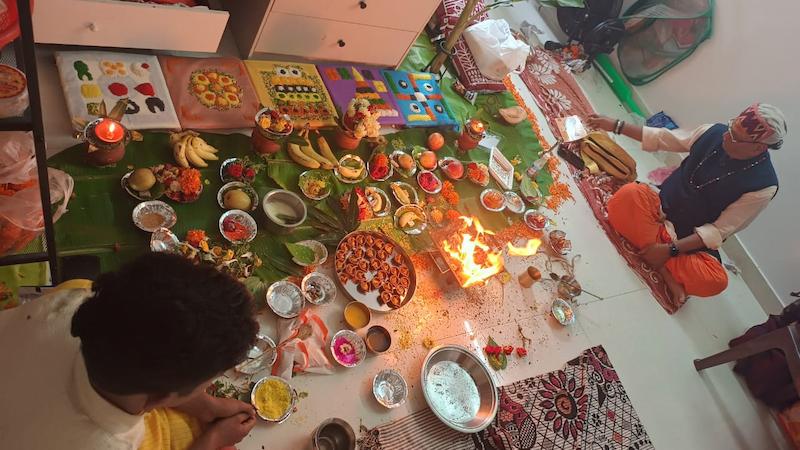
Gand Mool Nakshatra Shanti Puja: Complete Process
Gand Mool Nakshatra Shanti Puja (also called Sataisa Puja) is performed when a child is born under one of the 6 Gand Mool Nakshatras — Ashwini, Ashlesha, Magha, Jyeshtha, Moola, or Revati. It neutralises the negative effects of the dosha and blesses the child with a healthy and prosperous life. The puja takes 4 to 5 hours with 2 to 3 pandit ji, and is ideally performed on the 27th day after birth. Pitradev arranges this puja at your home in Bangalore, Hyderabad, and Pune with experienced North Indian pandits.
What Is Gand Mool Nakshatra
In Vedic astrology, the sky is divided into 27 Nakshatras (lunar constellations). Out of these 27, six are classified as Gand Mool Nakshatras — they are ruled by the shadow planets Rahu and Ketu, and a child born under any of these is said to have Gand Mool Dosha.
The 6 Gand Mool Nakshatras are:
- Ashwini — ruled by Ketu, the first nakshatra of the zodiac
- Ashlesha — ruled by Mercury, associated with Naga Devata
- Magha — ruled by Ketu, associated with Pitru (ancestors)
- Jyeshtha — ruled by Mercury, associated with Indra
- Moola — ruled by Ketu, associated with Nirriti (the goddess of dissolution)
- Revati — ruled by Mercury, associated with Pushan (the nourisher)
Each of these nakshatras has 4 padas (quarters), and the effects of Gand Mool Dosha vary based on which pada the child is born in. Moola Nakshatra, particularly the 1st pada, is considered the most intense, while Ashwini and Revati are generally considered milder.
Why Is Gand Mool Shanti Puja Necessary
According to the Brihat Parashara Hora Shastra, one of the foundational texts of Vedic astrology, a child born in Gand Mool Nakshatra may face certain challenges in life if the dosha is left unaddressed. These may include:
Health issues in early childhood, frequent illnesses, or delayed milestones. Difficulties for the parents — the specific nakshatra and pada determine whether the father, the mother, or both may face challenges. Obstacles in education, career, or relationships later in life. General instability or unexpected difficulties without clear cause.
It is important to understand that being born in Gand Mool Nakshatra is not a curse. The Vedic tradition specifically prescribes the Gand Mool Nakshatra Shanti Puja (also known as Sataisa Puja) as the remedy. When performed correctly, this puja neutralises the negative effects of the dosha and activates the positive qualities of the nakshatra — each Gand Mool Nakshatra also carries strengths like leadership (Ashwini), depth (Ashlesha), authority (Magha), ambition (Jyeshtha), transformation (Moola), and compassion (Revati).
When Should the Puja Be Performed
The ideal time to perform Gand Mool Nakshatra Shanti Puja is on the 27th day after the child's birth. On this day, the same nakshatra in which the child was born returns in the lunar cycle, and performing the puja on this day is considered the most effective.
However, if the 27th day is missed due to the mother's health, travel, or any other reason, the puja can also be performed on the 27th month after birth, or on any day when the child's birth nakshatra recurs. Many families who were not aware of the dosha at the time of birth perform the puja later — even when the child is a few years old — and the benefits are still considered valid.
The key is to perform it on a day when the child's birth nakshatra is active, which a qualified pandit can calculate from the Hindu Panchang.
The Gand Mool Nakshatra Shanti Puja Process — Step by Step
The complete Gand Mool Nakshatra Shanti Puja takes approximately 4 to 5 hours and is performed by 2 to 3 pandit ji at your home. The ceremony is elaborate and follows a specific sequence prescribed in the Vedic texts.
Gauri Ganesh Puja — The ceremony opens with the invocation of Lord Ganesha and Goddess Gauri, seeking their blessings for the successful completion of the puja.
Lakshmi Puja — Goddess Lakshmi is worshipped for prosperity and well-being of the child and the family.
Vishnu Puja — Lord Vishnu is worshipped as the preserver and protector of the universe, seeking his blessings for the child's long and healthy life.
Kalash Puja — The sacred Kalash is established, representing the divine presence, with water, coconut, mango leaves, and flowers.
Navagraha Puja — All 9 planets are worshipped to harmonise their influence on the child's horoscope and to remove planetary afflictions.
Kul Devta / Kul Devi Puja — The family deity is invoked and worshipped, seeking ancestral blessings and protection for the child.
Sodash Pujari — The 16-step Vedic worship procedure is performed with the prescribed offerings.
Rudra Puja and Punyavachanam — Lord Shiva is worshipped through the Rudra mantras, and the Punyavachanam (sanctification prayers) are recited for the purification of the child and the family.
Mool Nakshatra Puja — The Main Puja
This is the core of the entire ceremony. The pandit ji performs the puja of the 3 presiding deities of the specific nakshatra in which the child was born:
- Pradhan Devta — the primary deity of the nakshatra
- Aadhi Devta — the secondary deity
- Pratyadhi Devata — the tertiary deity
Each Gand Mool Nakshatra has its own set of 3 deities, and the mantras, offerings, and invocations are specific to the child's birth nakshatra. This is why a knowledgeable pandit is essential — the puja is not generic, it is personalised to the child's exact nakshatra and pada.
The 27 Elements Ritual (Sataisa Vidhi)
After the Mool Nakshatra Puja, the most distinctive part of the ceremony takes place. A kalash is prepared with:
- Soil (mitti) collected from 27 different places
- 27 types of leaves from different trees
- Water collected from 27 different wells (in practice, Gangajal or sacred water is used)
These 27 elements are mixed together in the kalash. Both parents and the child then sprinkle this sacred mixture on themselves using a separate vessel that has 27 holes. The water flows through the holes like a gentle shower, symbolically cleansing the child and the parents of the dosha's effects.
After the sprinkling, both parents and the baby take a full bath (snan) and change into new clothes. The child is dressed in new garments, marking a symbolic rebirth — the dosha is shed with the old clothes, and the new clothes represent a fresh, blessed beginning.
The Gold and Silver Ritual
Two bowls are prepared:
- One bowl is filled with ghee, and a small piece of gold is placed in it
- One bowl is filled with oil, and a small piece of silver is placed in it
The father and mother look at the reflection of the baby's face in the ghee bowl (with gold), and then in the oil bowl (with silver). This is a deeply symbolic act — seeing the child's face reflected in gold and silver invokes prosperity and protection, and it is believed to bless the child with a life of abundance and strength.
Shanti Havan
After the gold and silver ritual, the Shanti Havan is performed. The pandit ji recites the specific mantras for the child's nakshatra while making offerings into the sacred fire. The havan purifies the atmosphere and seals the blessings invoked during the puja.
Aarti and Daan
The ceremony concludes with the Aarti and the Daan. The most important daan in this puja is:
28 types of grains (anaj) — in case 28 different types are not available, 28 kg of rice is donated instead. The grains or rice are donated to the priest by touching the baby to the grains, symbolically transferring the dosha from the child to the offering, which the priest then accepts and removes from the household.
Cost of Gand Mool Nakshatra Shanti Puja
Pitradev offers the complete Gand Mool Nakshatra Shanti Puja at a fixed, all-inclusive cost of ₹11,000.
What is included in ₹11,000:
- 2 to 3 experienced pandit ji at your home
- All puja samagri brought by pandit ji including:
- Water from 27 wells (or Gangajal from 27 sources)
- 27 types of soil (or soil from a Devsthan)
- 27 types of leaves
- Flowers
- Banana leaves
- Kalash
- Mandals for the puja setup
- Havan kund and havan items
- All other ritual materials
- Pandit ji dakshina
- No hidden charges
What You Need to Arrange at Your Home
The pandit ji brings all the puja samagri, the kalash, the havan materials, and the ritual items. From your side, you need to arrange the following household items:
- Fruits — 5 types, 2 to 3 kg total
- Sweets — 1 kg
- Milk — 500 ml
- Curd — 250 grams
- Ghee — 250 grams
- Honey — 1 small bottle
- 28 types of grains (anaj) — if not available, 28 kg of rice
- A small piece of gold metal (to be placed in the ghee bowl)
- A small piece of silver metal (to be placed in the oil bowl)
- 1 set of dhoti kurta — new cloth for the pandit ji
- Coins — 20 to 25 numbers (₹1, ₹2, ₹5, or ₹10 coins)
A note on the gold and silver: after the ritual, you can either donate the gold and silver pieces to the priest as part of the daan, or if you wish to keep them, give some money to the priest in lieu of the metal. Both approaches are acceptable.
Which Nakshatra Has What Effect — A Quick Reference
Available in Bangalore, Hyderabad and Pune
Pitradev arranges Gand Mool Nakshatra Shanti Puja at your home in all major cities:
Bangalore — Available across HSR Layout, Koramangala, Whitefield, Electronic City, Sarjapur Road, Marathahalli, Yelahanka, Hennur, Hebbal, and all other areas. North Indian pandit in Bangalore with experience in Gand Mool Shanti is assigned.
Hyderabad — Available across Gachibowli, Madhapur, Kondapur, Kukatpally, Miyapur, Secunderabad, LB Nagar, and all other areas. North Indian pandit in Hyderabad is arranged.
Pune — Available across Hinjewadi, Wakad, Baner, Kharadi, Viman Nagar, Hadapsar, and all other areas. North Indian pandit in Pune is arranged.
2 to 3 experienced pandit ji come to your home with all puja samagri. The puja is performed at your home — no temple visit is needed.
How to Book
- Contact Pitradev on WhatsApp or phone.
- Share the child's date and time of birth — our pandit will confirm the nakshatra and the best date for the puja.
- Confirm the date, time, and address.
- 2 to 3 pandit ji arrive at your home with all puja materials.
- The ceremony takes 4 to 5 hours.
Book at least 7 to 10 days in advance so the pandit can calculate the correct nakshatra recurrence date and prepare the specific mantras for your child's nakshatra.
Conclusion
Gand Mool Nakshatra Shanti Puja is not a ritual driven by fear — it is a ritual driven by care. Every parent wants the best for their child, and when Vedic astrology identifies a dosha, the tradition also provides the exact remedy. The Sataisa Puja, with its 27 elements, the gold and silver ritual, and the nakshatra-specific mantras, is a comprehensive and time-tested ceremony that has been protecting children for centuries.
With Pitradev, the puja is performed at your home in Bangalore, Hyderabad, or Pune by 2 to 3 experienced pandit ji, with all samagri brought by the priest. The ceremony takes 4 to 5 hours and follows the complete Vedic vidhi without shortcuts. Book your child's Gand Mool Shanti Puja today and give them the protected start they deserve.
Frequently Asked Questions
The complete puja costs ₹11,000, all-inclusive. This covers 2 to 3 pandit ji, all puja samagri including 27 well water, 27 types of soil, 27 types of leaves, kalash, mandals, havan items, flowers, banana leaves, and pandit ji dakshina.
Shashank Mishra
Manager, Pitradev.com
Shashank Mishra comes with over 15 years of experience in religious tourism and organising Vedic rituals and ancestral ceremonies. At Pitradev, he oversees the coordination of Asthi Visarjan, Pind Daan, Shraadh, Grihapravesh, Vastu Shanti Puja, Satyanarayan Katha, Rudrabhishek, and other sacred rites across Varanasi, Prayagraj, Gaya, Bangalore, Hyderabad, Pune, and Mumbai. His deep understanding of Hindu customs across regional traditions — North Indian, Tamil, Telugu, Odia, and Kannada — allows him to guide families through the correct vidhi with care and clarity, whether it is an ancestral ceremony at a tirtha kshetra or a housewarming puja in a metro city.
Latest Blog
- Gaya Pind Daan vs Varanasi Pind Daan
- Satyanarayan Katha in Pune by North Indian Pandit
- Odia Pandit Prayagraj | Asthi Bisarjan & Pind Daan Same Day
- How to Book Asthi Visarjan in Kashi Online
- Book Pandit Services Online A Complete Step by Step Guide
- Book Verified Pandit Ji in Bangalore for Any Puja Easy Guide
- How to Book a Vastu Pujan Griha Pravesh Puja for Your New Home
- How to Book Pind Daan in Gaya Online Complete Guide
- Pind Daan in Varanasi After Pitru Paksha
- Pind Daan for Dogs in Varanasi: Complete Rituals at Kashi
- Things To Know Before Booking A Pandit for Satyanarayan Puja
- How To Choose Right Muhurat for Griha Pravesh for Your New Home
- 7 Key Rituals and Stages of Pind Daan in Gaya
- Gand Mool Nakshatra Shanti Puja: Complete Process
- Grihapravesh Muhurat in November and December 2026
- Asthi Visarjan in Varanasi for Pets: Dogs And Cats
- Pind Daan in Varanasi: Guide to Ritual, Process, Cost, Booking
- Mistakes to Avoid During Asthi Visarjan in Varanasi
- How to book satyanarayn puja
- Verified South Indian Purohits in Gaya
- Samvatsarikam in Varanasi: Cost and Vidhi
- Best South Indian Purohits in Kashi Varanasi
- Pind Daan in Varanasi by Telugu Purohit
- Telugu Purohit in Gaya: Pind Daan Packages
- Tripindi Shraadh in Gaya
- Pitradev- Hindi, Tamil, Telugu & Bengali Pandit in Bangalore
- Narayan Bali Puja in Gaya
- Can I Do Pind Daan Within One Year of Death?
- One Day Narayan Bali Puja at Trimbakeshwar
- Asthi Visarjan at Manikarnika Ghat in Kashi Varanasi
- Cost of Asthi Visarjan in Varanasi: Packages and Precautions
- Pandit for Tripindi Shradh in Varanasi: 2026 Dates & Cost
- Pind Daan in Gaya in Pitru Paksha 2026: Dates and Packages
- Vastu Shanti Puja Cost in Pune by North Indian Pandit
- Pitra Dosh: Causes, Symptoms and Remedies — A Complete Guide
- How to Find Genuine Tamil Vadhyars in Kashi Varanasi
- How to Carry Asthi in Flight in India?
- Pind Daan in Gaya by Tamil Iyer: Cost, Packages and Process
- Asthi Visarjan in Srirangapatna from Bangalore — Full Guide
- Send Ashes from Coimbatore to Kashi — Asthi Visarjan Service
- Cost of Asthi Visarjan in Prayagraj by Telugu Pandit
- Asthi Visarjan and Pind Daan in Prayagraj for Odia Families
- North Indian Pandit Bangalore for Annaprashan Puja
- Telugu Grihapravesham Bangalore: 4 Packages Cost & Inclusion
- Cost of Tripindi Shraadh in Varanasi -Pishachmochan Kund
- North Indian Pandit in Pune for Grihapravesh: Package Guide
- Pind Daan in Prayagraj: Cost, Vidhi & Booking Guide-2026
- Narayan Bali Puja in Varanasi — Complete Cost Breakdown for 2026
- Book a Verified North Indian Pandit in Pune: Cost & Packages
- How to Send Asthi to Kashi: A Step-by-Step Guide
- Book Tamil Iyer in Bangalore for Grihapravesham – Complete Guide
- How to Plan 10th 11th and 12th Day Rituals in Varanasi
- Pitru Paksha 2026 – Pind Daan in Prayagraj, Kashi and Gaya
- Pitru Paksha 2026 – Book Online Pind Daan in Varanasi
- Asthi Visarjan in Varanasi for Tamil Families – Complete Guide
- How to Send Asthi (Ashes) from USA to India – Complete Guide
- Narayan Bali Puja in Varanasi – Complete Guide 2026
- Pind Daan in Gaya from Malaysia – Complete Guide
- Pind Pradanam in Varanasi from Malaysia – Complete Guide
- Grihapravesh Puja in Bangalore by Kannada Purohit
- Online Pind Daan in Varanasi for NRIs
- Book Verified Telugu Purohits in Bangalore for Grihapravesham
- Best Ghat for Asthi Visarjan in Varanasi: A Practical Comparison
- Asthi Visarjan in Prayagraj – Complete Guide 2026
- Tripindi Shradh in Varanasi – Complete Guide
- Asthi Visarjan in Varanasi –Best Ghat & Package 2026
- Grihapravesh Puja in Prestige City Sarjapur
- Gaya Ji Pind Daan 2026 – Quick Guide for Planning Your Trip
- Online Puja Booking for Griha Pravesh, Shradh & Satyanarayan
- Pitru Paksha 2026 Dates, Rituals and Pind Daan Guide
- Akshaya Tritiya 2026 (19 April): Best Muhurat for Griha Pravesh
- How to Do Asthi Visarjan When You Cannot Travel: Complete Guide
- Asthi Visarjan in Kashi: Complete Guide with Cost & Time
- Griha Pravesh Muhurat 2026: Auspicious Dates & Timings
- Complete Guide to Gaya Pind Daan Ritual, Samagri & Best Time
- Asthi Visarjan By Post in Kashi Varanasi – Complete Guide
- How to Book a Bengali Pandit for Puja: Step-by-Step Process
- Book Verified Pandit for Puja in Bangalore
- Book Verified North Indian Pandit in Hyderabad Online
- Book North Indian Pandit in Bangalore for Satyanarayan Puja
- How to Book a Pandit in Bangalore Online for Puja:Complete Guide
- Find and Book Pandits in Hyderabad for Griha Pravesh Puja Online
- How to Find and Book Experienced Pandit Online for Puja?
- Exploring the History and Origins of Griha Pravesh Puja Rituals
- Top 5 Ancient Places for Gayaji Pind Daan - 2024 Guide
- Significance of Performing Griha Pravesh Puja in Hindu Culture
- How to Choose the Right Pandit for Pind Daan in Gaya
- Why is Pind Daan in Gaya so Famous?
- Where to Find Experienced Pandit for Griha Pravesh Puja Online?
- Cost of Pind Daan in Gaya: Packages, Procedure and How to Book
- Griha Pravesh Puja and Housewarming Ceremony 2024
- How Gaya Pind Daan Brings Closure and Peace to Your Ancestors
- Gayaji Pind Daan: Achieve Eternal Peace for Your Ancestors
- Online Pind daan: Importance, Cost, and Procedure
- Gaya Pind Daan Puja is Performed by an Experienced Pandit ji
- The Sacred Ritual of Brahma Kapal Pind Daan
- A Complete Guide About Pind Daan in India: Update 2023
- Unveiling the Significance of Pind Daan in Gaya
- The Ultimate Guide to Pind Daan Tour Packages
- Where to do Asthi Visarjan in Haridwar?
- Rudrabhishek Pooja Why Hindus Perform Rudrabhishek pooja At home
- Varanasi's Asthi Visarjan: Embracing Life's Eternal Journey
- Unveiling the Sacred Ritual:
- Significance of Asthi Visarjan in Haridwar
- Exploring the Profound Significance of Asthi Visarjan in Kashi
- The Science of Pind Daan:
- What are the rituals of Pind Daan?
- Varanasi Ayodhya Tour Package with Prayagraj
- Pind Daan Puja in Varanasi | Book Your Puja Online
- Prayagraj: The Enchanting Journey of Asthi Visarjan
- Pind Daan Gaya : When and Where to Do Pind Daan in Gayaji
- Exploring the Mystical Rituals of Asthi Visarjan Poojan
- Which are the Best Places to do Pind Daan in Gaya?
- Everything You Need to Know About Rudrabhishek Puja
- Why Is Pind Daan At Gaya Important To Hindus?
- Asthi Visarjan: When to Perform It, Where to Go, and Cost
- Rudra Abhishek Puja's Purpose:
- Ganga Pushkaralu 2023
- Pind daan for people having unnatural deaths
- Is doing pind daan beneficial without self presence of related?