Samvatsarikam in Varanasi: Cost and Vidhi
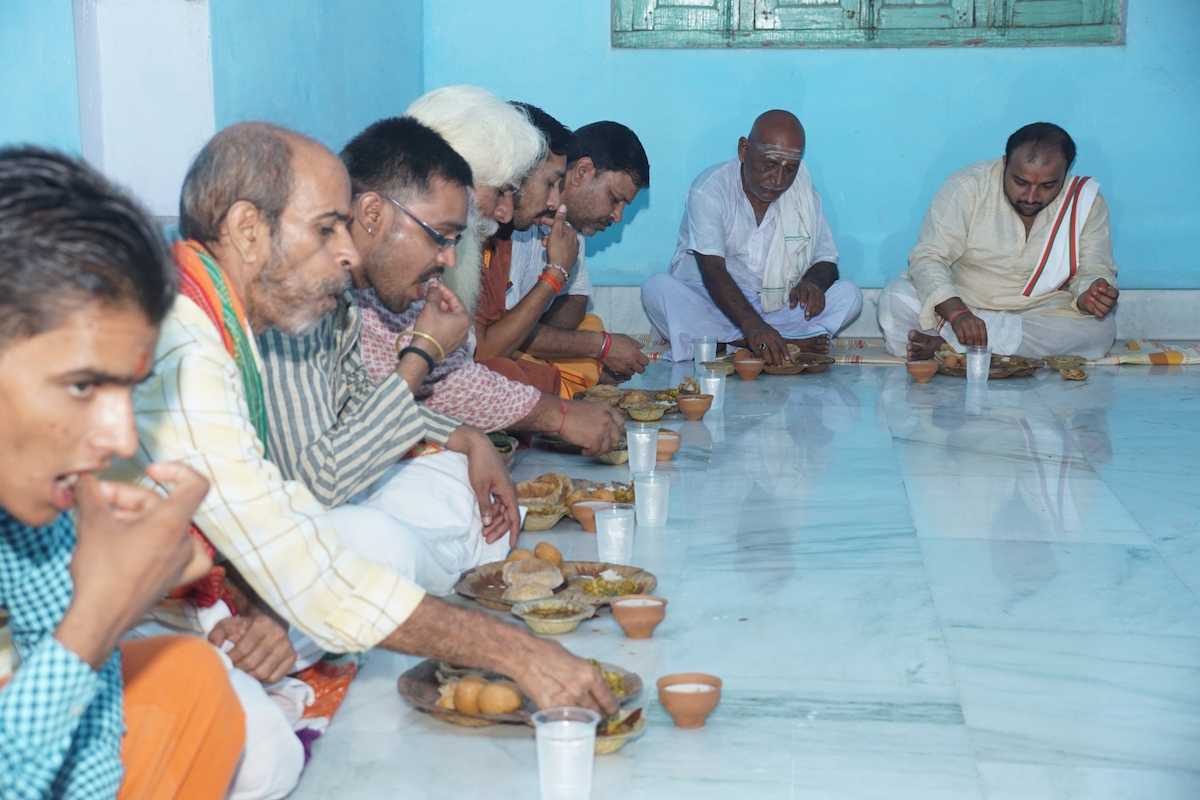
Pitradev arranges Samvatsarikam (annual shradh) in Varanasi at a fixed, all-inclusive ₹15,000. The ceremony includes Pind Pradanam, Vastra Daan, Gho Daan, Saiya Daan, and Brahmana Bhojanam to 5 Bhoktas, performed by a Telugu, Tamil, or Hindi purohit at the Ganga ghat. Duration is approximately 2 hours. Family prasad/bhojanam available at ₹300 per person additional.
What Is Samvatsarikam and Why Families Perform It at Kashi
Samvatsarikam is the first annual shradh ceremony performed on the same tithi (lunar day) on which the departed family member passed away. It marks one of the most important milestones in the post-death ritual sequence — the moment when the departed soul formally transitions from the state of preta (unsettled spirit) to the state of pitru (ancestor) and enters Pitru Loka.
This ceremony is known by different names across regions: in Telugu, it is called Samvatsarikam or Taddinam; in Tamil, it is called Srardham or Varshikam; and in the North Indian tradition, it is known as Barsi or Varshik Shradh. Despite the different names, the core purpose is the same — honouring the departed ancestor on the death anniversary through pind offering, tarpanam, daan, and feeding of Brahmins.
While Samvatsarikam can be performed at home or at a local temple, the Puranas state that performing Varshika Shraddha at a Tirtha Kshetra (holy pilgrimage site) carries multiplied spiritual merit. Among all the Tirtha Kshetras, Kashi (Varanasi) holds a singular position. The Ganga in Kashi is believed to carry the highest spiritual power for moksha, and performing Samvatsarikam at its banks is considered to grant the departed soul the fullest possible benefit.
Many Telugu and Tamil families combine the Samvatsarikam with Pind Daan in Varanasi or with Asthi Visarjan in Varanasi during the same trip, completing all their ancestral obligations at the holiest tirtha in a single visit.
The Full Form vs the Tirtha Kshetra Form
In the Telugu tradition, the complete Samvatsarikam is a multi-day ceremony. The full form typically spans 3 to 4 days:
This multi-day format is generally followed when the ceremony is performed at home, where the family has the time and space to observe each day separately.
When performed at a Tirtha Kshetra like Varanasi, the ceremony is traditionally condensed into a single day covering the core elements: the Pind Pradanam, the Tarpanam, the Daan (Vastra Daan, Gho Daan, Saiya Daan), and the Brahmana Bhojanam. This single-day tirtha format is scripturally recognised and widely practised by families who travel to Kashi specifically for the Samvatsarikam.
Pitradev's ₹15,000 package covers this single-day Tirtha Kshetra Samvatsarikam in its complete form.
When Should Samvatsarikam Be Performed
Samvatsarikam is performed on the same tithi on which the departed family member passed away, after the completion of 12 Masikams (monthly shradhs). This means the ceremony takes place approximately 11 to 12 months after the death, depending on the tithi alignment in the Hindu calendar.
It is important to understand that Samvatsarikam should not be performed before the 12th Masikam is completed. The monthly shradh sequence must be fulfilled first, as each Masikam serves a specific purpose in supporting the departed soul's journey through the afterlife. Only after the final Masikam is complete does the Samvatsarikam take place, formally marking the soul's entry into Pitru Loka.
If you are unsure about the correct tithi for your family's Samvatsarikam, Pitradev's purohit can help calculate it based on the date of passing and the Hindu Panchang.
Why Perform Samvatsarikam at Varanasi
Families choose to perform Samvatsarikam at Kashi for several reasons that go beyond convenience.
First, the scriptural merit is multiplied. The Puranas specifically state that Varshika Shraddha performed at a Tirtha Kshetra carries greater spiritual benefit than the same ceremony performed at home. Among all Tirtha Kshetras, Kashi is considered supreme for ancestral rites because of the presence of the Ganga and the city's association with moksha.
Second, the combination of rituals makes the journey worthwhile. Many families who travel to Kashi for the Samvatsarikam also perform Tirth Shradh (Pind Pradanam for all ancestors), Asthi Visarjan if the ashes have been preserved, and Tarpanam at the Ganga ghat. Completing all these obligations in a single pilgrimage gives the family a sense of completeness.
Third, the purohit quality at Kashi is trusted. Varanasi has been a centre of Vedic learning for centuries, and the purohits available here carry a depth of scriptural knowledge that is difficult to find in most cities.
Samvatsarikam Package in Varanasi — ₹15,000
Pitradev offers a single, all-inclusive package for Samvatsarikam in Varanasi at a fixed cost of ₹15,000.
The ceremony includes:
- Pind Pradanam — rice ball offerings in the name and gotram of the departed, with sankalp
- Vastra Daan — donation of clothes to Brahmins in the name of the departed
- Gho Daan — donation of a cow in the name of the departed
- Saiya Daan — donation of a bed (cot with bedding) in the name of the departed
- Brahmana Bhojanam — feeding of 5 Brahmin Bhoktas who represent the ancestors and deities
- All puja material and samagri
- Purohit dakshina
Duration: Approximately 2 hours
Timing: 7 AM to 3 PM (morning hours preferred)
Location: Ganga ghat in Varanasi (specific ghat confirmed based on language and tradition)
Fasting: You are required to be fasting before the puja. You can eat only after the ceremony and the Brahmana Bhojanam are completed.
The price is fixed and confirmed at the time of booking. The purohit will not ask for additional money during the ceremony for any reason.
Family Prasad / Bhojanam Option
After the Brahmana Bhojanam is completed, if you and your family members also wish to eat food or prasad at the same location, this can be arranged at an additional cost of ₹300 per person.
This is optional and not required as part of the Samvatsarikam vidhi. However, many families prefer to eat together after the ceremony as a way of bringing closure to the day. If you wish to include this, mention it at the time of booking so the food arrangements can be made in advance.
Step-by-Step Vidhi of Samvatsarikam at Varanasi
The purohit guides you through every step. Here is the sequence:
Sankalp: The ceremony begins with the sankalp, in which the karta (the person performing the rite, usually the eldest son) takes a vow in the name of the departed. The name, gotram, nakshatra, and tithi of the departed are formally invoked. The names and gotram of all other departed ancestors in the family are also taken.
Pind Pradanam: Rice ball pinds are prepared using the materials provided by the purohit. Each pind is offered with the recitation of Vedic mantras in the name of the departed soul and the ancestral lineage.
Tarpanam: Water mixed with black sesame seeds is offered to the ancestors, believed to nourish and satisfy the departed souls in Pitru Loka.
Daan: Three important daans are performed in sequence:
Vastra Daan — clothes are donated to Brahmins in the name of the departed. It is believed that this provides clothing to the ancestor in the afterlife.
Gho Daan — a cow is donated in the name of the departed. According to the Garuda Purana, the cow helps the departed soul cross the Vaitarni River in the afterlife.
Saiya Daan — a bed with bedding is donated. This is believed to provide rest and comfort to the departed soul.
Brahmana Bhojanam: 5 Brahmin Bhoktas are fed a complete meal. These Bhoktas represent the deities Vasu, Rudra, and Aditya, and the Pitrus themselves. Feeding them is considered equivalent to feeding the ancestors directly.
Concluding Prayers: The purohit recites the concluding mantras and the karta seeks blessings. The ceremony is complete.
Telugu, Tamil and North Indian Purohits Available
Pitradev understands that the Samvatsarikam must be performed in the family's own tradition for it to feel correct and complete.
For Telugu families: The ceremony is conducted by a genuine Telugu Shashtri settled in Kashi. The sankalp follows the Andhra and Telangana form, the mantras are from the Telugu tradition, and the complete vidhi — including the daan sequence preferred by Telugu households — is followed.
For Tamil families: The ceremony is conducted by a Tamil Vadhyar from a Tamil Brahmin family settled in Kashi. The sankalp is taken in the Tamil Iyer form, and the Srardham vidhi follows Tamil tradition.
For North Indian families: The ceremony is conducted by an experienced Hindi-speaking pandit as per the Barsi or Varshik Shradh tradition.
It is important to note that Pitradev's South Indian purohits in Kashi are from genuinely South Indian families settled in Varanasi — not North Indian pandits who have learned to speak basic Tamil or Telugu. The vidhi they perform follows your regional tradition, not a translated version of the North Indian format.
Important Rules to Keep in Mind
Samvatsarikam should not be done before the 12th Masikam. The monthly shradh sequence must be completed first. If the 12 monthly shradhs have not been performed, the Samvatsarikam cannot take place.
The ceremony must be on the correct tithi. The tithi should match the date of the ancestor's passing as per the Hindu Panchang. If you are unsure, our purohit can calculate the correct tithi for you.
Fasting is mandatory. The karta must fast before the ceremony and can eat only after the Brahmana Bhojanam is completed.
The eldest son is the karta. Samvatsarikam is traditionally performed by the eldest son who conducted the cremation and the initial post-death rites. However, if the eldest son is not available, another son or a male family member can perform it. In cases where no male member is available, women can also perform the ceremony with the purohit's guidance.
Tirth Shradh can begin after this. Once the Samvatsarikam is completed, the family is now eligible to perform Tirth Shradh (Pind Pradanam) at sacred cities like Varanasi, Prayagraj, and Gaya. Many families perform their first Tirth Shradh immediately after the Samvatsarikam at Kashi, on the same trip.
How to Book Samvatsarikam in Varanasi
- Contact Pitradev on WhatsApp or phone.
- Share the details of the departed — name, gotram, nakshatra, and date of passing.
- Our purohit will confirm the correct tithi for the Samvatsarikam.
- Specify your language preference — Telugu, Tamil, or Hindi.
- Confirm your date and receive a booking confirmation with the purohit's name and all details.
- If you wish to include family prasad/bhojanam, mention the number of persons at the time of booking.
Advance booking of at least 7 to 10 days is recommended. During Pitru Paksha (September to October) and on Amavasya dates, booking 2 to 3 weeks in advance is strongly advised.
Conclusion
Samvatsarikam is not just a ritual — it is the moment when your departed family member formally enters Pitru Loka and begins to bless the family as an ancestor rather than remain as a preta. Performing it at Kashi, at the banks of the Ganga, carries the highest spiritual merit prescribed by the Puranas.
With Pitradev, the Samvatsarikam in Varanasi is arranged at a fixed ₹15,000, covering Pind Pradanam, Vastra Daan, Gho Daan, Saiya Daan, and Brahmana Bhojanam to 5 Bhoktas. Telugu, Tamil, and Hindi purohits are available, the vidhi follows your tradition, and the price includes everything with no hidden charges. Book your date and give your ancestor the transition they are owed.
Frequently Asked Questions
1. What is Samvatsarikam and when is it performed?
2. What is the cost of Samvatsarikam in Varanasi?
3. How long does the Samvatsarikam ceremony take?
4. Is a Telugu or Tamil purohit available for Samvatsarikam in Varanasi?
5. Can family members eat after the Brahmana Bhojanam?
6. Can Samvatsarikam be performed before completing 12 Masikams?
Shashank Mishra
Manager, Pitradev.com
Shashank Mishra comes with over 15 years of experience in religious tourism and organising Vedic rituals and ancestral ceremonies. At Pitradev, he oversees the coordination of Asthi Visarjan, Pind Daan, Shraadh, Grihapravesh, Vastu Shanti Puja, Satyanarayan Katha, Rudrabhishek, and other sacred rites across Varanasi, Prayagraj, Gaya, Bangalore, Hyderabad, Pune, and Mumbai. His deep understanding of Hindu customs across regional traditions — North Indian, Tamil, Telugu, Odia, and Kannada — allows him to guide families through the correct vidhi with care and clarity, whether it is an ancestral ceremony at a tirtha kshetra or a housewarming puja in a metro city.
Latest Blog
- Gand Mool Nakshatra Shanti Puja: Complete Process
- Grihapravesh Muhurat in November and December 2026
- Asthi Visarjan in Varanasi for Pets: Dogs And Cats
- Pind Daan in Varanasi: Guide to Ritual, Process, Cost, Booking
- Mistakes to Avoid During Asthi Visarjan in Varanasi
- How to book satyanarayn puja
- Verified South Indian Purohits in Gaya
- Samvatsarikam in Varanasi: Cost and Vidhi
- Best South Indian Purohits in Kashi Varanasi
- Pind Daan in Varanasi by Telugu Purohit
- Telugu Purohit in Gaya: Pind Daan Packages
- Tripindi Shraadh in Gaya
- Pitradev- Hindi, Tamil, Telugu & Bengali Pandit in Bangalore
- Narayan Bali Puja in Gaya
- Can I Do Pind Daan Within One Year of Death?
- One Day Narayan Bali Puja at Trimbakeshwar
- Asthi Visarjan at Manikarnika Ghat in Kashi Varanasi
- Cost of Asthi Visarjan in Varanasi: Packages and Precautions
- Pandit for Tripindi Shradh in Varanasi: 2026 Dates & Cost
- Pind Daan in Gaya in Pitru Paksha 2026: Dates and Packages
- Vastu Shanti Puja Cost in Pune by North Indian Pandit
- Pitra Dosh: Causes, Symptoms and Remedies — A Complete Guide
- How to Find Genuine Tamil Vadhyars in Kashi Varanasi
- How to Carry Asthi in Flight in India?
- Pind Daan in Gaya by Tamil Iyer: Cost, Packages and Process
- Asthi Visarjan in Srirangapatna from Bangalore — Full Guide
- Send Ashes from Coimbatore to Kashi — Asthi Visarjan Service
- Cost of Asthi Visarjan in Prayagraj by Telugu Pandit
- Asthi Visarjan and Pind Daan in Prayagraj for Odia Families
- North Indian Pandit Bangalore for Annaprashan Puja
- Telugu Grihapravesham Bangalore: 4 Packages Cost & Inclusion
- Cost of Tripindi Shraadh in Varanasi -Pishachmochan Kund
- North Indian Pandit in Pune for Grihapravesh: Package Guide
- Pind Daan in Prayagraj: Cost, Vidhi & Booking Guide-2026
- Narayan Bali Puja in Varanasi — Complete Cost Breakdown for 2026
- Book a Verified North Indian Pandit in Pune: Cost & Packages
- How to Send Asthi to Kashi: A Step-by-Step Guide
- Book Tamil Iyer in Bangalore for Grihapravesham – Complete Guide
- How to Plan 10th 11th and 12th Day Rituals in Varanasi
- Pitru Paksha 2026 – Pind Daan in Prayagraj, Kashi and Gaya
- Pitru Paksha 2026 – Book Online Pind Daan in Varanasi
- Asthi Visarjan in Varanasi for Tamil Families – Complete Guide
- How to Send Asthi (Ashes) from USA to India – Complete Guide
- Narayan Bali Puja in Varanasi – Complete Guide 2026
- Pind Daan in Gaya from Malaysia – Complete Guide
- Pind Pradanam in Varanasi from Malaysia – Complete Guide
- Grihapravesh Puja in Bangalore by Kannada Purohit
- Online Pind Daan in Varanasi for NRIs
- Book Verified Telugu Purohits in Bangalore for Grihapravesham
- Best Ghat for Asthi Visarjan in Varanasi: A Practical Comparison
- Asthi Visarjan in Prayagraj – Complete Guide 2026
- Tripindi Shradh in Varanasi – Complete Guide
- Asthi Visarjan in Varanasi –Best Ghat & Package 2026
- Grihapravesh Puja in Prestige City Sarjapur
- Gaya Ji Pind Daan 2026 – Quick Guide for Planning Your Trip
- Online Puja Booking for Griha Pravesh, Shradh & Satyanarayan
- Pitru Paksha 2026 Dates, Rituals and Pind Daan Guide
- Akshaya Tritiya 2026 (19 April): Best Muhurat for Griha Pravesh
- North Indian Pandit in Bangalore for All Hindu Pujas
- How to Do Asthi Visarjan When You Cannot Travel: Complete Guide
- Asthi Visarjan in Kashi: Complete Guide with Cost & Time
- Griha Pravesh Muhurat 2026: Auspicious Dates & Timings
- Complete Guide to Gaya Pind Daan Ritual, Samagri & Best Time
- Asthi Visarjan By Post in Kashi Varanasi – Complete Guide
- How to Book a Bengali Pandit for Puja: Step-by-Step Process
- Book Verified Pandit for Puja in Bangalore
- Book Verified North Indian Pandit in Hyderabad Online
- Book North Indian Pandit in Bangalore for Satyanarayan Puja
- How to Book a Pandit in Bangalore Online for Puja:Complete Guide
- Find and Book Pandits in Hyderabad for Griha Pravesh Puja Online
- How to Find and Book Experienced Pandit Online for Puja?
- Exploring the History and Origins of Griha Pravesh Puja Rituals
- Top 5 Ancient Places for Gayaji Pind Daan - 2024 Guide
- Significance of Performing Griha Pravesh Puja in Hindu Culture
- How to Choose the Right Pandit for Pind Daan in Gaya
- Why is Pind Daan in Gaya so Famous?
- Where to Find Experienced Pandit for Griha Pravesh Puja Online?
- Cost of Pind Daan in Gaya: Packages, Procedure and How to Book
- Griha Pravesh Puja and Housewarming Ceremony 2024
- How Gaya Pind Daan Brings Closure and Peace to Your Ancestors
- Gayaji Pind Daan: Achieve Eternal Peace for Your Ancestors
- Online Pind daan: Importance, Cost, and Procedure
- Gaya Pind Daan Puja is Performed by an Experienced Pandit ji
- The Sacred Ritual of Brahma Kapal Pind Daan
- A Complete Guide About Pind Daan in India: Update 2023
- Unveiling the Significance of Pind Daan in Gaya
- The Ultimate Guide to Pind Daan Tour Packages
- Where to do Asthi Visarjan in Haridwar?
- Rudrabhishek Pooja Why Hindus Perform Rudrabhishek pooja At home
- Varanasi's Asthi Visarjan: Embracing Life's Eternal Journey
- Unveiling the Sacred Ritual:
- Significance of Asthi Visarjan in Haridwar
- Exploring the Profound Significance of Asthi Visarjan in Kashi
- The Science of Pind Daan:
- What are the rituals of Pind Daan?
- Varanasi Ayodhya Tour Package with Prayagraj
- Pind Daan Puja in Varanasi | Book Your Puja Online
- Prayagraj: The Enchanting Journey of Asthi Visarjan
- Pind Daan Gaya : When and Where to Do Pind Daan in Gayaji
- Exploring the Mystical Rituals of Asthi Visarjan Poojan
- Which are the Best Places to do Pind Daan in Gaya?
- Everything You Need to Know About Rudrabhishek Puja
- Why Is Pind Daan At Gaya Important To Hindus?
- Asthi Visarjan: When to Perform It, Where to Go, and Cost
- Rudra Abhishek Puja's Purpose:
- Ganga Pushkaralu 2023
- Pind daan for people having unnatural deaths
- Is doing pind daan beneficial without self presence of related?