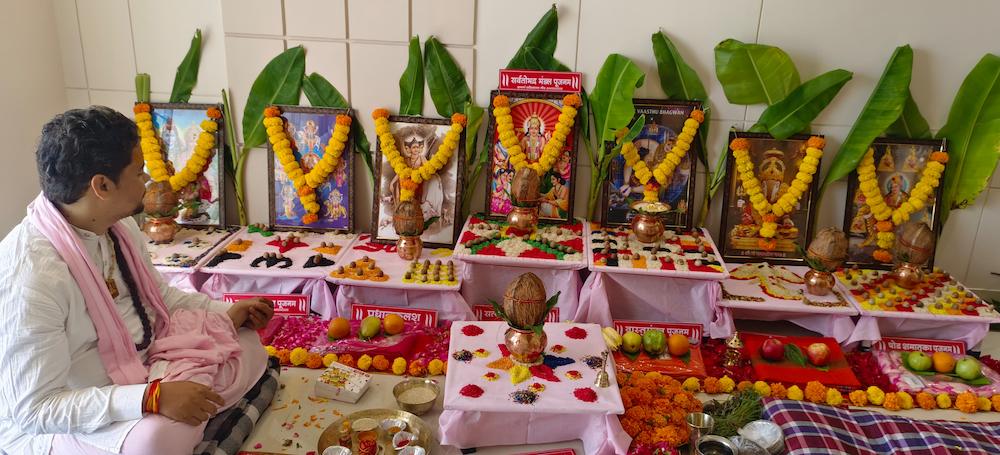
Book a Verified North Indian Pandit in Pune: Cost & Packages
North Indian families in Pune can book a verified, Hindi-speaking pandit through Pitradev for Grihapravesh, Satyanarayan Katha, Vastu Shanti and other ceremonies. Grihapravesh puja with 1 Pandit ji starts at ₹6,500, Grihapravesh with Vastu Shanti and 3 pandits is ₹21,000, and Satyanarayan Katha is ₹4,500. All packages include samagri guidance, dakshina, and travel within Pune municipal limits.
Introduction
Every week, in localities like Kothrud, Baner, Wakad and Hinjewadi, a North Indian family settled in Pune begins the search for a verified North Indian pandit in Pune, often 6 to 8 days before their Grihapravesh muhurat. The phone calls usually follow the same pattern — 4 to 5 numbers are tried, half of them connect to Marathi-speaking pandits who follow Maharashtrian paddhati, and the rest quote a vague figure that grows by ₹2,000 to ₹4,000 on the day of the puja once samagri and dakshina are added separately. For families who grew up watching Banarasi, UP or Bihar tradition pujas at home, this is the moment where a clearly priced, language-matched, properly verified service starts to matter more than anything else.
This guide explains how to book a verified North Indian pandit in Pune the right way — what verification actually means, what the standard puja packages cost, the step-by-step booking process, and the mistakes families repeatedly make when they leave the decision to the last 48 hours.
Why North Indian families in Pune specifically need a North Indian pandit
Pune has a deep and respected Brahmin tradition, but the local Maharashtrian paddhati and the North Indian Sanatani tradition differ in noticeable ways during ceremonies. The sankalp wording, the sequence of avahan and visarjan, the choice of mantras for Ganesh sthapana, Punyahavachan and Navagraha, and the materials used in the kalash differ between the two traditions. A Grihapravesh performed in the Banarasi or UP tradition includes specific recitations from the Matsya Puran and Vastu Shastra that a pandit trained only in the Maharashtrian Brahmin tradition may not perform in the same sequence.
Further to this, language matters for the elderly members of the family. Many a time, the eldest member of the household — the dada ji or dadi ji for whom the puja is being arranged — wants to follow what the pandit is reciting, ask a question mid-vidhi, or request a small change in the sankalp to include a deceased family member. This conversation happens naturally only when the Pandit ji is fluent in Hindi and familiar with North Indian customs around festivals like Karva Chauth, Chhath Puja, Ahoi Ashtami and Govardhan Puja. The model is the same that Pitradev runs for North Indian pandit in Bangalore — language match, tradition match, and a clear verification trail.
What "verified" actually means when you book a North Indian pandit in Pune
A verified North Indian pandit in Pune is one whose Vedic education, gotra lineage, scriptural knowledge and personal identity have been independently checked by the booking platform — not simply someone who answered a phone enquiry. At Pitradev, verification is a 4-step process completed before any pandit is listed on the platform, and it is what allows the family to focus on the ceremony rather than on screening the priest.
The verification covers, in order, an identity and address proof check, confirmation of Veda-Pathshala or Sanskrit-Vidyalaya training with the name of the institution and years attended, a language fluency check in Hindi and at least one of Sanskrit, Bhojpuri or Maithili depending on the family's tradition, and a sample sankalp recital where the pandit is asked to recite the standard Grihapravesh or Satyanarayan sankalp on a call. Considering the sensitivity of the work, complaint history from previous bookings is also reviewed before the pandit is allocated to a new family.
The reason this matters is straightforward. On the morning of the muhurat, with relatives arriving and the cook setting up for prasad, the family has no time to check whether the person who walked in actually knows the vidhi. The verification is done weeks earlier so that the day of the ceremony stays calm.
Puja packages and cost for a North Indian pandit in Pune
The cost of booking a North Indian pandit in Pune depends on the puja, the number of pandits required, and whether additional vidhis like Vastu Shanti or Havan are bundled in. The three most commonly booked packages are priced as follows, with samagri guidance, dakshina, and travel within Pune municipal limits included:
- Grihapravesh puja with 1 Pandit ji —₹6,500. Standard 2 to 3 hour vidhi covering Ganesh sthapana, Punyahavachan, Kalash sthapana, Vastu prarthna and the main Grihapravesh sankalp. Suitable for apartments and smaller independent houses where a single Pandit ji can complete the puja within the muhurat window.
- Grihapravesh with Vastu Shanti and 2 pandits —₹15,000. A 4 to 5 hour ceremony with full Vastu Shanti Havan, Navagraha shanti, 9 planet ahuti, and the main Grihapravesh vidhi. Recommended for new independent houses, builder-handover flats where Vastu Shanti is being done for the first time, and families who want the complete Banarasi tradition observed.
- Satyanarayan Katha —₹4,500. A 3 to 4 hour vidhi with Ganesh and Navagraha avahan, the 5 chapters of Satyanarayan Katha recital, aarti and prasad sankalp. The package most North Indian families in Pune book for housewarming follow-ups, first-anniversary-of-new-home pujas, or as a thanksgiving ceremony after a major life event.
For families comparing options across cities, the same packaging model is used for Grihapravesh puja packages by Kannada purohit in Bangalore, and the inclusions follow the same structure of samagri guidance, fixed dakshina and travel within city limits. On completion of the puja, a final samagri list and a sankalp record is shared with the family for their own records.
Step-by-step process to book a North Indian pandit in Pune
Booking is designed to be completed in 4 steps and usually takes less than 20 minutes once the family has decided on the muhurat. The objective is to lock the date, the pandit, and the package in a single conversation so the family is not chasing confirmations in the final week.
The 4 steps are:
- Share the muhurat date, start time and address over WhatsApp or call. The address determines travel arrangement and helps confirm whether 1 pandit or 3 pandits are appropriate for the space available.
- Select the puja and package from the options above. If you are unsure between Grihapravesh alone and Grihapravesh with Vastu Shanti, the consultation call walks you through what each includes and which is appropriate for a newly handed-over flat versus a resale property.
- Receive the verified pandit profile with name, Veda-Pathshala background, languages spoken and years of practice. The same model is used to book a North Indian pandit in Hyderabad, and the profile is shared before payment, not after.
- Pay 25 percent advance to confirm, with the balance settled on completion of the puja on the day. A samagri list is shared 48 hours before the puja so the family knows exactly what is being brought by the pandit and what, if anything, the household needs to arrange.
Areas of Pune covered and how travel is handled
Verified North Indian pandits are available across all major residential pockets of Pune, including Kothrud, Aundh, Baner, Balewadi, Wakad, Hinjewadi Phase 1, 2 and 3, Viman Nagar, Kalyani Nagar, Magarpatta, Kharadi, Hadapsar, Wagholi, Pashan, NIBM, Undri, and the entire Pimpri-Chinchwad belt covering Pimpri, Chinchwad, Akurdi and Nigdi. For families in central Pune areas like Camp, Koregaon Park and Boat Club Road, the same packages apply with no surcharge.
Travel within Pune Municipal Corporation and Pimpri-Chinchwad Municipal Corporation limits is included in the package price. For locations outside the PMC and PCMC boundary — such as Talegaon, Lonavala, Saswad or Shirur — a small additional travel arrangement is quoted separately and confirmed at the time of booking, so there are no day-of surprises.
Common mistakes families make when booking a pandit in Pune
A few patterns repeat across families who later wish they had done things differently, and they are all avoidable with one extra conversation at the time of booking. Considering that the puja is meant to bring shanti to the new home, getting the booking right is itself part of the vidhi.
The most common mistakes are: starting the search on the morning of the muhurat, by which point most verified pandits are already committed; assuming the local pandit will follow the North Indian vidhi without confirming language and tradition; not asking for an itemised samagri list 48 hours in advance, which leads to last-minute trips to the market; and agreeing to a verbal price over the phone, which often expands by ₹2,000 to ₹4,000 once dakshina, samagri and travel are added separately on the day. Each of these is solved by confirming, in writing, the package, the inclusions and the pandit profile at the time of the advance payment.
Conclusion
Booking a verified North Indian pandit in Pune is, at its core, about three things — language and tradition match for the family, clear and inclusive pricing so the muhurat morning stays calm, and a verification trail that has been completed weeks before the puja. The standard packages — Satyanarayan Katha at ₹3,500, Grihapravesh with 1 Pandit ji at ₹6,500, and Grihapravesh with Vastu Shanti and 3 pandits at ₹21,000 — cover the ceremonies most North Indian families in Pune actually book through the year, and the inclusions are designed so the family is not negotiating samagri or dakshina on the day of the puja.
For families who would prefer the entire arrangement handled end to end — verification, samagri, sankalp wording and the muhurat itself — Pitradev coordinates the booking from the first call to the completion of the puja. A short WhatsApp consultation before booking is offered for families who want to talk through which package suits their new home, and is the recommended starting point for first-time Grihapravesh.
FAQ
1. How much does it cost to book a North Indian pandit in Pune for Grihapravesh puja? A standard Grihapravesh puja in Pune with 1 verified North Indian Pandit ji costs ₹6,500, covering Ganesh sthapana, Punyahavachan, Kalash sthapana and the main Grihapravesh sankalp over 2 to 3 hours. A larger ceremony with Vastu Shanti Havan and 3 pandits, suitable for new independent houses and builder-handover flats, is ₹21,000. Both packages include samagri guidance, dakshina and travel within Pune municipal limits.
2. Will the pandit speak Hindi and follow North Indian vidhi, not Maharashtrian paddhati? Yes. Every pandit listed for North Indian bookings in Pune is verified for Hindi fluency and trained in the North Indian tradition — Banarasi, UP or Bihar paddhati depending on the family's lineage. The pandit's profile, shared before payment, names the Veda-Pathshala attended and the languages spoken, so families can confirm the match before confirming the booking.
3. How much advance notice is needed to book a verified pandit in Pune? For weekday muhurats, a 5 to 7 day notice is comfortable and allows the samagri list to be finalised and shared 48 hours before the puja. For weekend or auspicious-day muhurats — particularly during Akshaya Tritiya, Navratri and the Margashirsh and Magh months — a 14 to 21 day notice is recommended since verified pandits get committed early during these windows.
4. Are puja samagri and decoration included in the package cost? Samagri guidance, the sankalp materials carried by the Pandit ji, and dakshina are included in all 3 standard packages. Larger consumable samagri like flowers, fruits, sweets, ghee, and the havan samagri for the Vastu Shanti package can either be arranged by the family from the local market against the shared list, or arranged by Pitradev as an add-on quoted separately. Decoration like rangoli, mandap setup and flower garlands is not part of the base package and is quoted on request.
5. What is cost of Satyanarayan Pooja in Pune? All Cost of Satyanarayan Pooja in Pune by North Indian pandit ji is Rs4500/ which included puja material like flowers, havan kund and havan materials, shaligram, etc.
6. Which areas of Pune are covered, and is there an extra charge for distance? All areas within Pune Municipal Corporation and Pimpri-Chinchwad Municipal Corporation are covered at the standard package price, including Kothrud, Baner, Wakad, Hinjewadi, Viman Nagar, Magarpatta, Kharadi, Hadapsar, Wagholi, and the entire PCMC belt. Locations outside the PMC and PCMC limits — for example Talegaon, Lonavala, Saswad or Shirur — are quoted with a small additional travel arrangement at the time of booking, with no surprise charges on the day.
Shashank Mishra
Manager, Pitradev.com
Shashank Mishra comes with over 15 years of experience in religious tourism and organising Vedic rituals and ancestral ceremonies. At Pitradev, he oversees the coordination of Asthi Visarjan, Pind Daan, Shraadh, Grihapravesh, Vastu Shanti Puja, Satyanarayan Katha, Rudrabhishek, and other sacred rites across Varanasi, Prayagraj, Gaya, Bangalore, Hyderabad, Pune, and Mumbai. His deep understanding of Hindu customs across regional traditions — North Indian, Tamil, Telugu, Odia, and Kannada — allows him to guide families through the correct vidhi with care and clarity, whether it is an ancestral ceremony at a tirtha kshetra or a housewarming puja in a metro city.
Latest Blog
- Pind Daan for Dogs in Varanasi: Complete Rituals at Kashi
- Things To Know Before Booking A Pandit for Satyanarayan Puja
- How To Choose Right Muhurat for Griha Pravesh for Your New Home
- 7 Key Rituals and Stages of Pind Daan in Gaya
- Gand Mool Nakshatra Shanti Puja: Complete Process
- Grihapravesh Muhurat in November and December 2026
- Asthi Visarjan in Varanasi for Pets: Dogs And Cats
- Pind Daan in Varanasi: Guide to Ritual, Process, Cost, Booking
- Mistakes to Avoid During Asthi Visarjan in Varanasi
- How to book satyanarayn puja
- Verified South Indian Purohits in Gaya
- Samvatsarikam in Varanasi: Cost and Vidhi
- Best South Indian Purohits in Kashi Varanasi
- Pind Daan in Varanasi by Telugu Purohit
- Telugu Purohit in Gaya: Pind Daan Packages
- Tripindi Shraadh in Gaya
- Pitradev- Hindi, Tamil, Telugu & Bengali Pandit in Bangalore
- Narayan Bali Puja in Gaya
- Can I Do Pind Daan Within One Year of Death?
- One Day Narayan Bali Puja at Trimbakeshwar
- Asthi Visarjan at Manikarnika Ghat in Kashi Varanasi
- Cost of Asthi Visarjan in Varanasi: Packages and Precautions
- Pandit for Tripindi Shradh in Varanasi: 2026 Dates & Cost
- Pind Daan in Gaya in Pitru Paksha 2026: Dates and Packages
- Vastu Shanti Puja Cost in Pune by North Indian Pandit
- Pitra Dosh: Causes, Symptoms and Remedies — A Complete Guide
- How to Find Genuine Tamil Vadhyars in Kashi Varanasi
- How to Carry Asthi in Flight in India?
- Pind Daan in Gaya by Tamil Iyer: Cost, Packages and Process
- Asthi Visarjan in Srirangapatna from Bangalore — Full Guide
- Send Ashes from Coimbatore to Kashi — Asthi Visarjan Service
- Cost of Asthi Visarjan in Prayagraj by Telugu Pandit
- Asthi Visarjan and Pind Daan in Prayagraj for Odia Families
- North Indian Pandit Bangalore for Annaprashan Puja
- Telugu Grihapravesham Bangalore: 4 Packages Cost & Inclusion
- Cost of Tripindi Shraadh in Varanasi -Pishachmochan Kund
- North Indian Pandit in Pune for Grihapravesh: Package Guide
- Pind Daan in Prayagraj: Cost, Vidhi & Booking Guide-2026
- Narayan Bali Puja in Varanasi — Complete Cost Breakdown for 2026
- Book a Verified North Indian Pandit in Pune: Cost & Packages
- How to Send Asthi to Kashi: A Step-by-Step Guide
- Book Tamil Iyer in Bangalore for Grihapravesham – Complete Guide
- How to Plan 10th 11th and 12th Day Rituals in Varanasi
- Pitru Paksha 2026 – Pind Daan in Prayagraj, Kashi and Gaya
- Pitru Paksha 2026 – Book Online Pind Daan in Varanasi
- Asthi Visarjan in Varanasi for Tamil Families – Complete Guide
- How to Send Asthi (Ashes) from USA to India – Complete Guide
- Narayan Bali Puja in Varanasi – Complete Guide 2026
- Pind Daan in Gaya from Malaysia – Complete Guide
- Pind Pradanam in Varanasi from Malaysia – Complete Guide
- Grihapravesh Puja in Bangalore by Kannada Purohit
- Online Pind Daan in Varanasi for NRIs
- Book Verified Telugu Purohits in Bangalore for Grihapravesham
- Best Ghat for Asthi Visarjan in Varanasi: A Practical Comparison
- Asthi Visarjan in Prayagraj – Complete Guide 2026
- Tripindi Shradh in Varanasi – Complete Guide
- Asthi Visarjan in Varanasi –Best Ghat & Package 2026
- Grihapravesh Puja in Prestige City Sarjapur
- Gaya Ji Pind Daan 2026 – Quick Guide for Planning Your Trip
- Online Puja Booking for Griha Pravesh, Shradh & Satyanarayan
- Pitru Paksha 2026 Dates, Rituals and Pind Daan Guide
- Akshaya Tritiya 2026 (19 April): Best Muhurat for Griha Pravesh
- North Indian Pandit in Bangalore for All Hindu Pujas
- How to Do Asthi Visarjan When You Cannot Travel: Complete Guide
- Asthi Visarjan in Kashi: Complete Guide with Cost & Time
- Griha Pravesh Muhurat 2026: Auspicious Dates & Timings
- Complete Guide to Gaya Pind Daan Ritual, Samagri & Best Time
- Asthi Visarjan By Post in Kashi Varanasi – Complete Guide
- How to Book a Bengali Pandit for Puja: Step-by-Step Process
- Book Verified Pandit for Puja in Bangalore
- Book Verified North Indian Pandit in Hyderabad Online
- Book North Indian Pandit in Bangalore for Satyanarayan Puja
- How to Book a Pandit in Bangalore Online for Puja:Complete Guide
- Find and Book Pandits in Hyderabad for Griha Pravesh Puja Online
- How to Find and Book Experienced Pandit Online for Puja?
- Exploring the History and Origins of Griha Pravesh Puja Rituals
- Top 5 Ancient Places for Gayaji Pind Daan - 2024 Guide
- Significance of Performing Griha Pravesh Puja in Hindu Culture
- How to Choose the Right Pandit for Pind Daan in Gaya
- Why is Pind Daan in Gaya so Famous?
- Where to Find Experienced Pandit for Griha Pravesh Puja Online?
- Cost of Pind Daan in Gaya: Packages, Procedure and How to Book
- Griha Pravesh Puja and Housewarming Ceremony 2024
- How Gaya Pind Daan Brings Closure and Peace to Your Ancestors
- Gayaji Pind Daan: Achieve Eternal Peace for Your Ancestors
- Online Pind daan: Importance, Cost, and Procedure
- Gaya Pind Daan Puja is Performed by an Experienced Pandit ji
- The Sacred Ritual of Brahma Kapal Pind Daan
- A Complete Guide About Pind Daan in India: Update 2023
- Unveiling the Significance of Pind Daan in Gaya
- The Ultimate Guide to Pind Daan Tour Packages
- Where to do Asthi Visarjan in Haridwar?
- Rudrabhishek Pooja Why Hindus Perform Rudrabhishek pooja At home
- Varanasi's Asthi Visarjan: Embracing Life's Eternal Journey
- Unveiling the Sacred Ritual:
- Significance of Asthi Visarjan in Haridwar
- Exploring the Profound Significance of Asthi Visarjan in Kashi
- The Science of Pind Daan:
- What are the rituals of Pind Daan?
- Varanasi Ayodhya Tour Package with Prayagraj
- Pind Daan Puja in Varanasi | Book Your Puja Online
- Prayagraj: The Enchanting Journey of Asthi Visarjan
- Pind Daan Gaya : When and Where to Do Pind Daan in Gayaji
- Exploring the Mystical Rituals of Asthi Visarjan Poojan
- Which are the Best Places to do Pind Daan in Gaya?
- Everything You Need to Know About Rudrabhishek Puja
- Why Is Pind Daan At Gaya Important To Hindus?
- Asthi Visarjan: When to Perform It, Where to Go, and Cost
- Rudra Abhishek Puja's Purpose:
- Ganga Pushkaralu 2023
- Pind daan for people having unnatural deaths
- Is doing pind daan beneficial without self presence of related?