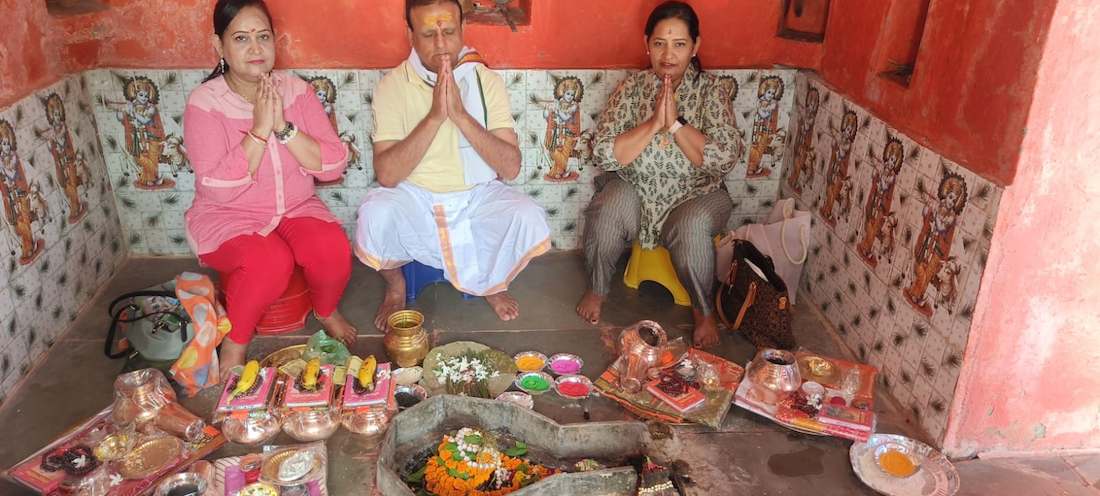
Pind Daan Gaya : When and Where to Do Pind Daan in Gayaji
Pind Daan is a very solemn Hindu ceremony that includes the act of paying respect to one's deceased ancestors. This ancient ceremony not only helps us feel more connected to our ancestors, but it also opens up doors for our own growth, the eradication of bad karma, and the fulfilment of our goals. Gaya in Bihar is regarded as one of the holiest sites in the world to perform Pind Daan. While performing Pind Daan Gaya, it is important to equip yourself with information about its meaning, its significance, the role of pundits, and its associated costs, and this information is listed below.
When to do Pind Daan Gaya
People come to Gaya for pind daan throughout the year however, the most auspicious time to do pind daan in gaya is during Pitrupaksh or shraadh paksh. Pitrupaksh is 15 15-day period that generally falls in September or October. It is believed that during this period, our ancestors came down to earth and whatever offerings we made, it directly reached them. Lacs of people from the world visit Gaya during Pitrupaksh and hence you may face difficulty in getting good accommodation and priest. You can plan your travel to avoid a last-minute rush.
The Importance of Gaya Pind Daan
Spiritual Liberation or Moksha for Departed Souls: One of the ultimate benefits associated with Pind Daan Gaya is the attainment of spiritual liberation or Moksha. By performing this sacred ritual, individuals seek to liberate the souls of their departed ancestors from the cycle of birth and death. It is believed that when the ancestral souls find salvation, they, in turn, bless the performer with their divine grace. For both the living and the dead, the ritual serves as a transforming trip that opens the door to spiritual advancement and freedom from the cycle of rebirth.
Elimination of Bad Karma: Hinduism holds that every action we take leaves an impression on our soul, which is referred to as karma. The accumulation of both positive and negative karma influences our life's circumstances and future experiences. Gaya Pind Daan is considered a powerful means to dissolve negative karmas associated with our lineage.
Seek your Ancestors' Blessings: Performing Pind Daan Gaya is believed to invoke the blessings of our ancestors. It is a profound act of gratitude and reverence towards those who came before us, acknowledging their role in shaping our existence. The blessings bestowed by our ancestors through this ritual can bring protection, guidance, and spiritual support to our lives. Their benevolent presence can help navigate through life's challenges and foster overall well-being.
Fulfillment of Desires: Gaya Pind Daan is believed to have the power to fulfill heartfelt desires and aspirations. It is said that by performing this ritual with sincerity and devotion, one can seek divine intervention and assistance in manifesting their dreams. The act of honouring and appeasing the ancestral souls is believed to generate positive energy and blessings that can aid in the fulfillment of personal and spiritual goals.
Can Daughters Do Gayaji Pind Daan?
Yes, daughters or any female family member can also do the Gaya Pind Daan ritual. It is believed that Sita Mata once did the Pinddaan for her father in law, King Dashrath in Gaya. You will find ladies doing gaya shraadh in and around the temple for their ancestors.
How Many Places One Should Do Pind Daan in Gaya?
During Pitrupaksh, people stay in gaya for 15 days and perform the pind daan for their ancestors at different places. The most important place in gaya for performing pind daan is Vishnupad temple. Those people who wants to complete the pind daan rituals in one day, performs pind daan at 3 places - Vishnupad temple, falguni river and Akshay vat tree. These three places are nearby and it takes around three to four hours to complete the gaya ji pind daan at all these places.
Process of Gayaji pind daan
The process of shraadh or pind daan starts from morning 7 am and goes till evening before sunset. First the person who wants to perform pind daan will take bath at hotel or dharmshala and come to Vishnupad temple. He needs to carry one white dhoti with him which he will wear at the time of puja. Pandit ji will arrange all other materials and puja starts with sankalp in which names of all ancestors is taken. Then the person makes rice balls and one by one offer rice balls which is also called pind to their ancestors. After completing the pind daan ritual, pandit ji will ask to carry the pind/rice balls and put them on the feet of lord Vishnu, Vishnupad.
Cost of Gayaji Pind Daan
The normal charge of gaya ji pind daan is around Rs5000/ for private puja at one place in Vishnupad Temple. In case you want to do pind daan at 3 places- Vishnupad Temple, Falguni River and Akshayvat treee, cost will be Rs7500/. In case one wants to do pind daan in group, the charges are around Rs 500/. The charge includes priest dakshina and material charges, however, inside the Vishnupad temple, priest may ask you to donate some additional amount at time of placing pind on feet of lord Vishnu. It is advisable to pre-book the ritual form some site before going to Gaya as this helps in avoiding negotiations and chances of frauds at the time of puja.
Conclusion
Performing Gayaji Pind Daan is an act of devotion and reverence towards one's ancestors, and the associated cost are a small price to pay for the spiritual benefits and the deep sense of fulfillment that this sacred ritual brings. Ultimately, the value of Gaya Pind Daan lies in the profound connection it establishes with our lineage and the opportunity to honour and seek blessings from our departed ancestors.
FAQs
1. What is cost of pind daan in Gaya? Pind Daan in Gaya costs around ₹5,000 for a private puja at a single place inside the Vishnupad Temple, and ₹7,500 for the complete 3-place vidhi performed at Vishnupad Temple, the Falgu River and the Akshay Vat tree on the same day. Group Pind Daan, where multiple families share a single sankalp, starts at around ₹500 per person. All prices include the priest dakshina and the standard puja samagri.
2. Can Pind Daan in Gaya be performed outside Pitru Paksh? Yes, Pind Daan in Gaya can be performed throughout the year and is not restricted to Pitru Paksh alone. However, the 15-day Pitru Paksh window in September-October is considered the most auspicious, as scripture holds that ancestral atmas descend to receive the offerings directly during these days. Families performing the ritual outside Pitru Paksh face less crowd, better priest availability and easier accommodation, and the scriptural merit of the puja remains the same.
3. Can daughters and daughters-in-law perform Gaya Pind Daan? Yes, daughters, daughters-in-law and any female family member can perform Gaya Pind Daan. Scripture cites Sita Mata, who performed the Pind Daan for her father-in-law King Dashrath at Gaya itself, as the original precedent. Many families today see ladies performing the shraddh at and around the Vishnupad Temple, particularly in cases where the family has no surviving male heir or where the daughter wishes to discharge the ancestral duty personally.
4. How many days does it take to complete Pind Daan in Gaya? The complete 3-place Pind Daan at Vishnupad Temple, the Falgu River and the Akshay Vat tree is performed in a single day and takes 3 to 4 hours from morning till before sunset. Families visiting only during Pitru Paksh sometimes stay in Gaya for the full 15-day window to perform Pind Daan for different ancestors across multiple days. For most families, a single-day visit with overnight stay before and after is sufficient.
5. What should we carry for the Pind Daan ritual in Gaya? The karta who performs the ritual carries one white dhoti to wear at the time of the puja, and the basic details of the ancestors being offered to — names, the family gotra, and the dates of their departure where known. All other materials including the rice for the pind, the samagri and the offering items are arranged by the Pandit ji. A photograph of the deceased ancestor is helpful but not mandatory.
6. Why is Gaya famous for pind daan? Gaya is considered the highest-merit destination for Pind Daan in Sanatani tradition, as Lord Vishnu's own feet at the Vishnupad Temple are the site of the offering. According to the Puranas, Lord Rama performed Pind Daan at Gaya for his father King Dasharatha, which established the city as the foremost tirtha for Shradh.
7. Where to stay in Gaya for pind daan? Gaya has many options for stay near Vishnupad temple. Local pandas also provide accommodation in their own Dhamshalas or houses. Rates of Dhamshalas and house accomodation varies from Rs200 per person to Rs700 per person depending on type of Dharmshala. In case you want luxury stay, you can explore hotels in Bodh Gaya, around 15 kms away from Gaya.
8. What is best time to perform pind daan in Gaya? Best time to perform pind daan in Gaya is during Pitrupkashwhich falls in month of September-October. However, this period is very crowded and if you want less crowded time, please plan December end and January starting. This period is also considered auspicious for pind daan and weather is also cold. Another suitable time during Holi.
9. Should we do Pind Daan in Gaya or in Varanasi — or both? Gaya is considered the highest-merit destination for Pind Daan in Sanatani tradition, as Lord Vishnu's own feet at the Vishnupad Temple are the site of the offering. Varanasi is the preferred destination for families combining Pind Daan with Asthi Visarjan or with Narayan Bali for ancestors who died of unnatural causes. Many families perform Pind Daan at both — once in Gaya and once at the Ganga ghats of Kashi — within the same ancestral-rites trip.
Shashank Mishra
Manager, Pitradev.com
Shashank Mishra comes with over 15 years of experience in religious tourism and organising Vedic rituals and ancestral ceremonies. At Pitradev, he oversees the coordination of Asthi Visarjan, Pind Daan, Shraadh, Grihapravesh, Vastu Shanti Puja, Satyanarayan Katha, Rudrabhishek, and other sacred rites across Varanasi, Prayagraj, Gaya, Bangalore, Hyderabad, Pune, and Mumbai. His deep understanding of Hindu customs across regional traditions — North Indian, Tamil, Telugu, Odia, and Kannada — allows him to guide families through the correct vidhi with care and clarity, whether it is an ancestral ceremony at a tirtha kshetra or a housewarming puja in a metro city.
Latest Blog
- Gand Mool Nakshatra Shanti Puja: Complete Process
- Grihapravesh Muhurat in November and December 2026
- Asthi Visarjan in Varanasi for Pets: Dogs And Cats
- Pind Daan in Varanasi: Guide to Ritual, Process, Cost, Booking
- Mistakes to Avoid During Asthi Visarjan in Varanasi
- How to book satyanarayn puja
- Verified South Indian Purohits in Gaya
- Samvatsarikam in Varanasi: Cost and Vidhi
- Best South Indian Purohits in Kashi Varanasi
- Pind Daan in Varanasi by Telugu Purohit
- Telugu Purohit in Gaya: Pind Daan Packages
- Tripindi Shraadh in Gaya
- Pitradev- Hindi, Tamil, Telugu & Bengali Pandit in Bangalore
- Narayan Bali Puja in Gaya
- Can I Do Pind Daan Within One Year of Death?
- One Day Narayan Bali Puja at Trimbakeshwar
- Asthi Visarjan at Manikarnika Ghat in Kashi Varanasi
- Cost of Asthi Visarjan in Varanasi: Packages and Precautions
- Pandit for Tripindi Shradh in Varanasi: 2026 Dates & Cost
- Pind Daan in Gaya in Pitru Paksha 2026: Dates and Packages
- Vastu Shanti Puja Cost in Pune by North Indian Pandit
- Pitra Dosh: Causes, Symptoms and Remedies — A Complete Guide
- How to Find Genuine Tamil Vadhyars in Kashi Varanasi
- How to Carry Asthi in Flight in India?
- Pind Daan in Gaya by Tamil Iyer: Cost, Packages and Process
- Asthi Visarjan in Srirangapatna from Bangalore — Full Guide
- Send Ashes from Coimbatore to Kashi — Asthi Visarjan Service
- Cost of Asthi Visarjan in Prayagraj by Telugu Pandit
- Asthi Visarjan and Pind Daan in Prayagraj for Odia Families
- North Indian Pandit Bangalore for Annaprashan Puja
- Telugu Grihapravesham Bangalore: 4 Packages Cost & Inclusion
- Cost of Tripindi Shraadh in Varanasi -Pishachmochan Kund
- North Indian Pandit in Pune for Grihapravesh: Package Guide
- Pind Daan in Prayagraj: Cost, Vidhi & Booking Guide-2026
- Narayan Bali Puja in Varanasi — Complete Cost Breakdown for 2026
- Book a Verified North Indian Pandit in Pune: Cost & Packages
- How to Send Asthi to Kashi: A Step-by-Step Guide
- Book Tamil Iyer in Bangalore for Grihapravesham – Complete Guide
- How to Plan 10th 11th and 12th Day Rituals in Varanasi
- Pitru Paksha 2026 – Pind Daan in Prayagraj, Kashi and Gaya
- Pitru Paksha 2026 – Book Online Pind Daan in Varanasi
- Asthi Visarjan in Varanasi for Tamil Families – Complete Guide
- How to Send Asthi (Ashes) from USA to India – Complete Guide
- Narayan Bali Puja in Varanasi – Complete Guide 2026
- Pind Daan in Gaya from Malaysia – Complete Guide
- Pind Pradanam in Varanasi from Malaysia – Complete Guide
- Grihapravesh Puja in Bangalore by Kannada Purohit
- Online Pind Daan in Varanasi for NRIs
- Book Verified Telugu Purohits in Bangalore for Grihapravesham
- Best Ghat for Asthi Visarjan in Varanasi: A Practical Comparison
- Asthi Visarjan in Prayagraj – Complete Guide 2026
- Tripindi Shradh in Varanasi – Complete Guide
- Asthi Visarjan in Varanasi –Best Ghat & Package 2026
- Grihapravesh Puja in Prestige City Sarjapur
- Gaya Ji Pind Daan 2026 – Quick Guide for Planning Your Trip
- Online Puja Booking for Griha Pravesh, Shradh & Satyanarayan
- Pitru Paksha 2026 Dates, Rituals and Pind Daan Guide
- Akshaya Tritiya 2026 (19 April): Best Muhurat for Griha Pravesh
- North Indian Pandit in Bangalore for All Hindu Pujas
- How to Do Asthi Visarjan When You Cannot Travel: Complete Guide
- Asthi Visarjan in Kashi: Complete Guide with Cost & Time
- Griha Pravesh Muhurat 2026: Auspicious Dates & Timings
- Complete Guide to Gaya Pind Daan Ritual, Samagri & Best Time
- Asthi Visarjan By Post in Kashi Varanasi – Complete Guide
- How to Book a Bengali Pandit for Puja: Step-by-Step Process
- Book Verified Pandit for Puja in Bangalore
- Book Verified North Indian Pandit in Hyderabad Online
- Book North Indian Pandit in Bangalore for Satyanarayan Puja
- How to Book a Pandit in Bangalore Online for Puja:Complete Guide
- Find and Book Pandits in Hyderabad for Griha Pravesh Puja Online
- How to Find and Book Experienced Pandit Online for Puja?
- Exploring the History and Origins of Griha Pravesh Puja Rituals
- Top 5 Ancient Places for Gayaji Pind Daan - 2024 Guide
- Significance of Performing Griha Pravesh Puja in Hindu Culture
- How to Choose the Right Pandit for Pind Daan in Gaya
- Why is Pind Daan in Gaya so Famous?
- Where to Find Experienced Pandit for Griha Pravesh Puja Online?
- Cost of Pind Daan in Gaya: Packages, Procedure and How to Book
- Griha Pravesh Puja and Housewarming Ceremony 2024
- How Gaya Pind Daan Brings Closure and Peace to Your Ancestors
- Gayaji Pind Daan: Achieve Eternal Peace for Your Ancestors
- Online Pind daan: Importance, Cost, and Procedure
- Gaya Pind Daan Puja is Performed by an Experienced Pandit ji
- The Sacred Ritual of Brahma Kapal Pind Daan
- A Complete Guide About Pind Daan in India: Update 2023
- Unveiling the Significance of Pind Daan in Gaya
- The Ultimate Guide to Pind Daan Tour Packages
- Where to do Asthi Visarjan in Haridwar?
- Rudrabhishek Pooja Why Hindus Perform Rudrabhishek pooja At home
- Varanasi's Asthi Visarjan: Embracing Life's Eternal Journey
- Unveiling the Sacred Ritual:
- Significance of Asthi Visarjan in Haridwar
- Exploring the Profound Significance of Asthi Visarjan in Kashi
- The Science of Pind Daan:
- What are the rituals of Pind Daan?
- Varanasi Ayodhya Tour Package with Prayagraj
- Pind Daan Puja in Varanasi | Book Your Puja Online
- Prayagraj: The Enchanting Journey of Asthi Visarjan
- Pind Daan Gaya : When and Where to Do Pind Daan in Gayaji
- Exploring the Mystical Rituals of Asthi Visarjan Poojan
- Which are the Best Places to do Pind Daan in Gaya?
- Everything You Need to Know About Rudrabhishek Puja
- Why Is Pind Daan At Gaya Important To Hindus?
- Asthi Visarjan: When to Perform It, Where to Go, and Cost
- Rudra Abhishek Puja's Purpose:
- Ganga Pushkaralu 2023
- Pind daan for people having unnatural deaths
- Is doing pind daan beneficial without self presence of related?