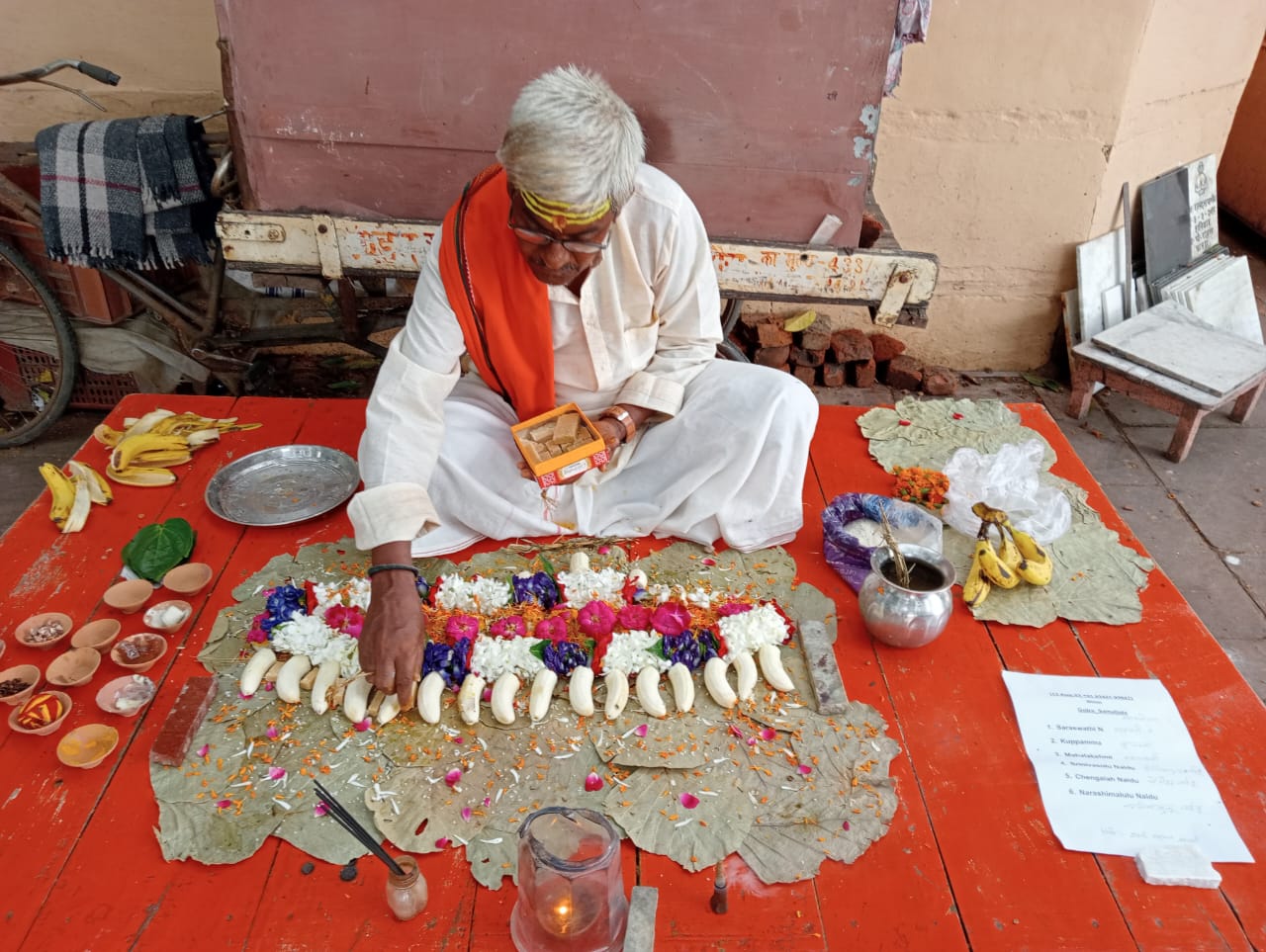
Complete Guide to Gaya Pind Daan Ritual, Samagri & Best Time
Ancestral rituals have always held deep emotional and spiritual importance in Hindu families. They are performed as acts of remembrance, gratitude and responsibility toward previous generations, guided by tradition and family belief.
Among these rituals, Pind Daan is considered one of the most significant. Families often look for clear guidance to understand what the ritual means, why Gaya is important, what is required to perform it correctly and how it can be completed today without confusion or stress.
This guide explains the meaning of Pind Daan, its historical and spiritual connection with Gaya, the ritual process, required samagri, the best time to perform it, how families today manage the ritual while overcoming common challenges and how to book Pind Daan Pandit or purohit.
What Is Pind Daan and Why Is It Performed?
Pind Daan is a Hindu ancestral ritual in which offerings known as pindas (rice balls prepared with specific ritual ingredients) are offered to departed ancestors along with prescribed mantras.
The ritual is traditionally performed to:
Honour and remember ancestors
Fulfil ancestral responsibilities passed through generations
Bring emotional and spiritual closure to the family
It is part of broader Hindu ancestral practices and is performed under the guidance of experienced Pandits, following Vedic customs that may vary slightly based on family lineage.
Why Gaya Holds Special Importance for Pind Daan
Gaya has been associated with ancestral rituals for centuries and is mentioned in Hindu scriptures as a sacred place for performing Pind Daan.
The Falgu River and the long-standing tradition of Pandas maintaining family genealogy records make Gaya unique. Many families perform Pind Daan here based on guidance from elders and Pandits, especially when ancestral rituals remain incomplete.
Because of this deep historical and spiritual significance, Gaya is often chosen even when families live far away or across generations.
When and Who Should Perform Pind Daan
Families usually consider performing Pind Daan when:
A parent, grandparent or close ancestor has passed away
Elders advise completing ancestral duties
Certain ancestral rituals were not performed earlier
Traditionally, the ritual is performed by a male family member. However, guidance may differ based on family circumstances and Pandits advise accordingly with respect to tradition.
Is There a Specific Time or Muhurat for Pind Daan?
Families often ask whether there is a fixed muhurat or best time for performing Pind Daan. Traditionally, Pind Daan is considered a karma-based ancestral ritual, which means it is not restricted to a single auspicious hour like some other ceremonies.
However, certain periods are traditionally regarded as more suitable for ancestral rituals.
Pitru Paksha (Shradh Paksha)
Pitru Paksha is widely considered the most appropriate period for ancestral rituals, including Pind Daan. It is observed once every year and is dedicated specifically to ancestors.
Amavasya and Other Tithis
Apart from Pitru Paksha, Amavasya (new moon day) and certain lunar dates such as Panchami or Ashtami are also commonly chosen, depending on family tradition and priest guidance.
Can Pind Daan Be Performed on Other Days?
Yes. Pind Daan can be performed throughout the year if there is a genuine reason or family guidance to do so.
Traditional understanding:
For ancestral rituals, intent and correctness of the ritual are considered more important than selecting an exact auspicious hour.
Talk to us for clear guidance on performing Pind Daan in Gaya
Samagri Required for Pind Daan
Families often want to know what materials are required before planning the ritual. While exact requirements may vary slightly, commonly used samagri includes:
Rice and barley
Black sesame seeds (til)
Ghee
Kush grass
Sacred water from the river
Other ritual items arranged as per custom
Arranging the correct samagri is essential to ensure the ritual is performed as prescribed.
How Pind Daan Is Traditionally Performed in Gaya
When performed traditionally:
A Panda or Pandit guides the family at the sacred location
Pindas are prepared using prescribed materials
Mantras are chanted while offerings are made
Rituals are completed at the designated site near the river
The duration of the ritual depends on family tradition and the number of ancestors involved.
Common Challenges Families Face Today
While the ritual itself is traditional, many families face modern challenges such as:
Difficulty travelling due to age, health or distance
Uncertainty about whom to trust at the ritual location
Fear of unclear or hidden costs
Confusion around arrangements and materials
Language barriers when communicating with priests
Emotional stress during an already sensitive time
These challenges often create hesitation, even when families genuinely wish to perform the ritual.
How Pitradev Supports Families with Experienced Pandits and Clear Guidance
Pitradev is a trusted online pandit booking platform that supports families by connecting them with 8000+ experienced and verified Vedic Pandits who have been performing ancestral rituals for many years. The focus is on providing clear guidance, correct procedures and reliable coordination so families can perform Pind Daan with confidence and peace of mind.
This depth of experience helps ensure rituals are conducted properly, traditions are respected and families receive the clarity and support they need throughout the process.
How Pitradev Bridges These Gaps
Pitradev helps families by:
Explaining the ritual clearly before it begins
Sharing expense details in advance, avoiding hidden costs
Coordinating experienced Pandits and required samagri
Assisting families who cannot travel due to unavoidable reasons
This approach removes uncertainty and allows families to focus on the purpose of the ritual.
End-to-End Support for the Entire Ritual Process
Pind Daan involves more than the ritual itself. Families often need help with planning, coordination and on-ground arrangements.
Pitradev provides end-to-end support that includes:
Guidance before the ritual
Arrangement of experienced Pandits
Management of Samagri
On-ground coordination at Gaya
Support when the ritual is performed on behalf of the family
This ensures families are not left managing multiple things on their own during a sensitive time.
When Families Are Unable to Travel for Pind Daan (Online Pind Daan)
Many families wish to perform Pind Daan in Gaya because the place holds deep personal and ancestral significance for them. However, they are sometimes unable to travel due to health issues, age, distance, work commitments or international residence. In such genuine situations, families often look for a reliable way to complete the ritual correctly and with peace of mind, even when physical presence is not possible.
Common Concerns Families Have
Will the ritual be performed properly if we are not present?
Who will perform the ritual on our behalf at Gaya?
How will we know the ritual is actually being conducted as per tradition?
Can we stay connected to the ritual while it is being performed?
How Online Pind Daan Works
In genuine cases where travel is not possible, online pind daan allows the ritual to be performed on behalf of the family at Gaya by an experienced and verified Pandit, following proper Vedic procedures.
The entire ritual is conducted at the sacred location and families are connected to the ceremony through a video call, allowing them to witness the process and remain involved even when they cannot be physically present. All samagri and arrangements are handled respectfully and families are guided clearly before and during the ritual.
For ancestral rituals, intent, sincerity and correctness of the process are considered more important than physical presence alone.
Connect with us to understand how Pind Daan can be performed when travel is not possible
Structured Pricing Through Pind Daan Packages
One of the biggest concerns families have is the fear of unexpected expenses. Traditionally, gaya pind daan costs were often unclear until families reached the ritual location
Pitradev offers clearly defined packages that:
Include priest dakshina and essential ritual materials
Are explained in advance
Help families plan confidently without pressure
There are no hidden costs and families receive transparency at every step.
Get complete clarity on the Pind Daan process, packages and arrangements in Gaya
Pandits Available in Multiple Regional Languages
Language comfort plays an important role in rituals. Pandits associated with Pitradev are available to perform rituals in Tamil, Hindi, Marathi, Telugu, Kannada, Bengali and more, depending on availability and location.
This helps families feel understood and comfortable, especially when travelling from different regions or coordinating remotely.
Why Families Choose Pitradev for Online Puja Booking?
Families trust Pitradev because of its experience and approach:
Serving families for over a decade
145000+ poojas completed
8000+ verified Vedic Pandits
Support for 700+ types of poojas
Multi-language Pandit availability
Pick-up and drop support where required
24/7 guidance and coordination
All services are provided without fear-based claims or pressure.
Final Thoughts
Gaya Pind Daan is not just a ritual; it is a responsibility carried with emotion and respect. Understanding its meaning, choosing the right time, arranging the correct samagri and having clear support allows families to fulfil this duty with peace of mind.
A transparent, end-to-end approach helps bridge the gap between tradition and modern realities without compromising on value
Frequently Asked Questions
What is Gaya Pind Daan and why is it important?
Gaya Pind Daan is a Hindu ancestral ritual performed to offer pindas (rice offerings) to departed ancestors. It is believed to help fulfil ancestral duties and bring spiritual peace to the soul. Gaya is considered especially sacred for this ritual due to its historical and spiritual association with ancestral rites.
When is the best time to perform Pind Daan in Gaya?
Pind Daan can be performed throughout the year based on genuine need. However, Pitru Paksha is widely regarded as the most appropriate period for ancestral rituals. Amavasya and certain lunar tithis are also commonly chosen based on Pandit guidance and family tradition.
Who can perform Pind Daan in Gaya?
Traditionally, Pind Daan is performed by a male family member such as a son or close relative. However, depending on family circumstances, daughters or other family members may also perform the ritual under proper Pandit guidance.
What is included in Gaya Pind Daan cost?
Gaya Pind Daan cost usually includes Pandit dakshina, essential samagri, ritual coordination at the sacred location, and other required arrangements. Structured packages help families understand expenses in advance and avoid confusion during the ritual.
Can Pind Daan be performed if the family cannot travel to Gaya?
Yes. In genuine situations where travel is not possible, Pitradev facilitates online Pind Daan in Gaya through experienced and verified Pandits. The ritual is performed at the sacred location following proper Vedic procedure, and families are connected through live video updates for clarity and peace of mind.
How does Pitradev help families perform Pind Daan in Gaya smoothly?
Pitradev supports families by offering clear ritual guidance, access to 8000+ experienced Vedic Pandits, transparent package details, multi-language support, and coordination of required samagri and arrangements. This structured approach allows families to complete the ritual respectfully without hidden costs or confusion.
Latest Blog
- Pind Daan for Dogs in Varanasi: Complete Rituals at Kashi
- Things To Know Before Booking A Pandit for Satyanarayan Puja
- How To Choose Right Muhurat for Griha Pravesh for Your New Home
- 7 Key Rituals and Stages of Pind Daan in Gaya
- Gand Mool Nakshatra Shanti Puja: Complete Process
- Grihapravesh Muhurat in November and December 2026
- Asthi Visarjan in Varanasi for Pets: Dogs And Cats
- Pind Daan in Varanasi: Guide to Ritual, Process, Cost, Booking
- Mistakes to Avoid During Asthi Visarjan in Varanasi
- How to book satyanarayn puja
- Verified South Indian Purohits in Gaya
- Samvatsarikam in Varanasi: Cost and Vidhi
- Best South Indian Purohits in Kashi Varanasi
- Pind Daan in Varanasi by Telugu Purohit
- Telugu Purohit in Gaya: Pind Daan Packages
- Tripindi Shraadh in Gaya
- Pitradev- Hindi, Tamil, Telugu & Bengali Pandit in Bangalore
- Narayan Bali Puja in Gaya
- Can I Do Pind Daan Within One Year of Death?
- One Day Narayan Bali Puja at Trimbakeshwar
- Asthi Visarjan at Manikarnika Ghat in Kashi Varanasi
- Cost of Asthi Visarjan in Varanasi: Packages and Precautions
- Pandit for Tripindi Shradh in Varanasi: 2026 Dates & Cost
- Pind Daan in Gaya in Pitru Paksha 2026: Dates and Packages
- Vastu Shanti Puja Cost in Pune by North Indian Pandit
- Pitra Dosh: Causes, Symptoms and Remedies — A Complete Guide
- How to Find Genuine Tamil Vadhyars in Kashi Varanasi
- How to Carry Asthi in Flight in India?
- Pind Daan in Gaya by Tamil Iyer: Cost, Packages and Process
- Asthi Visarjan in Srirangapatna from Bangalore — Full Guide
- Send Ashes from Coimbatore to Kashi — Asthi Visarjan Service
- Cost of Asthi Visarjan in Prayagraj by Telugu Pandit
- Asthi Visarjan and Pind Daan in Prayagraj for Odia Families
- North Indian Pandit Bangalore for Annaprashan Puja
- Telugu Grihapravesham Bangalore: 4 Packages Cost & Inclusion
- Cost of Tripindi Shraadh in Varanasi -Pishachmochan Kund
- North Indian Pandit in Pune for Grihapravesh: Package Guide
- Pind Daan in Prayagraj: Cost, Vidhi & Booking Guide-2026
- Narayan Bali Puja in Varanasi — Complete Cost Breakdown for 2026
- Book a Verified North Indian Pandit in Pune: Cost & Packages
- How to Send Asthi to Kashi: A Step-by-Step Guide
- Book Tamil Iyer in Bangalore for Grihapravesham – Complete Guide
- How to Plan 10th 11th and 12th Day Rituals in Varanasi
- Pitru Paksha 2026 – Pind Daan in Prayagraj, Kashi and Gaya
- Pitru Paksha 2026 – Book Online Pind Daan in Varanasi
- Asthi Visarjan in Varanasi for Tamil Families – Complete Guide
- How to Send Asthi (Ashes) from USA to India – Complete Guide
- Narayan Bali Puja in Varanasi – Complete Guide 2026
- Pind Daan in Gaya from Malaysia – Complete Guide
- Pind Pradanam in Varanasi from Malaysia – Complete Guide
- Grihapravesh Puja in Bangalore by Kannada Purohit
- Online Pind Daan in Varanasi for NRIs
- Book Verified Telugu Purohits in Bangalore for Grihapravesham
- Best Ghat for Asthi Visarjan in Varanasi: A Practical Comparison
- Asthi Visarjan in Prayagraj – Complete Guide 2026
- Tripindi Shradh in Varanasi – Complete Guide
- Asthi Visarjan in Varanasi –Best Ghat & Package 2026
- Grihapravesh Puja in Prestige City Sarjapur
- Gaya Ji Pind Daan 2026 – Quick Guide for Planning Your Trip
- Online Puja Booking for Griha Pravesh, Shradh & Satyanarayan
- Pitru Paksha 2026 Dates, Rituals and Pind Daan Guide
- Akshaya Tritiya 2026 (19 April): Best Muhurat for Griha Pravesh
- North Indian Pandit in Bangalore for All Hindu Pujas
- How to Do Asthi Visarjan When You Cannot Travel: Complete Guide
- Asthi Visarjan in Kashi: Complete Guide with Cost & Time
- Griha Pravesh Muhurat 2026: Auspicious Dates & Timings
- Complete Guide to Gaya Pind Daan Ritual, Samagri & Best Time
- Asthi Visarjan By Post in Kashi Varanasi – Complete Guide
- How to Book a Bengali Pandit for Puja: Step-by-Step Process
- Book Verified Pandit for Puja in Bangalore
- Book Verified North Indian Pandit in Hyderabad Online
- Book North Indian Pandit in Bangalore for Satyanarayan Puja
- How to Book a Pandit in Bangalore Online for Puja:Complete Guide
- Find and Book Pandits in Hyderabad for Griha Pravesh Puja Online
- How to Find and Book Experienced Pandit Online for Puja?
- Exploring the History and Origins of Griha Pravesh Puja Rituals
- Top 5 Ancient Places for Gayaji Pind Daan - 2024 Guide
- Significance of Performing Griha Pravesh Puja in Hindu Culture
- How to Choose the Right Pandit for Pind Daan in Gaya
- Why is Pind Daan in Gaya so Famous?
- Where to Find Experienced Pandit for Griha Pravesh Puja Online?
- Cost of Pind Daan in Gaya: Packages, Procedure and How to Book
- Griha Pravesh Puja and Housewarming Ceremony 2024
- How Gaya Pind Daan Brings Closure and Peace to Your Ancestors
- Gayaji Pind Daan: Achieve Eternal Peace for Your Ancestors
- Online Pind daan: Importance, Cost, and Procedure
- Gaya Pind Daan Puja is Performed by an Experienced Pandit ji
- The Sacred Ritual of Brahma Kapal Pind Daan
- A Complete Guide About Pind Daan in India: Update 2023
- Unveiling the Significance of Pind Daan in Gaya
- The Ultimate Guide to Pind Daan Tour Packages
- Where to do Asthi Visarjan in Haridwar?
- Rudrabhishek Pooja Why Hindus Perform Rudrabhishek pooja At home
- Varanasi's Asthi Visarjan: Embracing Life's Eternal Journey
- Unveiling the Sacred Ritual:
- Significance of Asthi Visarjan in Haridwar
- Exploring the Profound Significance of Asthi Visarjan in Kashi
- The Science of Pind Daan:
- What are the rituals of Pind Daan?
- Varanasi Ayodhya Tour Package with Prayagraj
- Pind Daan Puja in Varanasi | Book Your Puja Online
- Prayagraj: The Enchanting Journey of Asthi Visarjan
- Pind Daan Gaya : When and Where to Do Pind Daan in Gayaji
- Exploring the Mystical Rituals of Asthi Visarjan Poojan
- Which are the Best Places to do Pind Daan in Gaya?
- Everything You Need to Know About Rudrabhishek Puja
- Why Is Pind Daan At Gaya Important To Hindus?
- Asthi Visarjan: When to Perform It, Where to Go, and Cost
- Rudra Abhishek Puja's Purpose:
- Ganga Pushkaralu 2023
- Pind daan for people having unnatural deaths
- Is doing pind daan beneficial without self presence of related?