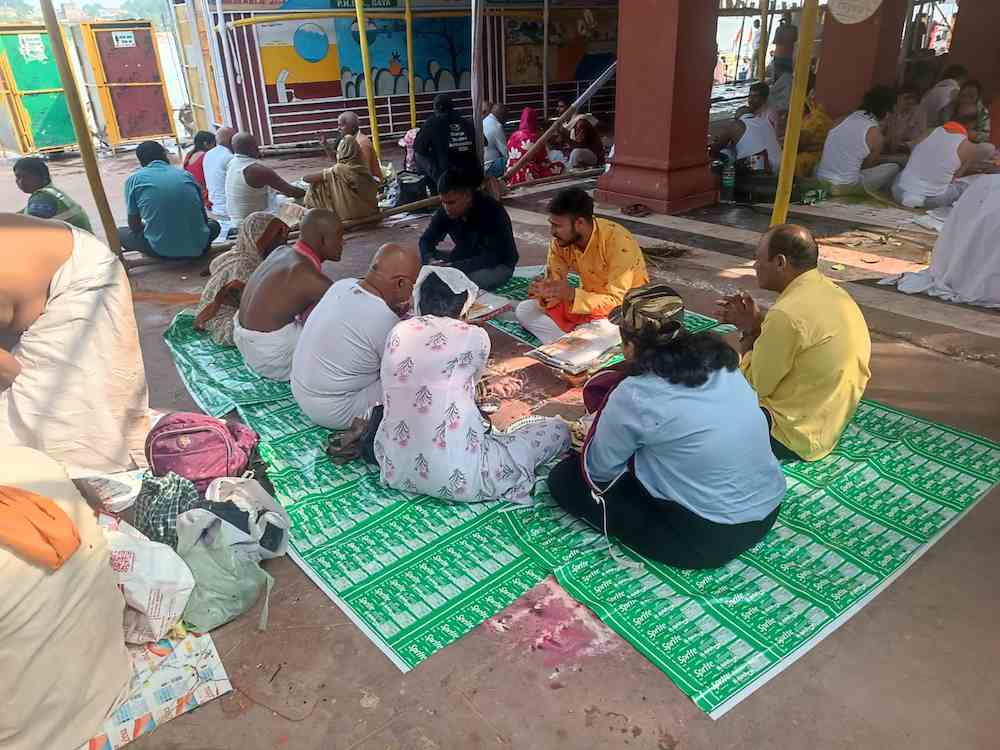
Pind Daan in Gaya by Odia Pandit | Odia Shraddha Paddhati
TL;DR: Pitradev arranges Pind Daan in Gaya by an Odia-speaking pandit who follows the Odia Shraddha Paddhati — with the correct sankalp pronunciation, Utkala Pradesh reference, and Odia Brahmin customs. Four packages: ₹5,000 (Vishnupad Mandir), ₹7,500 (3 places), ₹11,000 (4 places), and ₹25,000 (3-day complete Gaya Shradh at all 45 vedis). Most Odia families first visit Prayagraj for Asthi Bisarjan and then travel to Gaya for the final Pind Daan.
Why Odia Families Travel to Gaya for Pind Daan
The connection between Odisha and Gaya runs deep — deeper than geography, deeper than convenience. For centuries, Odia families have made the journey from Bhubaneswar, Cuttack, Puri, Berhampur, Sambalpur, and Rourkela to perform Pind Daan at the Vishnupad Mandir in Gaya, believing it to be the most sacred act they can perform for their departed ancestors.
While Odisha has its own sacred sites for ancestral rites — Nabhi Gaya in Jajpur, the Bindusagar in Bhubaneswar, and the ghats of Puri — the Puranas consistently declare Gaya in Bihar as the supreme tirtha for Pind Daan. The Vayu Purana states that Pind Daan performed at Gaya liberates seven generations of ancestors. Lord Rama himself performed Pind Daan at Gaya for King Dasharatha. No other tirtha carries this scriptural finality.
The challenge Odia families face at Gaya is the same one they face at every pilgrimage site outside Odisha — finding a pandit who understands the Odia Shraddha Paddhati, who pronounces the sankalp correctly in the Odia tradition, and who does not substitute the North Indian vidhi in place of your family’s customs.
Pitradev addresses this by arranging dedicated Odia-speaking pandits in Gaya who perform the Pind Daan as per the Odia Brahmin Shraddha Paddhati — not a Hindi pandit who speaks basic Odia, but a purohit who knows the distinction between the Odia tradition and the North Indian one.
The Odia Shraddha Paddhati — What Makes It Different
Many families assume that Pind Daan is the same everywhere, regardless of the tradition. This is not accurate. The Odia Shraddha Paddhati has specific elements that distinguish it from the North Indian Shraddha Paddhati commonly followed in Gaya:
The Sankalp reference. In the Odia tradition, the sankalp includes a reference to “Utkala Pradesh” (the historical name for Odisha) and uses the Odia month name. A North Indian pandit performing the same sankalp will use generic references or North Indian geographical terms, which changes the specificity of the invocation.
Gotra pronunciation. Odia Brahmin gotras have specific pronunciations that differ from their Hindi equivalents. An Odia pandit pronounces these correctly because he is from the same tradition. A Hindi pandit may mispronounce or simplify the gotra, which affects the accuracy of the sankalp.
Pinda placement. In the Odia tradition, the pinda (rice ball) is typically placed on a banana leaf or peepal leaf. The specific leaf used, the direction of placement, and the accompanying mantras follow the Odia custom.
Dashaha customs. Odia families observe specific post-death customs (Dashaha) that influence the timing and form of the Gaya Pind Daan. An Odia pandit understands these customs and can advise the family on the correct sequence.
Shraddha Barsika connection. The annual death anniversary ceremony in the Odia tradition is called Shraddha Barsika. Many Odia families plan their Gaya Pind Daan trip after the first Shraddha Barsika is completed, and the Odia pandit understands this sequence and its requirements.
These are not minor differences. For a family that has observed the Odia Shraddha Paddhati at home for generations, having the same paddhati followed at Gaya makes the ceremony feel authentic and complete.
The Traditional Journey — Prayagraj First, Then Gaya
Most Odia families follow a specific pilgrimage sequence when performing ancestral rites:
First — Prayagraj (Triveni Sangam)
The journey typically begins at Prayagraj, where the family performs Asthi Bisarjan (immersion of ashes) and Pind Daan at the Triveni Sangam. Prayagraj is called Tirth Raj — the king of all tirthas — and performing the first offering here is the traditional opening of the ancestral-rites pilgrimage.
For Odia families, Prayagraj holds a special connection because of the Sangam — the meeting of three rivers mirrors the Odia reverence for water bodies and confluences. An Odia-speaking pandit is available at Prayagraj through Pitradev, and the Asthi Bisarjan and Pind Daan can be combined on the same day at ₹7,000.
Second — Gaya (Vishnupad Mandir)
From Prayagraj, the family travels to Gaya (approximately 350 km, 6 to 7 hours by road, or via train connection through Mughal Sarai/Pt. Deen Dayal Upadhyaya Junction). The Pind Daan at Vishnupad Mandir, Akshayvat, Falgu River, and Pret Shila completes the ancestral-rites journey. This is the culmination — the final offering after which the ancestors are considered permanently liberated.
Some families also add Pind Daan in Varanasi to this trip, making it a Prayagraj → Varanasi → Gaya sequence. However, if time is limited, the Prayagraj → Gaya combination is the most common route for Odia families, as Gaya is the final and most important destination.
Pind Daan Packages in Gaya by Odia Pandit
Pitradev offers 4 packages for Pind Daan in Gaya by an Odia-speaking pandit. The vidhi follows the Odia Shraddha Paddhati in every package.
Package 1: Pind Daan at Vishnupad Mandir — ₹5,000
Pind Daan at the most important and central place for Gaya Shradh. The ritual includes the sankalp with name, gotra, and Utkala Pradesh reference, offering of pinds, and Vedic prayers by the Odia pandit.
Suited for families who wish to perform the rite at the single most significant location in Gaya.
Package 2: Pind Daan at Three Places — ₹7,500 (Most Popular)
Pind Daan at 3 sacred locations:
- Vishnupad Mandir
- Akshayvat (the immortal banyan tree)
- Falgu River
This is the package most commonly chosen by Odia families visiting Gaya for the first time, as it covers the core sacred sites in a single day.
Package 3: Pind Daan at Four Places — ₹11,000
The most comprehensive one day package covering:
- Vishnupad Mandir
- Akshayvat
- Falgu River
- Pret Shila
Pret Shila is where departed souls are released from the preta state. Adding this completes the traditional Gaya Shradh in its fullest single-day form.
Package 4: Complete 3-Day Gaya Shradh at All 45 Vedis — ₹25,000
The most comprehensive Gaya Shradh package, covering Pind Daan at all 45 sacred vedis across the Gaya Kshetra over 3 days.
Day 1: Falgu River, Vishnupad Mandir, and all Pad Vedis (Rudra Pad, Vishnu Pad, Surya Pad, etc.) — 2 to 3 hours.
Day 2: Pret Shila, Ramshila, and surrounding vedis — 5 to 6 hours.
Day 3: Matangwapi, Vaitarani, Mangla Gauri Temple, Akshayvat, and remaining vedis — 5 to 6 hours. Concludes with Saiya Daan, Gau Daan, Brahmin Bhojan, and Suphala (formal declaration that the complete Gaya Shradh is finished).
Includes priest for all 3 days, all samagri, all daans, and Brahmin Bhojan. Accommodation, travel, and meals not included.
All packages include: Odia-speaking pandit, all puja samagri, pandit dakshina. No hidden charges.
Two Types of Pind Daan — Which Applies to Your Family
If the departed passed away within one year and the Shraddha Barsika (first annual shradh) has not been completed — Asthi Sanchay Pind Daan with 3 pinds is performed for the deceased person only. Tirth Shradh for all ancestors should not be done until the Barsika is complete.
If the departed passed away more than one year ago and the Shraddha Barsika has been completed — Tirth Shradh Pind Daan with 17 pinds is performed for all ancestors in the family. This is the full ancestral Pind Daan that Gaya is most sacred for.
The Odia pandit determines which type applies based on the information you share at the time of booking.
How to Plan the Trip from Odisha
From Bhubaneswar and Cuttack:
Direct trains to Gaya are available from Bhubaneswar (approximately 16 to 18 hours). Common routes go via Jamshedpur or Kharagpur. Flights to Gaya via Kolkata or Delhi are faster. Many Odia families take the Bhubaneswar → Prayagraj train first, perform Asthi Bisarjan at Triveni Sangam, and then travel to Gaya by train or road.
From Puri:
Trains from Puri to Gaya are available via Bhubaneswar. The journey takes approximately 18 to 20 hours.
From Rourkela and Sambalpur:
Trains via Jharsuguda or Bilaspur to Gaya Junction. Journey time approximately 12 to 14 hours.
From Berhampur (Brahmapur):
Trains to Gaya via Bhubaneswar or via Visakhapatnam-Howrah route. Journey time approximately 18 to 20 hours.
From Bangalore, Hyderabad (Odia families settled there):
Fly to Gaya via Delhi or Kolkata. Alternatively, fly to Varanasi (direct flights from Bangalore) and travel to Gaya by road (approximately 250 km, 5 to 6 hours).
The most common Odia family itinerary:
Day 1: Arrive Prayagraj. Asthi Bisarjan and Pind Daan at Triveni Sangam.
Day 2: Travel from Prayagraj to Gaya (6 to 7 hours by road or train).
Day 3: Pind Daan at Gaya — Vishnupad Mandir and other sacred places.
Day 4: Return journey to Odisha.
This 4-day trip covers both Prayagraj and Gaya — the two most important destinations for Odia families performing ancestral rites.
Accommodation in Gaya:
Hotels and dharamshalas near Vishnupad Temple. Rates range from ₹200 to ₹700 per person in dharamshalas. Hotels in Bodh Gaya (15 km away) offer more comfortable stays. During Pitru Paksha (September-October), book accommodation 3 to 4 weeks in advance.
For Odia Families Who Cannot Travel
If travelling to Gaya is not possible — due to age, health, distance, or work — Pitradev arranges the complete Pind Daan on your behalf at Vishnupad Mandir.
You share the names, gotra, and details of the departed ancestors. The Odia pandit performs the complete ceremony at Gaya following the Odia Shraddha Paddhati. Photos and videos are shared after completion. A live WhatsApp video call can also be arranged during the puja.
The charges for online Pind Daan are the same as in-person packages.
This service is especially valuable for:
- Senior Odia citizens who cannot travel
- Odia NRI families in USA, UK, Gulf, Singapore, and Malaysia
- Working professionals in Bangalore, Hyderabad, and Pune who cannot take extended leave
Precautions for Odia Families at Gaya
Beware of touts at Gaya station. Auto drivers and agents will offer to “arrange” the Pind Daan. They take commission and refer random pandits who may not know the Odia Shraddha Paddhati. Pre-book before you travel.
Verify the pandit speaks Odia, not just Hindi. Many local pandits claim to serve Odia families but perform the ceremony in the North Indian tradition with a few Odia words thrown in. A genuine Odia pandit will take the sankalp with the Utkala Pradesh reference and follow the Odia customs throughout.
Do not engage with random pandas inside Vishnupad Temple. If you already have a booking with Pitradev, stay with your assigned pandit.
Carry ancestor details in writing. Bring names, gotra, and dates of passing of all ancestors written in a note. If you have the details in Odia script, that is perfectly fine — the Odia pandit can read it.
What You Need to Carry
- White dhoti and gamcha — 1 per person
- Ashes of the departed in a container (if combining with Asthi Bisarjan)
- Names and gotra of all departed ancestors written on a note
All puja samagri is arranged by the pandit. Nothing needs to be carried from Odisha.
How to Book
- Contact Pitradev on WhatsApp or phone
- Mention that you need an Odia pandit (Oriya pandit) in Gaya
- Share the details of the departed — names, gotra, and date of passing
- Choose your package — ₹5,000, ₹7,500, ₹11,000, or ₹25,000
- If combining with Prayagraj, mention that as well — Pitradev coordinates both cities
- Confirm your date and receive booking confirmation
Advance booking of at least 5 to 7 days is recommended. During Pitru Paksha, book 2 to 3 weeks in advance.
Conclusion
For Odia families, performing Pind Daan at Gaya is the most sacred way to honour departed ancestors and to complete the Pitra Rin that every descendant carries. The journey from Odisha — whether from Bhubaneswar, Cuttack, Puri, or from cities like Bangalore and Hyderabad where Odia families have settled — deserves a pandit who knows the Odia Shraddha Paddhati, who pronounces the gotra and sankalp correctly, and who performs the vidhi as your family has followed it for generations.
With Pitradev, a dedicated Odia pandit is available in Gaya with packages from ₹5,000 to ₹25,000. The sankalp follows the Odia tradition, the vidhi is complete, and the price is fixed with no hidden charges. Whether you visit Gaya directly or follow the traditional Prayagraj → Gaya route, Pitradev coordinates every step of the journey.
Book your date and give your ancestors the liberation they are owed at the holiest place for Shradh.
Frequently Asked Questions
1. Is an Odia pandit available in Gaya for Pind Daan?
Yes. Pitradev has a dedicated Odia-speaking pandit in Gaya who performs the Pind Daan following the Odia Shraddha Paddhati. The sankalp includes the Utkala Pradesh reference and the correct Odia gotra pronunciation.
2. What is the cost of Pind Daan in Gaya by Odia pandit?
Pitradev offers 4 packages: ₹5,000 at Vishnupad Mandir (1 place), ₹7,500 at 3 places, ₹11,000 at 4 places, and ₹25,000 for the complete 3-day Gaya Shradh at all 45 vedis. All packages include the Odia pandit, all puja samagri, and pandit dakshina.
3. Should Odia families visit Prayagraj before Gaya?
Traditionally, yes. Most Odia families first visit Prayagraj for Asthi Bisarjan at Triveni Sangam and then travel to Gaya for the final Pind Daan. However, going directly to Gaya is also acceptable if time is limited. Gaya is the final and most important destination.
4. Can Pind Daan in Gaya be done online for Odia families?
Yes. Pitradev performs the complete ceremony on your behalf at Vishnupad Mandir with an Odia pandit following the Odia Shraddha Paddhati. Photos and videos are shared, and a live WhatsApp video call can be arranged. The charges are the same as in-person packages.
5. How to reach Gaya from Bhubaneswar or Cuttack?
Direct trains from Bhubaneswar to Gaya are available (approximately 16 to 18 hours). Flights via Kolkata or Delhi are faster. Many families take a train to Prayagraj first, perform Asthi Bisarjan, and then travel to Gaya by road or train (6 to 7 hours).
6. What is the difference between Odia Shraddha Paddhati and North Indian Shraddha Paddhati?
The Odia Shraddha Paddhati includes specific elements like the Utkala Pradesh reference in the sankalp, Odia gotra pronunciation, pinda placement on banana or peepal leaf, and Dashaha customs. A North Indian pandit follows the Hindi-Sanskrit tradition which differs in these details. For Odia families, having a pandit who knows the Odia paddhati ensures the ceremony feels authentic and complete.
Shashank Mishra
Manager, Pitradev.com
Shashank Mishra comes with over 15 years of experience in religious tourism and organising Vedic rituals and ancestral ceremonies. At Pitradev, he oversees the coordination of Asthi Visarjan, Pind Daan, Shraadh, Grihapravesh, Vastu Shanti Puja, Satyanarayan Katha, Rudrabhishek, and other sacred rites across Varanasi, Prayagraj, Gaya, Bangalore, Hyderabad, Pune, and Mumbai.
Latest Blog
- Pind Daan in Gaya by Odia Pandit | Odia Shraddha Paddhati
- Vastu Shanti Puja in Pune | 6 Mandals, 2 Pandits | ₹15000
- Gaya Pind Daan vs Varanasi Pind Daan
- Satyanarayan Katha in Pune by North Indian Pandit
- Odia Pandit Prayagraj | Asthi Bisarjan & Pind Daan Same Day
- How to Book Asthi Visarjan in Kashi Online
- Book Pandit Services Online A Complete Step by Step Guide
- Book Verified Pandit Ji in Bangalore for Any Puja Easy Guide
- How to Book a Vastu Pujan Griha Pravesh Puja for Your New Home
- How to Book Pind Daan in Gaya Online Complete Guide
- Pind Daan in Varanasi After Pitru Paksha
- Pind Daan for Dogs in Varanasi: Complete Rituals at Kashi
- Things To Know Before Booking A Pandit for Satyanarayan Puja
- How To Choose Right Muhurat for Griha Pravesh for Your New Home
- 7 Key Rituals and Stages of Pind Daan in Gaya
- Gand Mool Nakshatra Shanti Puja: Complete Process
- Grihapravesh Muhurat in November and December 2026
- Asthi Visarjan in Varanasi for Pets: Dogs And Cats
- Pind Daan in Varanasi: Guide to Ritual, Process, Cost, Booking
- Mistakes to Avoid During Asthi Visarjan in Varanasi
- How to book satyanarayn puja
- Verified South Indian Purohits in Gaya
- Samvatsarikam in Varanasi: Cost and Vidhi
- Best South Indian Purohits in Kashi Varanasi
- Pind Daan in Varanasi by Telugu Purohit
- Telugu Purohit in Gaya: Pind Daan Packages
- Tripindi Shraadh in Gaya
- Pitradev- Hindi, Tamil, Telugu & Bengali Pandit in Bangalore
- Narayan Bali Puja in Gaya
- Can I Do Pind Daan Within One Year of Death?
- One Day Narayan Bali Puja at Trimbakeshwar
- Asthi Visarjan at Manikarnika Ghat in Kashi Varanasi
- Cost of Asthi Visarjan in Varanasi: Packages and Precautions
- Pandit for Tripindi Shradh in Varanasi: 2026 Dates & Cost
- Pind Daan in Gaya in Pitru Paksha 2026: Dates and Packages
- Vastu Shanti Puja Cost in Pune by North Indian Pandit
- Pitra Dosh: Causes, Symptoms and Remedies — A Complete Guide
- How to Find Genuine Tamil Vadhyars in Kashi Varanasi
- How to Carry Asthi in Flight in India?
- Pind Daan in Gaya by Tamil Iyer: Cost, Packages and Process
- Asthi Visarjan in Srirangapatna from Bangalore — Full Guide
- Send Ashes from Coimbatore to Kashi — Asthi Visarjan Service
- Cost of Asthi Visarjan in Prayagraj by Telugu Pandit
- Asthi Visarjan and Pind Daan in Prayagraj for Odia Families
- North Indian Pandit Bangalore for Annaprashan Puja
- Telugu Grihapravesham Bangalore: 4 Packages Cost & Inclusion
- Cost of Tripindi Shraadh in Varanasi -Pishachmochan Kund
- North Indian Pandit in Pune for Grihapravesh: Package Guide
- Pind Daan in Prayagraj: Cost, Vidhi & Booking Guide-2026
- Narayan Bali Puja in Varanasi — Complete Cost Breakdown for 2026
- Book a Verified North Indian Pandit in Pune: Cost & Packages
- How to Send Asthi to Kashi: A Step-by-Step Guide
- Book Tamil Iyer in Bangalore for Grihapravesham – Complete Guide
- How to Plan 10th 11th and 12th Day Rituals in Varanasi
- Pitru Paksha 2026 – Pind Daan in Prayagraj, Kashi and Gaya
- Pitru Paksha 2026 – Book Online Pind Daan in Varanasi
- Asthi Visarjan in Varanasi for Tamil Families – Complete Guide
- How to Send Asthi (Ashes) from USA to India – Complete Guide
- Narayan Bali Puja in Varanasi – Complete Guide 2026
- Pind Daan in Gaya from Malaysia – Complete Guide
- Pind Pradanam in Varanasi from Malaysia – Complete Guide
- Grihapravesh Puja in Bangalore by Kannada Purohit
- Online Pind Daan in Varanasi for NRIs
- Book Verified Telugu Purohits in Bangalore for Grihapravesham
- Best Ghat for Asthi Visarjan in Varanasi: A Practical Comparison
- Asthi Visarjan in Prayagraj – Complete Guide 2026
- Tripindi Shradh in Varanasi – Complete Guide
- Asthi Visarjan in Varanasi –Best Ghat & Package 2026
- Grihapravesh Puja in Prestige City Sarjapur
- Gaya Ji Pind Daan 2026 – Quick Guide for Planning Your Trip
- Online Puja Booking for Griha Pravesh, Shradh & Satyanarayan
- Pitru Paksha 2026 Dates, Rituals and Pind Daan Guide
- Akshaya Tritiya 2026 (19 April): Best Muhurat for Griha Pravesh
- How to Do Asthi Visarjan When You Cannot Travel: Complete Guide
- Asthi Visarjan in Kashi: Complete Guide with Cost & Time
- Griha Pravesh Muhurat 2026: Auspicious Dates & Timings
- Complete Guide to Gaya Pind Daan Ritual, Samagri & Best Time
- Asthi Visarjan By Post in Kashi Varanasi – Complete Guide
- How to Book a Bengali Pandit for Puja: Step-by-Step Process
- Book Verified Pandit for Puja in Bangalore
- Book Verified North Indian Pandit in Hyderabad Online
- Book North Indian Pandit in Bangalore for Satyanarayan Puja
- How to Book a Pandit in Bangalore Online for Puja:Complete Guide
- Find and Book Pandits in Hyderabad for Griha Pravesh Puja Online
- How to Find and Book Experienced Pandit Online for Puja?
- Exploring the History and Origins of Griha Pravesh Puja Rituals
- Top 5 Ancient Places for Gayaji Pind Daan - 2024 Guide
- Significance of Performing Griha Pravesh Puja in Hindu Culture
- How to Choose the Right Pandit for Pind Daan in Gaya
- Why is Pind Daan in Gaya so Famous?
- Where to Find Experienced Pandit for Griha Pravesh Puja Online?
- Cost of Pind Daan in Gaya: Packages, Procedure and How to Book
- Griha Pravesh Puja and Housewarming Ceremony 2024
- How Gaya Pind Daan Brings Closure and Peace to Your Ancestors
- Gayaji Pind Daan: Achieve Eternal Peace for Your Ancestors
- Online Pind daan: Importance, Cost, and Procedure
- Gaya Pind Daan Puja is Performed by an Experienced Pandit ji
- The Sacred Ritual of Brahma Kapal Pind Daan
- A Complete Guide About Pind Daan in India: Update 2023
- Unveiling the Significance of Pind Daan in Gaya
- The Ultimate Guide to Pind Daan Tour Packages
- Where to do Asthi Visarjan in Haridwar?
- Rudrabhishek Pooja Why Hindus Perform Rudrabhishek pooja At home
- Varanasi's Asthi Visarjan: Embracing Life's Eternal Journey
- Unveiling the Sacred Ritual:
- Significance of Asthi Visarjan in Haridwar
- Exploring the Profound Significance of Asthi Visarjan in Kashi
- The Science of Pind Daan:
- What are the rituals of Pind Daan?
- Varanasi Ayodhya Tour Package with Prayagraj
- Pind Daan Puja in Varanasi | Book Your Puja Online
- Prayagraj: The Enchanting Journey of Asthi Visarjan
- Pind Daan Gaya : When and Where to Do Pind Daan in Gayaji
- Exploring the Mystical Rituals of Asthi Visarjan Poojan
- Which are the Best Places to do Pind Daan in Gaya?
- Everything You Need to Know About Rudrabhishek Puja
- Why Is Pind Daan At Gaya Important To Hindus?
- Asthi Visarjan: When to Perform It, Where to Go, and Cost
- Rudra Abhishek Puja's Purpose:
- Ganga Pushkaralu 2023
- Pind daan for people having unnatural deaths
- Is doing pind daan beneficial without self presence of related?