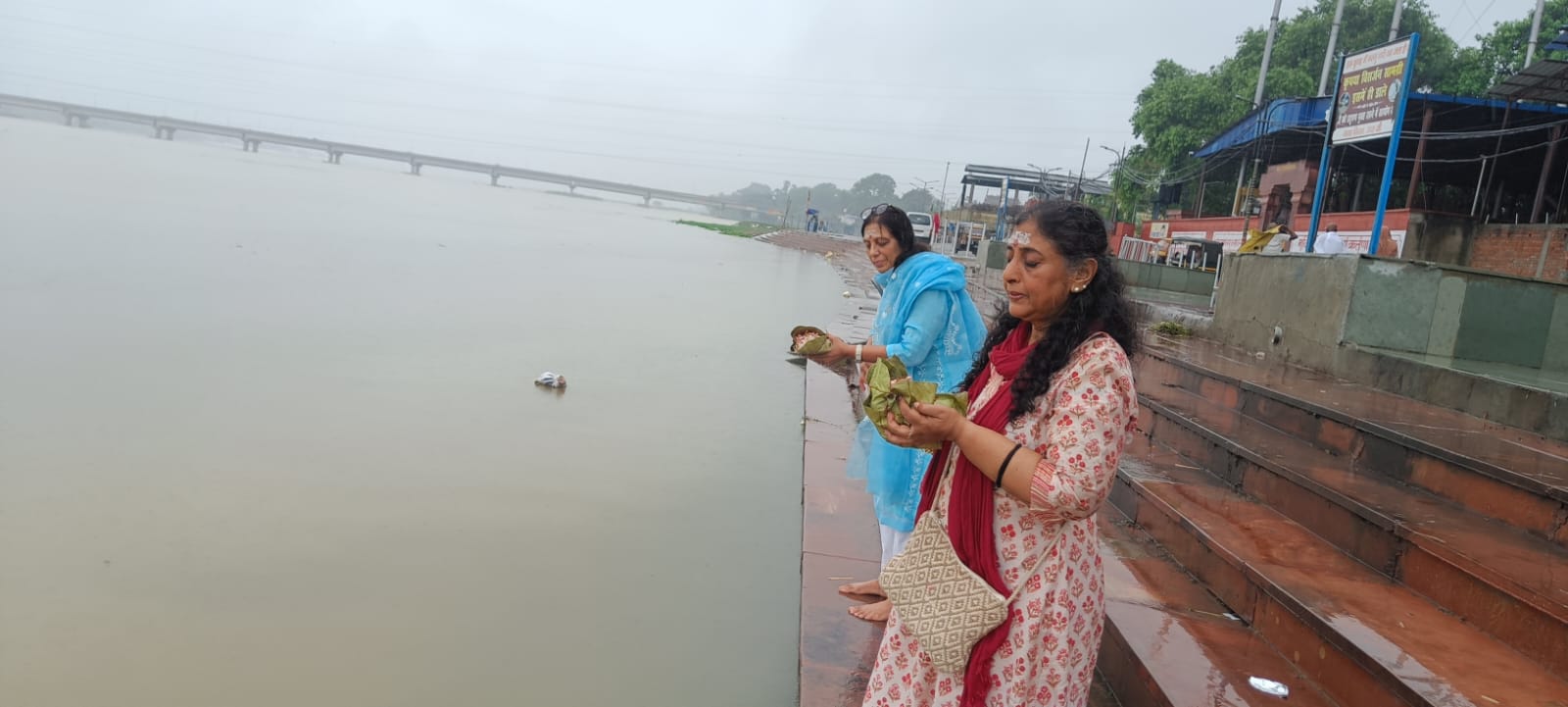
Can Women Perform Pind Daan in Varanasi?
TL;DR: Yes, women can perform Pind Daan in Varanasi. Daughters, wives, daughters-in-law, and mothers are all permitted to perform the ceremony when male heirs are unavailable or when the woman chooses to honour her parents or husband herself. The scriptural precedent comes from the Ramayana, where Goddess Sita performed Pind Daan for King Dasharatha at Gaya in the absence of Lord Rama. At Pitradev, women regularly perform Pind Daan at the Ganga ghats in Varanasi with the same vidhi, the same mantras, and the same spiritual merit.
The Question Every Family Asks
When a family loses a loved one and begins planning the ancestral rites, one of the first questions that arises — especially in families without sons or where the son is abroad or unavailable — is whether a daughter, a wife, or another female family member can perform Pind Daan in Varanasi.
The question comes with anxiety. Families worry that performing the ritual incorrectly, or having the “wrong” person perform it, will render the ceremony invalid or even bring negative consequences. Elderly relatives sometimes insist that only the eldest son can perform the rite, and in the absence of a son, a nephew or a distant male relative should be brought in rather than allowing a daughter to do it.
This anxiety is understandable but misplaced. The scriptures are clear, the precedent is established, and the reality at Varanasi’s ghats in 2026 is that women perform Pind Daan regularly — with full scriptural validity and complete spiritual merit. This blog lays out the rules, the scriptural basis, and the practical guidance for women who wish to perform Pind Daan in Varanasi.
The Short Answer — Yes, Women Can Perform Pind Daan
Women can perform Pind Daan in Varanasi. This is not a modern relaxation of rules or a progressive interpretation — it is grounded in the Puranas, demonstrated in the Ramayana, and practised at every major tirtha kshetra in India. Daughters can perform for their parents, wives can perform for their husbands, mothers can perform for their children, and daughters-in-law can perform for their parents-in-law. The ceremony follows the same Vedic vidhi, the same mantras are chanted, and the spiritual merit of the offering is identical regardless of whether a man or a woman performs it.
What matters to the departed soul is not the gender of the person performing the rite — it is the sincerity of the sankalp, the correctness of the vidhi, and the devotion behind the offering. The Garuda Purana, the foundational text for ancestral rites, does not prohibit women from performing Pind Daan. It prescribes the ritual for the family of the deceased, without restricting it to male members alone.
The Sita Mata Precedent — The Scriptural Foundation
The strongest scriptural precedent for women performing Pind Daan comes from the Ramayana itself.
When Lord Rama travelled to Gaya to perform Pind Daan for his father King Dasharatha, he went to the Falgu River to collect the sacred water and other materials for the ceremony. During his absence, the soul of King Dasharatha appeared before Goddess Sita and expressed that the auspicious time for the Pind Daan was passing and the ceremony must be completed immediately.
Sita Mata, finding herself alone without Rama or Lakshmana, performed the Pind Daan for King Dasharatha herself. She offered the pind on the banks of the Falgu River, with the river, the Tulsi plant, a cow, and a Brahmin as witnesses. When Lord Rama returned and expressed surprise, these witnesses confirmed that Sita had already completed the ceremony.
This event is not a minor footnote in the Ramayana. It is the foundational moment that establishes a daughter-in-law’s right to perform Pind Daan for her father-in-law. If Sita Mata — the embodiment of dharma and tradition — performed the rite and it was accepted by King Dasharatha’s soul, the scripture has settled the question permanently.
Families who visit Pind Daan in Gaya can see the Sita Kund, the exact spot where this event is believed to have occurred. The site itself is a testament to the validity of women performing ancestral rites.
Who Can Perform Pind Daan — The Complete Hierarchy
The traditional hierarchy for performing Pind Daan, as prescribed in the scriptures, is as follows:
1. Eldest son — The first and traditionally preferred person to perform Pind Daan. If the eldest son is available and willing, he performs the ceremony.
2. Younger sons — If the eldest son is unavailable (abroad, deceased, or unable), any younger son can perform the rite with equal validity.
3. Grandson (son’s son) — If no son is available, the grandson of the deceased can perform the ceremony.
4. Daughter — If no male descendant is available, or if the daughter chooses to perform the rite for her parents, she is fully entitled to do so. This is the Sita Mata precedent.
5. Wife — A wife can perform Pind Daan for her deceased husband, particularly when sons are young, unavailable, or not present.
6. Daughter-in-law — Can perform for parents-in-law, following the exact Sita Mata precedent.
7. Brother or nephew — If no direct descendants are available, a brother or nephew of the deceased can perform.
8. Any family member with sincere devotion — The scriptures ultimately prioritise sincerity over hierarchy. Any family member who undertakes the ceremony with genuine devotion and correct vidhi can perform Pind Daan.
An important clarification: the hierarchy above represents the traditional preference, not a strict prohibition. A daughter does not need to wait for “all sons to be unavailable” before she can perform the rite. In modern practice, many families where both sons and daughters are present choose to have the daughter perform or co-perform the Pind Daan, and this is accepted at every ghat in Varanasi.
For families who also need specialised rituals like Narayan Bali in Varanasi (for unnatural death), women can perform these as well under the pandit’s guidance.
When a Daughter Performs Pind Daan for Her Parents
This is the most common scenario where women perform Pind Daan at Varanasi, and it arises for several reasons.
Many families in India have only daughters. With changing family structures, the assumption that every family has a son to perform the last rites is simply not the reality for millions of households. A daughter who loves her parents and wishes to honour them after their passing should not be told that she cannot perform the most sacred rite because of her gender.
In some families, the son is abroad — in the USA, UK, Gulf, or Singapore — and cannot travel to India for the ceremony. Rather than postpone the rite indefinitely or delegate it to a distant male relative who has no emotional connection to the departed, the daughter who is in India performs it. This is not a compromise — it is a valid and complete ceremony.
In other families, the son may have predeceased the parents, or there may be family disputes where the son is estranged. In such situations, the daughter steps in as the person who carries the deepest devotion for the departed parent.
At Pitradev, we have seen all of these situations. In every case, the pandit performs the ceremony with the same vidhi, the same mantras, and the same reverence. The daughter takes the sankalp, offers the pinds, performs the tarpan, and completes the ceremony exactly as a son would. The Ganga receives the offering with the same grace.
When a Wife Performs Pind Daan for Her Husband
A wife performing Pind Daan for her deceased husband is less common but equally valid. This situation typically arises when the sons are very young (below the age where they can sit through the ceremony), when the sons are abroad, or when the wife herself wishes to perform the rite as her personal offering to her husband.
The vidhi remains the same. The wife takes the sankalp in her husband’s name and gotra, offers the pinds, and completes the tarpan. The pandit guides her through every step. There is no scriptural text that invalidates a wife’s Pind Daan for her husband.
What Changes in the Vidhi When a Woman Performs
Very little changes in the actual ceremony. The core vidhi — the sankalp, the preparation of pinds, the offering, the tarpan, and the conclusion — remains identical whether performed by a man or a woman. The mantras are the same. The pinds are the same. The spiritual merit is the same.
The minor procedural differences are:
Sacred thread (Janeu). Men wear the sacred thread during the ceremony and shift it to a specific position during the pind offering. Women do not wear the janeu, so this step is simply omitted. The pandit adjusts the procedure accordingly.
Dress code. Men wear a white dhoti for the ceremony. Women can wear any traditional Indian attire — a saree or a salwar suit. White is preferred but not mandatory for women. The attire should be clean and simple.
Physical actions. Some traditions require the performer to take a full dip (snan) in the Ganga before the ceremony. For women, sprinkling Ganga jal on the head is accepted as equivalent. The pandit will guide you on what is needed.
These are small procedural adjustments, not fundamental changes. The ceremony is complete and valid in every respect.
What Women Wear at the Ghat for Pind Daan
Women performing Pind Daan at the Ganga ghat in Varanasi should wear any traditional Indian attire that they are comfortable in. A cotton saree or a simple salwar suit is the most common choice. White or light-coloured clothing is preferred but not mandatory.
Footwear is removed at the ghat during the ceremony. A dupatta or pallu to cover the head during the puja is recommended out of respect for the tradition.
There is no requirement for a white saree specifically — this is a misconception. The ghat is an open, outdoor space, and the ceremony involves sitting for approximately 1 to 2 hours. Comfortable, modest, traditional attire is all that is needed.
Our Experience at Pitradev — Women Performing Pind Daan in Varanasi
At Pitradev, we have been coordinating ancestral rites at the Varanasi ghats for over 10 years. In our experience, approximately 20 to 25 percent of the Pind Daan ceremonies we arrange are performed by women — daughters, wives, and daughters-in-law.
The most common profile is a daughter in her 30s or 40s, often a working professional, who has lost her father or mother and has either no brother or a brother who is abroad and unable to travel. She contacts us, often with some hesitation, asking whether she is “allowed” to perform the ceremony. The answer is always the same — yes, she is not just allowed, she is performing one of the most honourable acts of devotion a child can offer to a parent.
Our pandits are experienced in guiding women through the ceremony with patience and sensitivity. The pandit explains every step in advance, signals when the woman needs to perform a specific action, and ensures that the ceremony feels complete and meaningful — not rushed or abbreviated because the performer is a woman.
The ceremony at the ghat is the same. The boat ride to the middle of the Ganga is the same. The tarpan is the same. And the peace that the departed soul receives is the same.
Common Misconceptions — What Is Not True
“Pind Daan by a woman is less effective.” This is not supported by any scripture. The Garuda Purana does not differentiate between the merit of Pind Daan based on the gender of the performer.
“A daughter can only perform if there is absolutely no male relative in the entire extended family.” This is an overly restrictive interpretation. In modern practice, if the direct male heirs (sons) are unavailable, the daughter is the natural next person — she does not need to search the extended family for a distant male cousin.
“Women cannot go on the boat for the immersion.” Women can and do go on the boat to the middle of the Ganga for the final offerings. There is no restriction.
“Women cannot touch the pinds.” Women prepare, hold, and offer the pinds during the ceremony, exactly as men do.
“A married daughter performing Pind Daan for her parents will bring bad luck to her husband’s family.” This superstition has no scriptural basis. Sita Mata was married to Lord Rama when she performed Pind Daan for King Dasharatha, and no negative consequence followed.
Conclusion
The question “can women perform Pind Daan” has a simple answer — yes. The Ramayana established the precedent through Sita Mata. The Garuda Purana does not prohibit it. Every major ghat in Varanasi accepts it. And at Pitradev, women perform Pind Daan regularly with the complete Vedic vidhi and the full spiritual merit.
If you are a daughter, a wife, or any female family member who wishes to honour your departed loved one at the Ganga in Kashi, do not let anyone tell you that you cannot. The ancestors do not care about the gender of the person performing the rite. They care about the love behind it.
Pitradev arranges the complete Pind Daan in Varanasi for women with experienced pandits who guide you through every step. Packages from ₹3,000. Telugu Shashtri, Tamil Vadhyar, Hindi, and Odia pandits available. For families who also wish to combine Pind Daan with Asthi Visarjan in Varanasi, both ceremonies can be performed on the same day.
The Ganga does not ask who is offering the prayer. She receives every offering with the same grace.
Frequently Asked Questions
1. Can a daughter perform Pind Daan in Varanasi for her parents?
Yes. A daughter can perform Pind Daan for her parents at Varanasi with full scriptural validity. The precedent is established by Goddess Sita, who performed Pind Daan for King Dasharatha at Gaya. The ceremony follows the same vidhi and carries the same spiritual merit.
2. Can a married daughter perform Pind Daan?
Yes. A married daughter can perform Pind Daan for her parents. Being married does not affect the validity of the ceremony. Sita Mata herself was married to Lord Rama when she performed the rite for King Dasharatha.
3. Can a wife perform Pind Daan for her husband in Varanasi?
Yes. A wife can perform Pind Daan for her deceased husband, particularly when sons are young, unavailable, or abroad. The pandit guides her through the complete ceremony at the Ganga ghat.
4. Does anything change in the Pind Daan vidhi when a woman performs it?
The core vidhi remains identical — the same sankalp, the same pinds, the same tarpan, the same mantras. The only minor difference is that the sacred thread (janeu) step is omitted for women, and sprinkling Ganga jal on the head is accepted in place of a full dip. The ceremony is complete and valid.
5. What should a woman wear for Pind Daan at the Varanasi ghat?
Any traditional Indian attire — a cotton saree or a simple salwar suit. White or light-coloured clothing is preferred but not mandatory. A dupatta or pallu to cover the head during the puja is recommended. The ghat involves sitting for 1 to 2 hours, so comfortable attire is important.
6. Does Pitradev have experience in conducting Pind Daan for women?
Yes. Approximately 20 to 25 percent of the Pind Daan ceremonies arranged by Pitradev in Varanasi are performed by women — daughters, wives, and daughters-in-law. Our pandits are experienced in guiding women through the ceremony with patience and sensitivity.
Shashank Mishra comes with over 15 years of experience in religious tourism and organising Vedic rituals and ancestral ceremonies. At Pitradev, he oversees the coordination of Asthi Visarjan, Pind Daan, Shraadh, Grihapravesh, Vastu Shanti Puja, Satyanarayan Katha, Rudrabhishek, and other sacred rites across Varanasi, Prayagraj, Gaya, Bangalore, Hyderabad, Pune, and Mumbai.
Latest Blog
- Can Women Perform Pind Daan in Varanasi?
- Tamil Vadhyar in Bangalore | Book Tamil Iyer Purohit
- Satyanarayana Vratam in Bangalore | Telugu Purohit ₹5100
- Satyanarayana Pooja in Bangalore | Kannada Purohit ₹5100
- Annaprashan in Pune | First Rice Feeding Ceremony ₹4500
- Namkaran Sanskar in Pune | Baby Naming Ceremony ₹5100
- North Indian Pandit in Hinjewadi for All Pujas
- North Indian Pandit in Pimpri-Chinchwad
- Pind Daan in Gaya by Odia Pandit | Odia Shraddha Paddhati
- Vastu Shanti Puja in Pune | 6 Mandals, 2 Pandits | ₹15000
- Gaya Pind Daan vs Varanasi Pind Daan
- Satyanarayan Katha in Pune by North Indian Pandit
- Odia Pandit Prayagraj | Asthi Bisarjan & Pind Daan Same Day
- How to Book Asthi Visarjan in Kashi Online
- Book Pandit Services Online A Complete Step by Step Guide
- Book Verified Pandit Ji in Bangalore for Any Puja Easy Guide
- How to Book a Vastu Pujan Griha Pravesh Puja for Your New Home
- How to Book Pind Daan in Gaya Online Complete Guide
- Pind Daan in Varanasi After Pitru Paksha
- Pind Daan for Dogs in Varanasi: Complete Rituals at Kashi
- Things To Know Before Booking A Pandit for Satyanarayan Puja
- How To Choose Right Muhurat for Griha Pravesh for Your New Home
- 7 Key Rituals and Stages of Pind Daan in Gaya
- Gand Mool Nakshatra Shanti Puja: Complete Process
- Grihapravesh Muhurat in November and December 2026
- Asthi Visarjan in Varanasi for Pets: Dogs And Cats
- Pind Daan in Varanasi: Guide to Ritual, Process, Cost, Booking
- Mistakes to Avoid During Asthi Visarjan in Varanasi
- How to book satyanarayn puja
- Verified South Indian Purohits in Gaya
- Samvatsarikam in Varanasi: Cost and Vidhi
- Best South Indian Purohits in Kashi Varanasi
- Pind Daan in Varanasi by Telugu Purohit
- Telugu Purohit in Gaya: Pind Daan Packages
- Tripindi Shraadh in Gaya
- Pitradev- Hindi, Tamil, Telugu & Bengali Pandit in Bangalore
- Narayan Bali Puja in Gaya
- Can I Do Pind Daan Within One Year of Death?
- One Day Narayan Bali Puja at Trimbakeshwar
- Asthi Visarjan at Manikarnika Ghat in Kashi Varanasi
- Cost of Asthi Visarjan in Varanasi: Packages and Precautions
- Pandit for Tripindi Shradh in Varanasi: 2026 Dates & Cost
- Pind Daan in Gaya in Pitru Paksha 2026: Dates and Packages
- Vastu Shanti Puja Cost in Pune by North Indian Pandit
- Pitra Dosh: Causes, Symptoms and Remedies — A Complete Guide
- How to Find Genuine Tamil Vadhyars in Kashi Varanasi
- How to Carry Asthi in Flight in India?
- Pind Daan in Gaya by Tamil Iyer: Cost, Packages and Process
- Asthi Visarjan in Srirangapatna from Bangalore — Full Guide
- Send Ashes from Coimbatore to Kashi — Asthi Visarjan Service
- Cost of Asthi Visarjan in Prayagraj by Telugu Pandit
- Asthi Visarjan and Pind Daan in Prayagraj for Odia Families
- North Indian Pandit Bangalore for Annaprashan Puja
- Telugu Grihapravesham Bangalore: 4 Packages Cost & Inclusion
- Cost of Tripindi Shraadh in Varanasi -Pishachmochan Kund
- North Indian Pandit in Pune for Grihapravesh: Package Guide
- Pind Daan in Prayagraj: Cost, Vidhi & Booking Guide-2026
- Narayan Bali Puja in Varanasi — Complete Cost Breakdown for 2026
- Book a Verified North Indian Pandit in Pune: Cost & Packages
- How to Send Asthi to Kashi: A Step-by-Step Guide
- Book Tamil Iyer in Bangalore for Grihapravesham – Complete Guide
- How to Plan 10th 11th and 12th Day Rituals in Varanasi
- Pitru Paksha 2026 – Pind Daan in Prayagraj, Kashi and Gaya
- Pitru Paksha 2026 – Book Online Pind Daan in Varanasi
- Asthi Visarjan in Varanasi for Tamil Families – Complete Guide
- How to Send Asthi (Ashes) from USA to India – Complete Guide
- Narayan Bali Puja in Varanasi – Complete Guide 2026
- Pind Daan in Gaya from Malaysia – Complete Guide
- Pind Pradanam in Varanasi from Malaysia – Complete Guide
- Grihapravesh Puja in Bangalore by Kannada Purohit
- Online Pind Daan in Varanasi for NRIs
- Book Verified Telugu Purohits in Bangalore for Grihapravesham
- Best Ghat for Asthi Visarjan in Varanasi: A Practical Comparison
- Asthi Visarjan in Prayagraj – Complete Guide 2026
- Tripindi Shradh in Varanasi – Complete Guide
- Asthi Visarjan in Varanasi –Best Ghat & Package 2026
- Grihapravesh Puja in Prestige City Sarjapur
- Gaya Ji Pind Daan 2026 – Quick Guide for Planning Your Trip
- Online Puja Booking for Griha Pravesh, Shradh & Satyanarayan
- Pitru Paksha 2026 Dates, Rituals and Pind Daan Guide
- Akshaya Tritiya 2026 (19 April): Best Muhurat for Griha Pravesh
- How to Do Asthi Visarjan When You Cannot Travel: Complete Guide
- Asthi Visarjan in Kashi: Complete Guide with Cost & Time
- Griha Pravesh Muhurat 2026: Auspicious Dates & Timings
- Complete Guide to Gaya Pind Daan Ritual, Samagri & Best Time
- Asthi Visarjan By Post in Kashi Varanasi – Complete Guide
- How to Book a Bengali Pandit for Puja: Step-by-Step Process
- Book Verified Pandit for Puja in Bangalore
- Book Verified North Indian Pandit in Hyderabad Online
- Book North Indian Pandit in Bangalore for Satyanarayan Puja
- How to Book a Pandit in Bangalore Online for Puja:Complete Guide
- Find and Book Pandits in Hyderabad for Griha Pravesh Puja Online
- How to Find and Book Experienced Pandit Online for Puja?
- Exploring the History and Origins of Griha Pravesh Puja Rituals
- Top 5 Ancient Places for Gayaji Pind Daan - 2024 Guide
- Significance of Performing Griha Pravesh Puja in Hindu Culture
- How to Choose the Right Pandit for Pind Daan in Gaya
- Why is Pind Daan in Gaya so Famous?
- Where to Find Experienced Pandit for Griha Pravesh Puja Online?
- Cost of Pind Daan in Gaya: Packages, Procedure and How to Book
- Griha Pravesh Puja and Housewarming Ceremony 2024
- How Gaya Pind Daan Brings Closure and Peace to Your Ancestors
- Gayaji Pind Daan: Achieve Eternal Peace for Your Ancestors
- Online Pind daan: Importance, Cost, and Procedure
- Gaya Pind Daan Puja is Performed by an Experienced Pandit ji
- The Sacred Ritual of Brahma Kapal Pind Daan
- A Complete Guide About Pind Daan in India: Update 2023
- Unveiling the Significance of Pind Daan in Gaya
- The Ultimate Guide to Pind Daan Tour Packages
- Where to do Asthi Visarjan in Haridwar?
- Rudrabhishek Pooja Why Hindus Perform Rudrabhishek pooja At home
- Varanasi's Asthi Visarjan: Embracing Life's Eternal Journey
- Unveiling the Sacred Ritual:
- Significance of Asthi Visarjan in Haridwar
- Exploring the Profound Significance of Asthi Visarjan in Kashi
- The Science of Pind Daan:
- What are the rituals of Pind Daan?
- Varanasi Ayodhya Tour Package with Prayagraj
- Pind Daan Puja in Varanasi | Book Your Puja Online
- Prayagraj: The Enchanting Journey of Asthi Visarjan
- Pind Daan Gaya : When and Where to Do Pind Daan in Gayaji
- Exploring the Mystical Rituals of Asthi Visarjan Poojan
- Which are the Best Places to do Pind Daan in Gaya?
- Everything You Need to Know About Rudrabhishek Puja
- Why Is Pind Daan At Gaya Important To Hindus?
- Asthi Visarjan: When to Perform It, Where to Go, and Cost
- Rudra Abhishek Puja's Purpose:
- Ganga Pushkaralu 2023
- Pind daan for people having unnatural deaths
- Is doing pind daan beneficial without self presence of related?