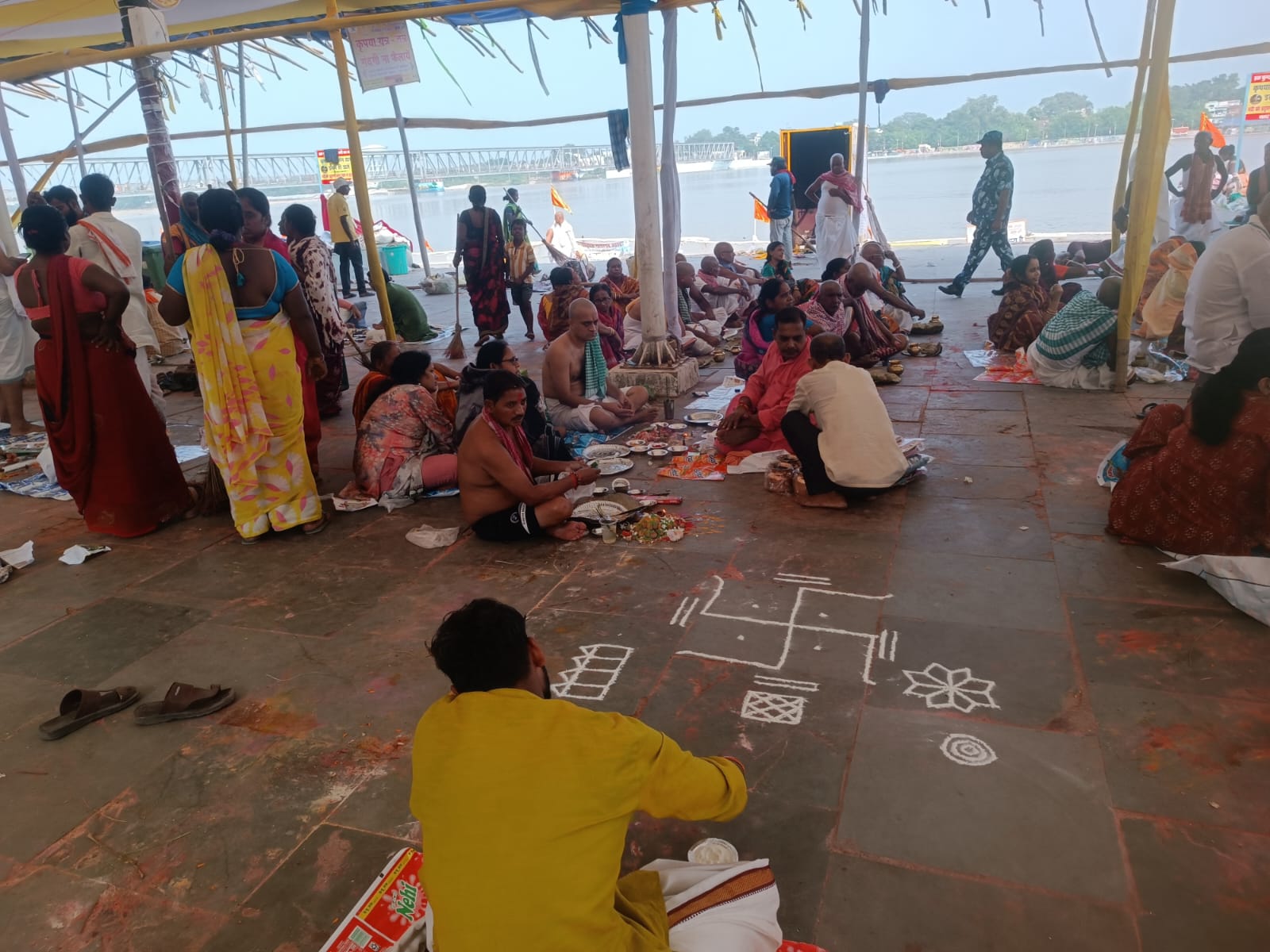
Pind Daan in Gaya in Winter (Nov-Feb) — Best Season to Visit
Doing Pind Daan is how Hindu families show love and respect to forefathers who came before them. While Gaya has always been the main hub for these rituals, families often look to book Kashi pind daan by the holy waters as well.
Pitradev takes the heavy lifting off your shoulders by booking knowledgeable pandits, handling the samagri, and managing the whole ritual. You can go any month that suits your family, but traveling between November and February brings lovely, pleasant weather.
Why Is Winter (November to February) a Good Time for Pind Daan in Gaya?
Winter makes travelling between sacred locations and participating in outdoor rituals more comfortable for elderly family members and other devotees.
Pleasant Daytime Weather Makes Rituals More Comfortable
Skip the brutal summer heat; planning your trip in winter means you will not be completely exhausted by noon. Pind Daan keeps you outside for hours moving between temples and riverbanks, which gets tiring fast. Gaya turns surprisingly cold between November and February, so grab a heavy jacket
Why Is Winter Suitable for Visiting Multiple Sacred Sites?
Visiting key pilgrimage sites is so much smoother in winter without harsh daytime heat draining your energy. You can comfortably plan visits around Vishnupad Mandir, Falgu River, Akshayvat, and Pret Shila for your specific rituals.
For families taking on an extended Gaya Shradh, mild weather makes hopping between these holy spots much easier and stress-free.
When Should You Plan Your Visit Between November and February?
Each winter month offers slightly different weather conditions:
November: Generally mild temperatures make it comfortable for daytime travel and rituals.
December: Temperatures begin to drop, particularly in early mornings and evenings.
January: Usually the coldest month, so carrying warm clothes is essential.
February: Temperatures gradually increase, offering relatively comfortable conditions for daytime activities.
Once you select your travel dates, understanding the important ritual locations will help you plan the pilgrimage better.
What Are the Important Places to Visit for Pind Daan in Gaya?
Gaya has several sacred locations associated with ancestral rituals where devotees perform different parts of Gaya Shradh.
Why Is Vishnupad Mandir Considered the Main Centre for Gaya Shradh?
At Vishnupad Mandir, people line up to see what faith remembers as Lord Vishnu’s footprint stamped into solid basalt. Relatives gather right here to offer Pind Daan, hoping to bring peace to departed family. You simply cannot plan a trip for Gaya Shradh without stopping here first.
What Is the Significance of Performing Pind Daan at Falgu River?
The Falgu River plays a huge role in Gaya's sacred ancestral rituals. Families head to its banks to perform Tarpan and Pind Visarjan as part of their Shradh duties. Beyond that, its spiritual ties to Lord Vishnu make it truly special.
Why Do Devotees Visit Akshayvat and Pret Shila?
Tradition says prayers at the evergreen Akshayvat tree grant ancestors unending peace, and climbing Pret Shila is another common stop. If your elders follow these specific customs, adding them to your Pind Daan day is simple.
With the main sites mapped out, it is time to pack for winter.
How Should You Prepare for Pind Daan in Gaya During Winter?
Since the rituals may involve early starts, outdoor ceremonies, and visits to multiple locations, arranging travel essentials and priest services beforehand is important.
What Should You Carry for a Comfortable Winter Pilgrimage?
Pack warm layers, comfortable shoes, personal medicines, and ID cards. Since December and January mornings get very cold, carry jackets or shawls. Keep spare traditional attire ready for the ceremony.
How Much Time Should You Allocate for Gaya Shradh?
Total time depends on your chosen rituals and sites. A basic ceremony at Vishnupad Mandir takes about an hour; three locations take two and a half hours, and four take five.
If you plan to perform the complete Gaya Shradh covering all 45 Vedis, budget three days
Why Should You Arrange a Pandit and Puja Samagri in Advance?
Booking a seasoned pandit early ensures your ceremony follows traditional rituals smoothly. Share your ancestor's name, gotra, and family details beforehand.
Also, double-check in advance if your booking already covers puja samagri, dakshina, and other arrangements.
What Is the Difference Between Pind Daan in Gaya and Pind Daan at Kashi?
Gaya and Varanasi are both important Hindu pilgrimage destinations for ancestral rituals, but they have different religious significance and traditional practices. Understanding these differences helps families choose the location that best fits their ritual requirements.
Why Is Gaya Particularly Significant for Traditional Gaya Shradh?
Gaya remains the cornerstone pilgrimage for honoring ancestors through Pind Daan. Connected to Lord Vishnu, the sacred Falgu River, and holy Gaya Kshetra, a complete traditional Gaya Shradh offers deep spiritual significance. These rituals often take families across several holy vedis.
What Makes Pind Daan in Varanasi Different?
Revered for Lord Shiva and the sacred Ganga, Varanasi holds a unique place in Hindu tradition. Families visit Pishachmochan Kund and the river ghats to honor departed elders. While completing kashi pind daan is a powerful pilgrimage practice, it has its own customs and is quite different from performing Gaya Shradh.
How Can Pitradev Help You Arrange Pind Daan in Gaya During Winter?
Planning ancestral rites is hassle-free when your priest and logistics are sorted before you travel. Whether arranging Gaya Shradh or performing Kashi pind daan, Pitradev connects families with knowledgeable pandits, regional language options, and customized ceremony packages.
Choose from quick rites at Vishnupad Mandir, multi-location visits, or the full three-day journey across all 45 vedis, guided by priests speaking Hindi, Tamil, Telugu, Kannada, or Odia.
Most packages cover everything upfront, including puja samagri and dakshina, so there are no surprises. Advance booking ensures a peaceful, organized pilgrimage. Discover Pitradev's seasonal winter offerings and fulfill your ancestral duties with complete peace of mind.
FAQs
Definitely. Mild winter days make moving between sacred spots and outdoor rituals much more comfortable, though January mornings can get quite chilly.
2. Can I perform Pind Daan outside Pitru Paksha?
Yes. You can visit Gaya anytime during the year. Pitru Paksha is popular, but completing rituals or kashi pind daan during other months is equally valid.
3. How long does Gaya Shradh take?
It depends on your package. A simple single-location ceremony takes roughly an hour, while a complete 45-Vedi Shradh takes three full days.
4. Which sacred places will we visit?
Core spots include Vishnupad Mandir, Falgu River, Akshayvat, and Pret Shila, with full traditional rituals including more vedis.
5. Can we book a knowledgeable pandit beforehand?
Yes. Pitradev lets you pre-book verified priests, confirm your preferred language, and arrange the required puja samagri well before you leave home.
Latest Blog
- Gaya Pind Daan in 1,3 or 17 Days: Which Should You Choose?
- Pind Daan Rules for Sons, Daughters, Wives & Grandsons
- Pind Daan in Gaya in Winter (Nov-Feb) — Best Season to Visit
- Griha Pravesh Puja Samagri List
- Griha pravesh muhurts in 2027
- Best Pandit in Pune — How to Choose the Right One
- Gand Mool Nakshatra Shanti Puja in Bangalore | ₹11,000
- Pandit Charges in Pune 2027 — Complete Price List
- Gand Mool Nakshatra Shanti Puja in Pune | ₹11,000
- What Is Gand Mool Nakshatra — A Guide for Parents
- North Indian Pandit in Baner Balewadi Pune | ₹3,500
- Baby Born in Moola Nakshatra — Effects and Shanti Puja
- North Indian Pandit in Kharadi Pune for All Pujas
- Tamil Vadhyar in Whitefield Bangalore | From ₹4,500
- North Indian Pandit in Whitefield Bangalore | ₹3,500
- Bhoomi Pujan in Bangalore 2027 | Book from ₹5,100
- 3-Day Pind Daan in Gaya 2027 — All 45 Vedis | ₹25,000
- Same Day Asthi Visarjan in Varanasi 2027 | ₹2,000
- North Indian Pandit in Wakad for All Pujas | ₹3500
- Online Pind Daan in Gaya | Private Puja ₹11,000
- Online Pind Daan in Varanasi | From ₹3,000 – Pitradev
- Can Women Perform Pind Daan in Varanasi?
- Tamil Vadhyar in Bangalore | Book Tamil Iyer Purohit
- Satyanarayana Vratam in Bangalore | Telugu Purohit ₹5100
- Satyanarayana Pooja in Bangalore | Kannada Purohit ₹5100
- Annaprashan in Pune | First Rice Feeding Ceremony ₹4500
- Namkaran Sanskar in Pune | Baby Naming Ceremony ₹5100
- North Indian Pandit in Hinjewadi for All Pujas
- North Indian Pandit in Pimpri-Chinchwad
- Pind Daan in Gaya by Odia Pandit | Odia Shraddha Paddhati
- Vastu Shanti Puja in Pune | 6 Mandals, 2 Pandits | ₹15000
- Gaya Pind Daan vs Varanasi Pind Daan
- Satyanarayan Katha in Pune by North Indian Pandit
- Odia Pandit Prayagraj | Asthi Bisarjan & Pind Daan Same Day
- How to Book Asthi Visarjan in Kashi Online
- Book Pandit Services Online A Complete Step by Step Guide
- Book Verified Pandit Ji in Bangalore for Any Puja Easy Guide
- How to Book a Vastu Pujan Griha Pravesh Puja for Your New Home
- How to Book Pind Daan in Gaya Online Complete Guide
- Pind Daan in Varanasi After Pitru Paksha
- Pind Daan for Dogs in Varanasi: Complete Rituals at Kashi
- Things To Know Before Booking A Pandit for Satyanarayan Puja
- How To Choose Right Muhurat for Griha Pravesh for Your New Home
- 7 Key Rituals and Stages of Pind Daan in Gaya
- Gand Mool Nakshatra Shanti Puja: Complete Process
- Grihapravesh Muhurat in November and December 2026
- Asthi Visarjan in Varanasi for Pets: Dogs And Cats
- Pind Daan in Varanasi: Guide to Ritual, Process, Cost, Booking
- Mistakes to Avoid During Asthi Visarjan in Varanasi
- How to book satyanarayn puja
- Verified South Indian Purohits in Gaya
- Samvatsarikam in Varanasi: Cost and Vidhi
- Best South Indian Purohits in Kashi Varanasi
- Pind Daan in Varanasi by Telugu Purohit
- Telugu Purohit in Gaya: Pind Daan Packages
- Tripindi Shraadh in Gaya
- Pitradev- Hindi, Tamil, Telugu & Bengali Pandit in Bangalore
- Narayan Bali Puja in Gaya
- Can I Do Pind Daan Within One Year of Death?
- One Day Narayan Bali Puja at Trimbakeshwar
- Asthi Visarjan at Manikarnika Ghat in Kashi Varanasi
- Cost of Asthi Visarjan in Varanasi: Packages and Precautions
- Pandit for Tripindi Shradh in Varanasi: 2026 Dates & Cost
- Pind Daan in Gaya in Pitru Paksha 2026: Dates and Packages
- Vastu Shanti Puja Cost in Pune by North Indian Pandit
- Pitra Dosh: Causes, Symptoms and Remedies — A Complete Guide
- How to Find Genuine Tamil Vadhyars in Kashi Varanasi
- How to Carry Asthi in Flight in India?
- Pind Daan in Gaya by Tamil Iyer: Cost, Packages and Process
- Asthi Visarjan in Srirangapatna from Bangalore — Full Guide
- Send Ashes from Coimbatore to Kashi — Asthi Visarjan Service
- Cost of Asthi Visarjan in Prayagraj by Telugu Pandit
- Asthi Visarjan and Pind Daan in Prayagraj for Odia Families
- North Indian Pandit Bangalore for Annaprashan Puja
- Telugu Grihapravesham Bangalore: 4 Packages Cost & Inclusion
- Cost of Tripindi Shraadh in Varanasi -Pishachmochan Kund
- North Indian Pandit in Pune for Grihapravesh: Package Guide
- Pind Daan in Prayagraj: Cost, Vidhi & Booking Guide-2026
- Narayan Bali Puja in Varanasi — Complete Cost Breakdown for 2026
- Book a Verified North Indian Pandit in Pune: Cost & Packages
- How to Send Asthi to Kashi: A Step-by-Step Guide
- Book Tamil Iyer in Bangalore for Grihapravesham – Complete Guide
- How to Plan 10th 11th and 12th Day Rituals in Varanasi
- Pitru Paksha 2026 – Pind Daan in Prayagraj, Kashi and Gaya
- Pitru Paksha 2026 – Book Online Pind Daan in Varanasi
- Asthi Visarjan in Varanasi for Tamil Families – Complete Guide
- How to Send Asthi (Ashes) from USA to India – Complete Guide
- Narayan Bali Puja in Varanasi – Complete Guide 2026
- Pind Daan in Gaya from Malaysia – Complete Guide
- Pind Pradanam in Varanasi from Malaysia – Complete Guide
- Grihapravesh Puja in Bangalore by Kannada Purohit
- Online Pind Daan in Varanasi for NRIs
- Book Verified Telugu Purohits in Bangalore for Grihapravesham
- Best Ghat for Asthi Visarjan in Varanasi: A Practical Comparison
- Asthi Visarjan in Prayagraj – Complete Guide 2026
- Tripindi Shradh in Varanasi – Complete Guide
- Asthi Visarjan in Varanasi –Best Ghat & Package 2026
- Grihapravesh Puja in Prestige City Sarjapur
- Gaya Ji Pind Daan 2026 – Quick Guide for Planning Your Trip
- Online Puja Booking for Griha Pravesh, Shradh & Satyanarayan
- Pitru Paksha 2026 Dates, Rituals and Pind Daan Guide
- Akshaya Tritiya 2026 (19 April): Best Muhurat for Griha Pravesh
- How to Do Asthi Visarjan When You Cannot Travel: Complete Guide
- Asthi Visarjan in Kashi: Complete Guide with Cost & Time
- Griha Pravesh Muhurat 2026: Auspicious Dates & Timings
- Complete Guide to Gaya Pind Daan Ritual, Samagri & Best Time
- Asthi Visarjan By Post in Kashi Varanasi – Complete Guide
- How to Book a Bengali Pandit for Puja: Step-by-Step Process
- Book Verified Pandit for Puja in Bangalore
- Book Verified North Indian Pandit in Hyderabad Online
- Book North Indian Pandit in Bangalore for Satyanarayan Puja
- How to Book a Pandit in Bangalore Online for Puja:Complete Guide
- Find and Book Pandits in Hyderabad for Griha Pravesh Puja Online
- How to Find and Book Experienced Pandit Online for Puja?
- Exploring the History and Origins of Griha Pravesh Puja Rituals
- Top 5 Ancient Places for Gayaji Pind Daan - 2024 Guide
- Significance of Performing Griha Pravesh Puja in Hindu Culture
- How to Choose the Right Pandit for Pind Daan in Gaya
- Why is Pind Daan in Gaya so Famous?
- Where to Find Experienced Pandit for Griha Pravesh Puja Online?
- Cost of Pind Daan in Gaya: Packages, Procedure and How to Book
- Griha Pravesh Puja and Housewarming Ceremony 2024
- How Gaya Pind Daan Brings Closure and Peace to Your Ancestors
- Gayaji Pind Daan: Achieve Eternal Peace for Your Ancestors
- Online Pind daan: Importance, Cost, and Procedure
- Gaya Pind Daan Puja is Performed by an Experienced Pandit ji
- The Sacred Ritual of Brahma Kapal Pind Daan
- A Complete Guide About Pind Daan in India: Update 2023
- Unveiling the Significance of Pind Daan in Gaya
- The Ultimate Guide to Pind Daan Tour Packages
- Where to do Asthi Visarjan in Haridwar?
- Rudrabhishek Pooja Why Hindus Perform Rudrabhishek pooja At home
- Varanasi's Asthi Visarjan: Embracing Life's Eternal Journey
- Unveiling the Sacred Ritual:
- Significance of Asthi Visarjan in Haridwar
- Exploring the Profound Significance of Asthi Visarjan in Kashi
- The Science of Pind Daan:
- What are the rituals of Pind Daan?
- Varanasi Ayodhya Tour Package with Prayagraj
- Pind Daan Puja in Varanasi | Book Your Puja Online
- Prayagraj: The Enchanting Journey of Asthi Visarjan
- Pind Daan Gaya : When and Where to Do Pind Daan in Gayaji
- Exploring the Mystical Rituals of Asthi Visarjan Poojan
- Which are the Best Places to do Pind Daan in Gaya?
- Everything You Need to Know About Rudrabhishek Puja
- Why Is Pind Daan At Gaya Important To Hindus?
- Asthi Visarjan: When to Perform It, Where to Go, and Cost
- Rudra Abhishek Puja's Purpose:
- Ganga Pushkaralu 2023
- Pind daan for people having unnatural deaths
- Is doing pind daan beneficial without self presence of related?