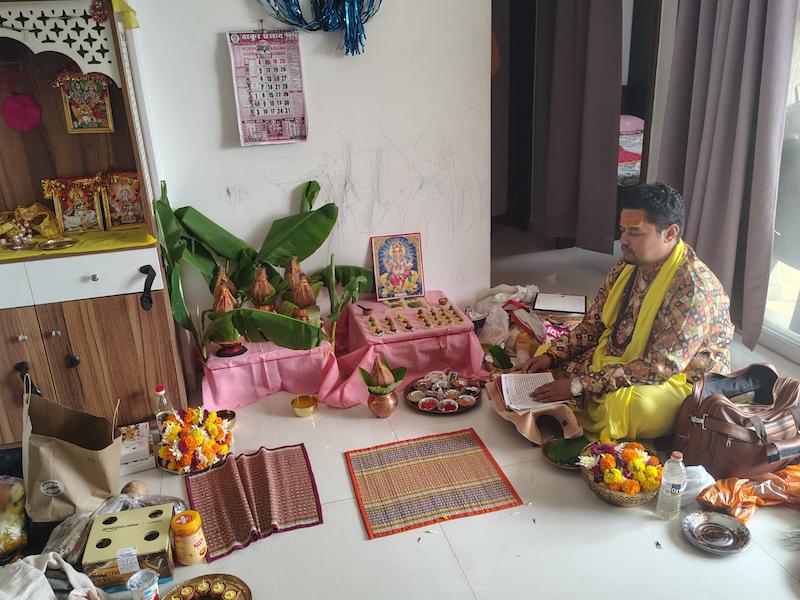
Best Pandit in Pune — How to Choose the Right One
TL;DR: Finding the best pandit in Pune is not about finding the most famous name — it is about finding a pandit who performs the ceremony in your tradition, charges a fixed price with no additions on the day, brings all puja samagri, arrives on time, and does not upsell mid-ceremony. Pitradev offers verified North Indian pandits in Pune — Pandit Shashikant Gaud and Pandit Amitabh Mishra — with fixed pricing, all samagri included, and no hidden charges. Pujas from ₹3,500. All Pune areas covered.
The Real Problem Is Not Finding a Pandit — It Is Finding a Reliable One
Pune has no shortage of pandits. A single Google search for “pandit in Pune” returns dozens of services, freelance pandits, and booking platforms. The problem is not availability — it is reliability.
Every North Indian family in Pune has either experienced or heard a version of this story: the pandit quoted ₹3,500 on the phone for a Satyanarayan Katha. The family prepared the puja room, invited relatives, arranged prasad. The pandit arrived 45 minutes late. Mid-ceremony, he mentioned that the havan samagri is extra (₹1,000), that the dakshina is separate (₹2,000), that the “complete” Katha with all 5 chapters requires the “premium” rate (₹1,500 more). The family, mid-ceremony with guests watching, paid without argument. The ₹3,500 puja became ₹8,000. The ceremony felt rushed. And the family resolved to never book that pandit again — but had no idea how to find a better one.
This is not an isolated experience. It is the standard experience in Pune’s unorganised pandit market, and it is the reason families search for “best pandit in Pune” — not because they want the most expensive or the most decorated pandit, but because they want one who will simply do what he said he would do, at the price he said he would charge.
5 Things to Check Before Booking Any Pandit in Pune
Whether you book through Pitradev or through any other service, these 5 checks will protect you from the most common problems.
1. Is the Price Fixed and All-Inclusive?
This is the single most important question. When a pandit or a booking service quotes you a price, ask specifically: “Does this include pandit ji dakshina?” and “Does this include all puja samagri?” and “Will any additional amount be asked on the day of the ceremony?”
If the answer to any of these is vague — “dakshina is as per your wish,” “samagri depends on what you want,” “there may be small additions” — the quoted price is not the real price. You will pay more on the day, and you will have no negotiating power because the ceremony will already be underway.
A reliable pandit service quotes a price that includes everything — dakshina, samagri, havan material, flowers, and all ritual items. The number confirmed at booking is the number you pay. Period.
2. Does the Pandit Perform in Your Tradition?
Pune has North Indian, Marathi, Tamil, Telugu, Kannada, Bengali, Odia, Gujarati, and Marwadi families — each with a distinct puja tradition. A “pandit in Pune” is not a generic role. A North Indian family from Lucknow needs a pandit who performs the Grihapravesh with Swasti Punyavachan, 6 mandals, and Shanti Havan in the North Indian vidhi. A Marathi family needs a Guruji who follows the Maharashtra tradition. A Tamil family needs a Vadhyar who follows the Tamil Agama vidhi with Punyahavachanam and Paal Kaachal.
When a Marathi Guruji performs a “Hindi” ceremony because the booking platform assigned whoever was available, the family gets a ceremony that looks approximately right but does not feel like theirs. The sankalpam pronunciation is different, the havan sequence is unfamiliar, and the guidance is in a language the elderly parents do not fully understand.
Ask specifically: “Is the pandit a native speaker of my language?” and “Does he follow my specific tradition?” — not just “Can he do it in Hindi?”
3. Does the Pandit Come with Samagri or Do You Arrange Everything?
There are 2 models in Pune’s pandit market. In the first, the pandit comes with all puja samagri — kalash, mandal items, havan cups, samithu, ghee, flowers, sacred thread, camphor, and every ritual item. The family arranges only household items (plates, deepam, milk, curd, fruits, sweets). In the second, the pandit comes with nothing — the family must source everything from the puja shop, often without knowing exactly what to buy or how much.
The first model is better for most families — particularly young couples in Pune who may be performing a ceremony for the first time and do not have parents nearby to guide the samagri preparation. When the pandit brings everything, the family’s only job is to prepare the household items (which are listed clearly in a checklist shared after booking) and be present for the ceremony.
4. Does the Pandit Arrive on Time?
Lateness is the second most common complaint after pricing. Many Pune pandits take multiple bookings on the same day — a morning Satyanarayan Katha in Wakad, an afternoon Grihapravesh in Baner, and an evening Namkaran in Hinjewadi. When the morning ceremony runs long, the afternoon booking gets pushed, and the family waiting in Baner with 30 guests receives a pandit who arrives 1 hour late and then rushes through the ceremony.
Ask: “Will the pandit have another booking on the same day before ours?” and “Is the timing confirmed or approximate?” A pandit who confirms “between 9 and 10 AM” is hedging — a pandit who confirms “9 AM” and arrives at 9 AM is reliable.
5. Does the Pandit Upsell During the Ceremony?
The most uncomfortable moment in any puja is when the pandit, mid-ceremony, suggests an “additional” puja that the family “should” do — a Navagraha Shanti for ₹2,000 extra, a “complete” havan instead of the “basic” one for ₹1,500 more, a Brahmin Bhojan arrangement that was not discussed. The family, with guests present and the ceremony underway, feels pressured to agree.
A reliable pandit performs what was booked, completely and correctly. If the family wants to add something, the initiative comes from the family — not from the pandit. The ceremony should not feel like a negotiation.
How Pitradev Addresses Each of These 5 Problems
Problem | Pitradev’s Approach |
Variable pricing | Fixed, all-inclusive pricing. The complete price list is published. The amount confirmed at booking is the final amount. |
Wrong tradition | You specify your language and tradition at booking. We assign a pandit who follows your vidhi — not a generic pandit who “adjusts.” |
No samagri | The pandit brings all puja samagri. Family arranges only household items from a checklist shared after booking. |
Lateness | Timing is confirmed at booking. The pandit is not double-booked on the same day for overlapping time slots. |
Upselling | The pandit performs what is booked. No additional suggestions mid-ceremony. No “dakshina as per your wish.” |
Our Pandits in Pune — Named, Not Anonymous
Many booking services in Pune assign an anonymous pandit — you do not know who is coming until the day of the ceremony. At Pitradev, the pandits are named, and you can request a specific pandit by name at the time of booking.
Pandit Shashikant Gaud — Originally from Uttar Pradesh. Specialises in Vastu Shanti Puja, Grihapravesh, and Shradh ceremonies. Regularly serves families across Hinjewadi, Wakad, Baner-Balewadi, PCMC, and all Pune areas. Known for his meticulous mandal setup and thorough vidhi — particularly valued for the premium ₹15,000 and ₹21,000 Grihapravesh packages where the ceremony runs 4 to 5 hours.
To book: 7829965737
Pandit Amitabh Mishra — Originally from Uttar Pradesh. Specialises in Satyanarayan Katha, Rudrabhishek, and Navgraha Shanti Puja. Covers Kharadi, Viman Nagar, Kalyani Nagar, Baner, and all Pune areas. Known for his patient, explanatory approach — he walks the family through every step in Hindi, making the ceremony meaningful rather than merely procedural. Young couples performing a ceremony for the first time without their parents present especially value this approach.
To book: 9686645737
Complete Pricing — No Surprises
For complete transparency, here is what every major ceremony costs with Pitradev in Pune:
Ceremony | Cost (₹) |
Sunderkand Path | 3,500 |
Barsi / Varshik Shradh | 3,500 |
4,500 | |
Mundan | 4,500 |
4,500 | |
Rudrabhishek | 5,000 |
5,100 | |
Navgraha Shanti | 7,000 |
Kaal Sarp Dosh Nivaran | 7,000 |
Basic Grihapravesh | 7,500 |
11,000 | |
15,000 | |
Grand Grihapravesh | 21,000 |
Every price includes pandit ji dakshina and all puja samagri. No hidden charges.
The Red Flags — When to Walk Away
If you are evaluating a pandit or a booking service in Pune, these are the signs that the experience will not go well:
“Dakshina is as per your wish.” This phrase sounds respectful but is actually the opening move for a guilt-based negotiation at the end of the ceremony. When the pandit says “aap ki marzi” after performing a 3-hour puja, the family feels obligated to give ₹2,000 to ₹5,000 — turning a “₹3,000 puja” into a ₹5,000 to ₹8,000 expense. A fixed-price service includes dakshina in the quoted amount. No ambiguity.
No specific pandit name confirmed. “We will assign a pandit” means they are sourcing from a pool of freelancers and you have no control over who comes. If the service cannot tell you the pandit’s name at the time of booking, the pandit is not confirmed — he is being found last minute.
Different phone numbers at every stage. You spoke to one number for booking, another number called to “confirm,” and a third number will “coordinate on the day.” This typically means the booking service is a middleman, and each layer is adding a margin. By the time the pandit arrives, the family has paid ₹8,000 of which the pandit received ₹3,000.
“Complete vidhi requires extra.” If the pandit quotes a base price and then says the “complete” vidhi — with all chapters of the Katha, or with havan, or with all mandals — costs more, the base price was never meant to cover the full ceremony. It was a hook to get the booking.
No WhatsApp checklist after booking. A reliable service sends a clear list of what the pandit brings and what the family arranges, within 24 hours of booking. If this list does not come, the expectations are not set, and the day of the ceremony will have surprises.
Areas We Serve in Pune
All Pune areas with no area surcharge:
Hinjewadi, Wakad, Baner-Balewadi, Kharadi, Pimpri-Chinchwad, Hadapsar, Magarpatta, Wagholi, Viman Nagar, Kalyani Nagar, Aundh, Pimple Saudagar, Undri, NIBM Road, Kondhwa, Bavdhan, Tathawade, Ravet, and all surrounding localities.
How to Book
- Contact Pitradev on WhatsApp or phone
- Pandit Shashikant Gaud: 7829965737
- Pandit Amitabh Mishra: 9686645737
- Share the puja you need, your preferred date, and your Pune address
- The pandit is confirmed by name, the price is confirmed from the published list, and the timing is confirmed
- Receive the household items checklist on WhatsApp within 24 hours
- Pandit ji arrives with all samagri at the confirmed time on the confirmed date
Book at least 5 to 7 days in advance for weekday pujas and 2 to 3 weeks for weekends.
Conclusion
The “best pandit in Pune” is not a title — it is a set of behaviours. Fixed pricing with no additions. Arrival on time. Samagri brought by the pandit. Ceremony performed in your tradition. No upselling. No guilt-based dakshina. No anonymous last-minute assignment.
Pitradev’s pandits — Pandit Shashikant Gaud and Pandit Amitabh Mishra — deliver these behaviours consistently across every ceremony, from a ₹3,500 Sunderkand Path to a ₹21,000 Grand Grihapravesh. That is what makes them the best pandit service for the North Indian families of Pune — not marketing, not claims, but the experience of the families who have already booked.
For the complete price list of all pandit services in Pune, visit our pricing page. For the complete list of all pandit services across all languages, visit our main Pune page. For a North Indian pandit in Pune specifically, visit our dedicated page.
The best pandit is not the one who promises the most. It is the one who delivers exactly what was promised.
Frequently Asked Questions
Shashank Mishra comes with over 15 years of experience in religious tourism and organising Vedic rituals and ancestral ceremonies. At Pitradev, he oversees the coordination of Asthi Visarjan, Pind Daan, Shraadh, Grihapravesh, Vastu Shanti Puja, Satyanarayan Katha, Rudrabhishek, and other sacred rites across Varanasi, Prayagraj, Gaya, Bangalore, Hyderabad, Pune, and Mumbai.
Latest Blog
- Best Pandit in Pune — How to Choose the Right One
- Gand Mool Nakshatra Shanti Puja in Bangalore | ₹11,000
- Pandit Charges in Pune 2027 — Complete Price List
- Gand Mool Nakshatra Shanti Puja in Pune | ₹11,000
- What Is Gand Mool Nakshatra — A Guide for Parents
- North Indian Pandit in Baner Balewadi Pune | ₹3,500
- Baby Born in Moola Nakshatra — Effects and Shanti Puja
- North Indian Pandit in Kharadi Pune for All Pujas
- Tamil Vadhyar in Whitefield Bangalore | From ₹4,500
- North Indian Pandit in Whitefield Bangalore | ₹3,500
- Bhoomi Pujan in Bangalore 2027 | Book from ₹5,100
- 3-Day Pind Daan in Gaya 2027 — All 45 Vedis | ₹25,000
- Same Day Asthi Visarjan in Varanasi 2027 | ₹2,000
- North Indian Pandit in Wakad for All Pujas | ₹3500
- Online Pind Daan in Gaya | Private Puja ₹11,000
- Online Pind Daan in Varanasi | From ₹3,000 – Pitradev
- Can Women Perform Pind Daan in Varanasi?
- Tamil Vadhyar in Bangalore | Book Tamil Iyer Purohit
- Satyanarayana Vratam in Bangalore | Telugu Purohit ₹5100
- Satyanarayana Pooja in Bangalore | Kannada Purohit ₹5100
- Annaprashan in Pune | First Rice Feeding Ceremony ₹4500
- Namkaran Sanskar in Pune | Baby Naming Ceremony ₹5100
- North Indian Pandit in Hinjewadi for All Pujas
- North Indian Pandit in Pimpri-Chinchwad
- Pind Daan in Gaya by Odia Pandit | Odia Shraddha Paddhati
- Vastu Shanti Puja in Pune | 6 Mandals, 2 Pandits | ₹15000
- Gaya Pind Daan vs Varanasi Pind Daan
- Satyanarayan Katha in Pune by North Indian Pandit
- Odia Pandit Prayagraj | Asthi Bisarjan & Pind Daan Same Day
- How to Book Asthi Visarjan in Kashi Online
- Book Pandit Services Online A Complete Step by Step Guide
- Book Verified Pandit Ji in Bangalore for Any Puja Easy Guide
- How to Book a Vastu Pujan Griha Pravesh Puja for Your New Home
- How to Book Pind Daan in Gaya Online Complete Guide
- Pind Daan in Varanasi After Pitru Paksha
- Pind Daan for Dogs in Varanasi: Complete Rituals at Kashi
- Things To Know Before Booking A Pandit for Satyanarayan Puja
- How To Choose Right Muhurat for Griha Pravesh for Your New Home
- 7 Key Rituals and Stages of Pind Daan in Gaya
- Gand Mool Nakshatra Shanti Puja: Complete Process
- Grihapravesh Muhurat in November and December 2026
- Asthi Visarjan in Varanasi for Pets: Dogs And Cats
- Pind Daan in Varanasi: Guide to Ritual, Process, Cost, Booking
- Mistakes to Avoid During Asthi Visarjan in Varanasi
- How to book satyanarayn puja
- Verified South Indian Purohits in Gaya
- Samvatsarikam in Varanasi: Cost and Vidhi
- Best South Indian Purohits in Kashi Varanasi
- Pind Daan in Varanasi by Telugu Purohit
- Telugu Purohit in Gaya: Pind Daan Packages
- Tripindi Shraadh in Gaya
- Pitradev- Hindi, Tamil, Telugu & Bengali Pandit in Bangalore
- Narayan Bali Puja in Gaya
- Can I Do Pind Daan Within One Year of Death?
- One Day Narayan Bali Puja at Trimbakeshwar
- Asthi Visarjan at Manikarnika Ghat in Kashi Varanasi
- Cost of Asthi Visarjan in Varanasi: Packages and Precautions
- Pandit for Tripindi Shradh in Varanasi: 2026 Dates & Cost
- Pind Daan in Gaya in Pitru Paksha 2026: Dates and Packages
- Vastu Shanti Puja Cost in Pune by North Indian Pandit
- Pitra Dosh: Causes, Symptoms and Remedies — A Complete Guide
- How to Find Genuine Tamil Vadhyars in Kashi Varanasi
- How to Carry Asthi in Flight in India?
- Pind Daan in Gaya by Tamil Iyer: Cost, Packages and Process
- Asthi Visarjan in Srirangapatna from Bangalore — Full Guide
- Send Ashes from Coimbatore to Kashi — Asthi Visarjan Service
- Cost of Asthi Visarjan in Prayagraj by Telugu Pandit
- Asthi Visarjan and Pind Daan in Prayagraj for Odia Families
- North Indian Pandit Bangalore for Annaprashan Puja
- Telugu Grihapravesham Bangalore: 4 Packages Cost & Inclusion
- Cost of Tripindi Shraadh in Varanasi -Pishachmochan Kund
- North Indian Pandit in Pune for Grihapravesh: Package Guide
- Pind Daan in Prayagraj: Cost, Vidhi & Booking Guide-2026
- Narayan Bali Puja in Varanasi — Complete Cost Breakdown for 2026
- Book a Verified North Indian Pandit in Pune: Cost & Packages
- How to Send Asthi to Kashi: A Step-by-Step Guide
- Book Tamil Iyer in Bangalore for Grihapravesham – Complete Guide
- How to Plan 10th 11th and 12th Day Rituals in Varanasi
- Pitru Paksha 2026 – Pind Daan in Prayagraj, Kashi and Gaya
- Pitru Paksha 2026 – Book Online Pind Daan in Varanasi
- Asthi Visarjan in Varanasi for Tamil Families – Complete Guide
- How to Send Asthi (Ashes) from USA to India – Complete Guide
- Narayan Bali Puja in Varanasi – Complete Guide 2026
- Pind Daan in Gaya from Malaysia – Complete Guide
- Pind Pradanam in Varanasi from Malaysia – Complete Guide
- Grihapravesh Puja in Bangalore by Kannada Purohit
- Online Pind Daan in Varanasi for NRIs
- Book Verified Telugu Purohits in Bangalore for Grihapravesham
- Best Ghat for Asthi Visarjan in Varanasi: A Practical Comparison
- Asthi Visarjan in Prayagraj – Complete Guide 2026
- Tripindi Shradh in Varanasi – Complete Guide
- Asthi Visarjan in Varanasi –Best Ghat & Package 2026
- Grihapravesh Puja in Prestige City Sarjapur
- Gaya Ji Pind Daan 2026 – Quick Guide for Planning Your Trip
- Online Puja Booking for Griha Pravesh, Shradh & Satyanarayan
- Pitru Paksha 2026 Dates, Rituals and Pind Daan Guide
- Akshaya Tritiya 2026 (19 April): Best Muhurat for Griha Pravesh
- How to Do Asthi Visarjan When You Cannot Travel: Complete Guide
- Asthi Visarjan in Kashi: Complete Guide with Cost & Time
- Griha Pravesh Muhurat 2026: Auspicious Dates & Timings
- Complete Guide to Gaya Pind Daan Ritual, Samagri & Best Time
- Asthi Visarjan By Post in Kashi Varanasi – Complete Guide
- How to Book a Bengali Pandit for Puja: Step-by-Step Process
- Book Verified Pandit for Puja in Bangalore
- Book Verified North Indian Pandit in Hyderabad Online
- Book North Indian Pandit in Bangalore for Satyanarayan Puja
- How to Book a Pandit in Bangalore Online for Puja:Complete Guide
- Find and Book Pandits in Hyderabad for Griha Pravesh Puja Online
- How to Find and Book Experienced Pandit Online for Puja?
- Exploring the History and Origins of Griha Pravesh Puja Rituals
- Top 5 Ancient Places for Gayaji Pind Daan - 2024 Guide
- Significance of Performing Griha Pravesh Puja in Hindu Culture
- How to Choose the Right Pandit for Pind Daan in Gaya
- Why is Pind Daan in Gaya so Famous?
- Where to Find Experienced Pandit for Griha Pravesh Puja Online?
- Cost of Pind Daan in Gaya: Packages, Procedure and How to Book
- Griha Pravesh Puja and Housewarming Ceremony 2024
- How Gaya Pind Daan Brings Closure and Peace to Your Ancestors
- Gayaji Pind Daan: Achieve Eternal Peace for Your Ancestors
- Online Pind daan: Importance, Cost, and Procedure
- Gaya Pind Daan Puja is Performed by an Experienced Pandit ji
- The Sacred Ritual of Brahma Kapal Pind Daan
- A Complete Guide About Pind Daan in India: Update 2023
- Unveiling the Significance of Pind Daan in Gaya
- The Ultimate Guide to Pind Daan Tour Packages
- Where to do Asthi Visarjan in Haridwar?
- Rudrabhishek Pooja Why Hindus Perform Rudrabhishek pooja At home
- Varanasi's Asthi Visarjan: Embracing Life's Eternal Journey
- Unveiling the Sacred Ritual:
- Significance of Asthi Visarjan in Haridwar
- Exploring the Profound Significance of Asthi Visarjan in Kashi
- The Science of Pind Daan:
- What are the rituals of Pind Daan?
- Varanasi Ayodhya Tour Package with Prayagraj
- Pind Daan Puja in Varanasi | Book Your Puja Online
- Prayagraj: The Enchanting Journey of Asthi Visarjan
- Pind Daan Gaya : When and Where to Do Pind Daan in Gayaji
- Exploring the Mystical Rituals of Asthi Visarjan Poojan
- Which are the Best Places to do Pind Daan in Gaya?
- Everything You Need to Know About Rudrabhishek Puja
- Why Is Pind Daan At Gaya Important To Hindus?
- Asthi Visarjan: When to Perform It, Where to Go, and Cost
- Rudra Abhishek Puja's Purpose:
- Ganga Pushkaralu 2023
- Pind daan for people having unnatural deaths
- Is doing pind daan beneficial without self presence of related?