What Is Gand Mool Nakshatra — A Guide for Parents
TL;DR: Gand Mool Nakshatra refers to 6 specific birth nakshatras — Ashwini, Ashlesha, Magha, Jyeshtha, Moola, and Revati — that sit at the junction points between water and fire zodiac signs. When a baby is born with the Moon in any of these 6 nakshatras, the Vedic tradition recommends a Gand Mool Shanti Puja, ideally on the 27th day after birth. The puja is a blessing ceremony, not a damage-control ritual. 3 of these nakshatras are ruled by Ketu (Ashwini, Magha, Moola) and 3 by Mercury (Ashlesha, Jyeshtha, Revati). Pitradev arranges the complete Gand Mool Shanti Puja at your home in Bangalore, Hyderabad, and Pune at ₹11,000 — all inclusive.
You Just Heard the Words “Gand Mool” for the First Time
For most parents, the first encounter with the term “Gand Mool Nakshatra” happens within hours of their baby’s birth. A grandmother calls the family astrologer. An aunt checks the Panchang on her phone. A hospital nurse casually mentions it. And suddenly, a word the parents have never heard before becomes the most searched term on their phone at 3 in the morning.
The search results are confusing. Some websites say it is dangerous. Others say it is a myth. Some list terrifying effects on the father, the mother, or the family. Others dismiss the entire concept. The parent — who was celebrating the birth of their child an hour ago — does not know what to believe.
This blog is written for that parent. In simple language, without astrological jargon, without fear-mongering, and without dismissing the tradition. What follows is a clear explanation of what Gand Mool Nakshatra means, which 6 nakshatras are part of it, what the traditional effects are, and what the recommended remedy is.
What Does Gand Mool Mean — The Simple Explanation
In Vedic astrology, the sky is divided into 27 Nakshatras (lunar mansions). Every person is born under one of these 27 nakshatras, determined by the position of the Moon at the exact time of birth.
Out of these 27, 6 nakshatras are classified as Gand Mool. The word “Gand” means knot or junction, and “Mool” means root or origin. These 6 nakshatras sit at the junction points where one zodiac sign ends and another begins — specifically, where a water sign transitions into a fire sign. This transition point is considered a sensitive zone in Vedic astrology, and births during this transition carry a specific karmic intensity that the tradition recommends addressing through a Shanti Puja.
Considering that there are 27 nakshatras and 6 of them are Gand Mool, approximately 1 in every 4 to 5 babies born in India is a Gand Mool baby. This is not a rare condition — it is a common astrological configuration that the Vedic tradition has a well-established remedy for.
The 6 Gand Mool Nakshatras — Which Ones and Why
The 6 Gand Mool Nakshatras are grouped in 3 pairs. Each pair sits at a junction between a water sign and a fire sign:
Pair 1: Revati and Ashwini
- Revati is the last nakshatra in Pisces (water sign)
- Ashwini is the first nakshatra in Aries (fire sign)
- The junction between Pisces and Aries
Pair 2: Ashlesha and Magha
- Ashlesha is the last nakshatra in Cancer (water sign)
- Magha is the first nakshatra in Leo (fire sign)
- The junction between Cancer and Leo
Pair 3: Jyeshtha and Moola
- Jyeshtha is the last nakshatra in Scorpio (water sign)
- Moola is the first nakshatra in Sagittarius (fire sign)
- The junction between Scorpio and Sagittarius
The transition from water to fire is what makes these junction points sensitive. Water represents emotion, intuition, and dissolution. Fire represents action, energy, and creation. The soul born at this junction carries the intensity of both elements meeting — which is precisely what the Shanti Puja is designed to harmonise.
Ruling planets:
Nakshatra | Rashi (Sign) | Ruler | Presiding Deity |
Ashwini | Aries | Ketu | Ashwini Kumaras (divine physicians) |
Ashlesha | Cancer | Mercury | Nagas (serpent deities) |
Magha | Leo | Ketu | Pitris (ancestors) |
Jyeshtha | Scorpio | Mercury | Indra (king of devas) |
Moola | Sagittarius | Ketu | Nirriti (goddess of dissolution) |
Revati | Pisces | Mercury | Pushan (nourisher, protector) |
3 nakshatras are ruled by Ketu (Ashwini, Magha, Moola) and 3 by Mercury (Ashlesha, Jyeshtha, Revati). The Shanti Puja includes specific mantras for the nakshatra ruler — Ketu mantras for Ashwini/Magha/Moola babies, and Mercury mantras for Ashlesha/Jyeshtha/Revati babies.
How to Check If Your Baby Is Born in Gand Mool
You need 2 pieces of information: the exact date of birth and the exact time of birth (to the minute). With these, any astrologer, Panchang app, or online kundali generator can tell you which nakshatra the Moon was in at the time of birth.
If the Moon was in Ashwini, Ashlesha, Magha, Jyeshtha, Moola, or Revati — the baby is born in Gand Mool Nakshatra.
The hospital birth certificate usually records the time of birth. If you are unsure about the exact time, ask the delivery nurse or check the hospital records. A difference of even 15 to 20 minutes can sometimes change the nakshatra, so accuracy matters.
If you share the baby’s date and time of birth with Pitradev, our pandit will confirm the nakshatra and the specific pada (quarter) free of charge.
What Are the Traditional Effects — Honestly Explained
The classical texts describe certain effects associated with Gand Mool births. It is important to understand what these texts actually say — and equally important to understand what they do not say.
What the texts say:
- Birth in Gand Mool nakshatras may bring challenges to the family during the early period of the child’s life — particularly the first 27 days and the first few years
- The specific nature of the challenge depends on the nakshatra and the pada. For example, the 1st pada of Moola is traditionally linked to the father’s health, the 2nd pada of Ashlesha to the mother, and certain padas of Jyeshtha to siblings
- The effects are described as concentrated in the early years and are considered manageable through the prescribed Shanti Puja
- The texts prescribe a specific remedy — the Gand Mool Shanti Puja — which itself implies that the remedy works
What the texts do NOT say:
- They do not say the child is cursed
- They do not say the child will definitely harm the family
- They do not say the child’s life will be unsuccessful
- They do not say the child should be treated differently from other children
- They do not say the father must not see the child for 27 days (this is a folk addition, not a scriptural prescription)
The balanced understanding: Gand Mool is an astrological configuration that the Vedic tradition flags as requiring attention — specifically, a Shanti Puja. It is not a death sentence, not a curse, and not a reason to panic. It is a reason to perform a ceremony, and that ceremony has been performed for centuries with the specific purpose of neutralising the sensitive influence and blessing the child.
Many accomplished individuals have been born in Gand Mool nakshatras. The same intensity that the texts flag as requiring a Shanti Puja is also the intensity that drives exceptional lives. Children born in Ketu-ruled nakshatras (Ashwini, Magha, Moola) often develop strong spiritual awareness and transformative abilities. Children born in Mercury-ruled nakshatras (Ashlesha, Jyeshtha, Revati) often develop sharp intellect, communication skills, and emotional depth.
The Gand Mool Shanti Puja — What It Is and What It Involves
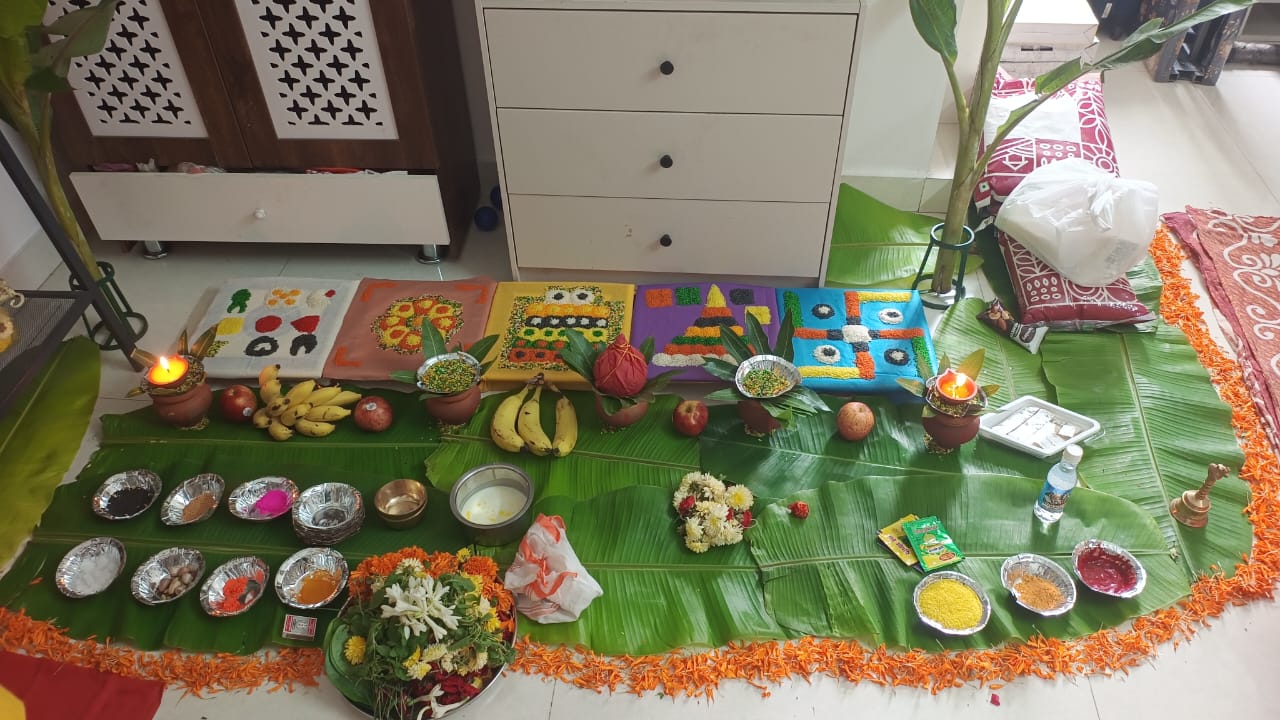
The Gand Mool Nakshatra Shanti Puja is the prescribed Vedic ceremony for children born in any of the 6 Gand Mool nakshatras. The word “Shanti” means peace — and that is exactly what the ceremony does. It brings peace to the sensitive junction energy of the birth nakshatra, harmonises the influence of the ruling planet (Ketu or Mercury), and blesses the child with the protection of the presiding deity.
The ceremony involves:
- Gauri Ganesh Puja, Lakshmi Puja, Vishnu Puja, and Kalash Puja
- Navagraha Puja (worship of all 9 planets, with special attention to the nakshatra ruler)
- Kul Devta / Kul Devi Puja (invoking the family’s ancestral deity)
- Rudra Puja and Punyavachanam
- Mool Nakshatra Puja — the core ceremony worshipping the Pradhan Devta, Aadhi Devta, and Pratyadhi Devata of the specific nakshatra
- The 27-element ritual — 27 types of well water, 27 types of soil, and 27 types of leaves representing all 27 nakshatras
- Gold and silver reflection ritual
- Shanti Havan (sacred fire ceremony)
- Daan of 28 types of grains
The ceremony takes approximately 4 to 5 hours and is performed at your home by 2 to 3 experienced pandit ji.
When to Perform the Shanti Puja
Ideal time: The 27th day after birth. The Moon takes approximately 27 days to return to the same nakshatra. The Shanti Puja performed on this day directly addresses the same celestial configuration that was present at birth, making it the most effective timing.
If you miss the 27th day: The puja can be performed on the 27th month after birth, or on any auspicious muhurat identified by the pandit. Many families perform it when the child is 1, 2, or even 5 years old — and the ceremony is fully valid.
For adults: If you are an adult born in a Gand Mool nakshatra and the Shanti Puja was never performed in your infancy, it can be done at any age. Many adults discover their Gand Mool birth later in life — during a kundali analysis before marriage, or when consulting an astrologer about persistent difficulties — and choose to have the Shanti Puja performed then.
What to do right after birth: Contact Pitradev within the first week after the baby’s birth. Share the date and exact time of birth. Our pandit will confirm the nakshatra, the pada, and the best date for the Shanti Puja (which will typically be the 27th day). This gives enough time to prepare and book the pandit.
Cost and Booking
Pitradev offers the complete Gand Mool Nakshatra Shanti Puja at a fixed, all-inclusive cost of ₹11,000. This covers:
- 2 to 3 pandit ji at your home
- All puja samagri — 27 well water, 27 soils, 27 leaves, kalash, mandals, havan items, flowers, banana leaves, and all ritual items
- Pandit ji dakshina
- Duration approximately 4 to 5 hours
- No hidden charges
Available at your home in:
- Bangalore — all areas including Whitefield, Electronic City, Sarjapur Road, Marathahalli, HSR Layout, Koramangala, Yelahanka, and surrounding localities. North Indian pandit, Kannada, Tamil, and Telugu purohits available.
- Hyderabad — all areas including Gachibowli, Madhapur, Kondapur, Kukatpally, Miyapur, Secunderabad, and surrounding localities. North Indian pandit and Telugu purohits available.
- Pune — all areas including Hinjewadi, Wakad, Baner, Kharadi, PCMC, Hadapsar, and surrounding localities. North Indian pandit available.
To book: contact Pitradev on WhatsApp or phone — 7829965737 or 9686645737. Share the baby’s date and time of birth, your city and address, and your language preference.
Conclusion
Gand Mool Nakshatra is not a curse. It is not a catastrophe. It is an astrological configuration — one that affects approximately 1 in every 4 to 5 babies born — that the Vedic tradition has addressed for centuries with a specific, well-established ceremony.
The 6 nakshatras are Ashwini, Ashlesha, Magha, Jyeshtha, Moola, and Revati. The remedy is the Gand Mool Shanti Puja, ideally on the 27th day after birth. The ceremony blesses the child, harmonises the nakshatra energy, and gives the family peace of mind.
If your baby was born in one of these nakshatras, do not panic. Do not let superstitious relatives frighten you or the new mother. Perform the Shanti Puja on the 27th day, and then raise your child with the same love and hope you would give any child. The puja takes 4 to 5 hours. The peace it brings lasts a lifetime.
For detailed information on effects of Moola Nakshatra specifically, visit our dedicated Moola Nakshatra blog.
Your child is not a problem to be solved. Your child is a blessing to be honoured.
Frequently Asked Questions
Shashank Mishra comes with over 15 years of experience in religious tourism and organising Vedic rituals and ancestral ceremonies. At Pitradev, he oversees the coordination of Asthi Visarjan, Pind Daan, Shraadh, Grihapravesh, Vastu Shanti Puja, Satyanarayan Katha, Rudrabhishek, and other sacred rites across Varanasi, Prayagraj, Gaya, Bangalore, Hyderabad, Pune, and Mumbai.
Latest Blog
- What Is Gand Mool Nakshatra — A Guide for Parents
- North Indian Pandit in Baner Balewadi Pune | ₹3,500
- Baby Born in Moola Nakshatra — Effects and Shanti Puja
- North Indian Pandit in Kharadi Pune for All Pujas
- Tamil Vadhyar in Whitefield Bangalore | From ₹4,500
- North Indian Pandit in Whitefield Bangalore | ₹3,500
- Bhoomi Pujan in Bangalore 2027 | Book from ₹5,100
- 3-Day Pind Daan in Gaya 2027 — All 45 Vedis | ₹25,000
- Same Day Asthi Visarjan in Varanasi 2027 | ₹2,000
- North Indian Pandit in Wakad for All Pujas | ₹3500
- Online Pind Daan in Gaya | Private Puja ₹11,000
- Online Pind Daan in Varanasi | From ₹3,000 – Pitradev
- Can Women Perform Pind Daan in Varanasi?
- Tamil Vadhyar in Bangalore | Book Tamil Iyer Purohit
- Satyanarayana Vratam in Bangalore | Telugu Purohit ₹5100
- Satyanarayana Pooja in Bangalore | Kannada Purohit ₹5100
- Annaprashan in Pune | First Rice Feeding Ceremony ₹4500
- Namkaran Sanskar in Pune | Baby Naming Ceremony ₹5100
- North Indian Pandit in Hinjewadi for All Pujas
- North Indian Pandit in Pimpri-Chinchwad
- Pind Daan in Gaya by Odia Pandit | Odia Shraddha Paddhati
- Vastu Shanti Puja in Pune | 6 Mandals, 2 Pandits | ₹15000
- Gaya Pind Daan vs Varanasi Pind Daan
- Satyanarayan Katha in Pune by North Indian Pandit
- Odia Pandit Prayagraj | Asthi Bisarjan & Pind Daan Same Day
- How to Book Asthi Visarjan in Kashi Online
- Book Pandit Services Online A Complete Step by Step Guide
- Book Verified Pandit Ji in Bangalore for Any Puja Easy Guide
- How to Book a Vastu Pujan Griha Pravesh Puja for Your New Home
- How to Book Pind Daan in Gaya Online Complete Guide
- Pind Daan in Varanasi After Pitru Paksha
- Pind Daan for Dogs in Varanasi: Complete Rituals at Kashi
- Things To Know Before Booking A Pandit for Satyanarayan Puja
- How To Choose Right Muhurat for Griha Pravesh for Your New Home
- 7 Key Rituals and Stages of Pind Daan in Gaya
- Gand Mool Nakshatra Shanti Puja: Complete Process
- Grihapravesh Muhurat in November and December 2026
- Asthi Visarjan in Varanasi for Pets: Dogs And Cats
- Pind Daan in Varanasi: Guide to Ritual, Process, Cost, Booking
- Mistakes to Avoid During Asthi Visarjan in Varanasi
- How to book satyanarayn puja
- Verified South Indian Purohits in Gaya
- Samvatsarikam in Varanasi: Cost and Vidhi
- Best South Indian Purohits in Kashi Varanasi
- Pind Daan in Varanasi by Telugu Purohit
- Telugu Purohit in Gaya: Pind Daan Packages
- Tripindi Shraadh in Gaya
- Pitradev- Hindi, Tamil, Telugu & Bengali Pandit in Bangalore
- Narayan Bali Puja in Gaya
- Can I Do Pind Daan Within One Year of Death?
- One Day Narayan Bali Puja at Trimbakeshwar
- Asthi Visarjan at Manikarnika Ghat in Kashi Varanasi
- Cost of Asthi Visarjan in Varanasi: Packages and Precautions
- Pandit for Tripindi Shradh in Varanasi: 2026 Dates & Cost
- Pind Daan in Gaya in Pitru Paksha 2026: Dates and Packages
- Vastu Shanti Puja Cost in Pune by North Indian Pandit
- Pitra Dosh: Causes, Symptoms and Remedies — A Complete Guide
- How to Find Genuine Tamil Vadhyars in Kashi Varanasi
- How to Carry Asthi in Flight in India?
- Pind Daan in Gaya by Tamil Iyer: Cost, Packages and Process
- Asthi Visarjan in Srirangapatna from Bangalore — Full Guide
- Send Ashes from Coimbatore to Kashi — Asthi Visarjan Service
- Cost of Asthi Visarjan in Prayagraj by Telugu Pandit
- Asthi Visarjan and Pind Daan in Prayagraj for Odia Families
- North Indian Pandit Bangalore for Annaprashan Puja
- Telugu Grihapravesham Bangalore: 4 Packages Cost & Inclusion
- Cost of Tripindi Shraadh in Varanasi -Pishachmochan Kund
- North Indian Pandit in Pune for Grihapravesh: Package Guide
- Pind Daan in Prayagraj: Cost, Vidhi & Booking Guide-2026
- Narayan Bali Puja in Varanasi — Complete Cost Breakdown for 2026
- Book a Verified North Indian Pandit in Pune: Cost & Packages
- How to Send Asthi to Kashi: A Step-by-Step Guide
- Book Tamil Iyer in Bangalore for Grihapravesham – Complete Guide
- How to Plan 10th 11th and 12th Day Rituals in Varanasi
- Pitru Paksha 2026 – Pind Daan in Prayagraj, Kashi and Gaya
- Pitru Paksha 2026 – Book Online Pind Daan in Varanasi
- Asthi Visarjan in Varanasi for Tamil Families – Complete Guide
- How to Send Asthi (Ashes) from USA to India – Complete Guide
- Narayan Bali Puja in Varanasi – Complete Guide 2026
- Pind Daan in Gaya from Malaysia – Complete Guide
- Pind Pradanam in Varanasi from Malaysia – Complete Guide
- Grihapravesh Puja in Bangalore by Kannada Purohit
- Online Pind Daan in Varanasi for NRIs
- Book Verified Telugu Purohits in Bangalore for Grihapravesham
- Best Ghat for Asthi Visarjan in Varanasi: A Practical Comparison
- Asthi Visarjan in Prayagraj – Complete Guide 2026
- Tripindi Shradh in Varanasi – Complete Guide
- Asthi Visarjan in Varanasi –Best Ghat & Package 2026
- Grihapravesh Puja in Prestige City Sarjapur
- Gaya Ji Pind Daan 2026 – Quick Guide for Planning Your Trip
- Online Puja Booking for Griha Pravesh, Shradh & Satyanarayan
- Pitru Paksha 2026 Dates, Rituals and Pind Daan Guide
- Akshaya Tritiya 2026 (19 April): Best Muhurat for Griha Pravesh
- How to Do Asthi Visarjan When You Cannot Travel: Complete Guide
- Asthi Visarjan in Kashi: Complete Guide with Cost & Time
- Griha Pravesh Muhurat 2026: Auspicious Dates & Timings
- Complete Guide to Gaya Pind Daan Ritual, Samagri & Best Time
- Asthi Visarjan By Post in Kashi Varanasi – Complete Guide
- How to Book a Bengali Pandit for Puja: Step-by-Step Process
- Book Verified Pandit for Puja in Bangalore
- Book Verified North Indian Pandit in Hyderabad Online
- Book North Indian Pandit in Bangalore for Satyanarayan Puja
- How to Book a Pandit in Bangalore Online for Puja:Complete Guide
- Find and Book Pandits in Hyderabad for Griha Pravesh Puja Online
- How to Find and Book Experienced Pandit Online for Puja?
- Exploring the History and Origins of Griha Pravesh Puja Rituals
- Top 5 Ancient Places for Gayaji Pind Daan - 2024 Guide
- Significance of Performing Griha Pravesh Puja in Hindu Culture
- How to Choose the Right Pandit for Pind Daan in Gaya
- Why is Pind Daan in Gaya so Famous?
- Where to Find Experienced Pandit for Griha Pravesh Puja Online?
- Cost of Pind Daan in Gaya: Packages, Procedure and How to Book
- Griha Pravesh Puja and Housewarming Ceremony 2024
- How Gaya Pind Daan Brings Closure and Peace to Your Ancestors
- Gayaji Pind Daan: Achieve Eternal Peace for Your Ancestors
- Online Pind daan: Importance, Cost, and Procedure
- Gaya Pind Daan Puja is Performed by an Experienced Pandit ji
- The Sacred Ritual of Brahma Kapal Pind Daan
- A Complete Guide About Pind Daan in India: Update 2023
- Unveiling the Significance of Pind Daan in Gaya
- The Ultimate Guide to Pind Daan Tour Packages
- Where to do Asthi Visarjan in Haridwar?
- Rudrabhishek Pooja Why Hindus Perform Rudrabhishek pooja At home
- Varanasi's Asthi Visarjan: Embracing Life's Eternal Journey
- Unveiling the Sacred Ritual:
- Significance of Asthi Visarjan in Haridwar
- Exploring the Profound Significance of Asthi Visarjan in Kashi
- The Science of Pind Daan:
- What are the rituals of Pind Daan?
- Varanasi Ayodhya Tour Package with Prayagraj
- Pind Daan Puja in Varanasi | Book Your Puja Online
- Prayagraj: The Enchanting Journey of Asthi Visarjan
- Pind Daan Gaya : When and Where to Do Pind Daan in Gayaji
- Exploring the Mystical Rituals of Asthi Visarjan Poojan
- Which are the Best Places to do Pind Daan in Gaya?
- Everything You Need to Know About Rudrabhishek Puja
- Why Is Pind Daan At Gaya Important To Hindus?
- Asthi Visarjan: When to Perform It, Where to Go, and Cost
- Rudra Abhishek Puja's Purpose:
- Ganga Pushkaralu 2023
- Pind daan for people having unnatural deaths
- Is doing pind daan beneficial without self presence of related?