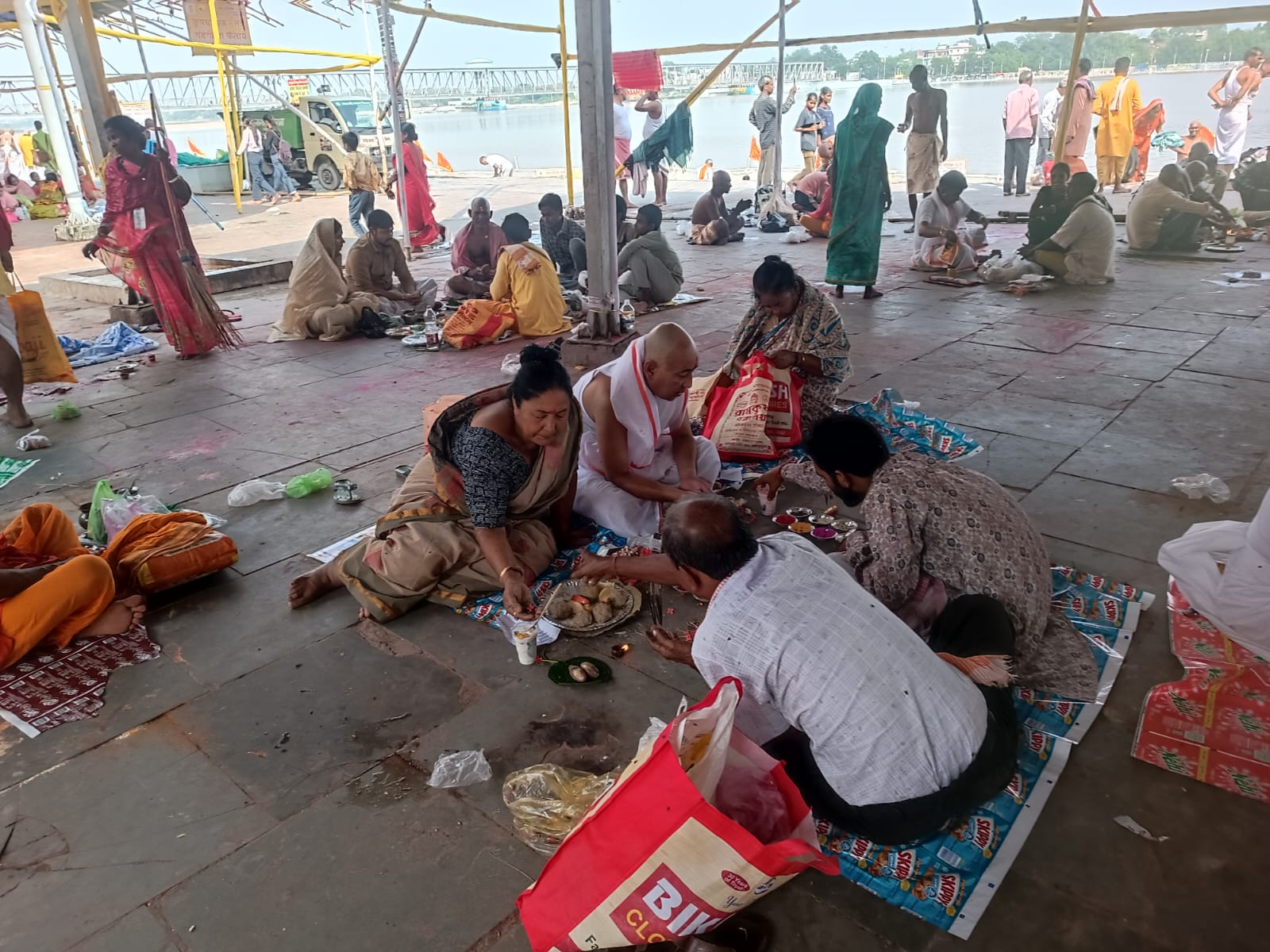
Gaya Pind Daan in 1,3 or 17 Days: Which Should You Choose?
When Hindu families travel to Gaya for ancestral Pind Daan, they step into a deeply revered practice dedicated to honoring and remembering past relatives. Pilgrims frequently weigh whether a quick one-day visit gets everything done or if a three-day or seventeen-day schedule works better. Even so, pilgrims frequently wonder whether a single day suffices or if they ought to commit to a three-day or seventeen-day spiritual journey instead.
Over at Pitradev, we recognize that selecting the ideal timeframe requires balancing ancestral customs, guidance from priests, travel logistics, and personal schedules. Grasping how these ritual lengths differ empowers you to map out your pilgrimage with absolute clarity and undivided devotion.
What Is The Significance Of Pind Daan In Gaya?
Gaya, situated in Bihar, occupies a profoundly sacred position in Hindu ancestral ceremonies. When people travel to perform Pind Daan in this sacred city, they are taking part in an old tradition meant to show respect to departed family members and clear family debts. Doing these rituals involves offering rice balls, pouring water, reciting prayers, and following whatever a local priest says. How it all happens changes completely based on your family background, what your elders advise, and the specific rites you pick out.
Planning a trip for pind daan in Gaya means remembering that staying longer does not automatically make the worship more powerful. Families need to look closely at their own traditions and talk things over with an experienced priest before deciding how many days to spend there.
One-Day Pind Daan: Best for Limited Time
A single-day trip often fits worshippers constrained by tight work schedules, domestic obligations, physical limitations, or travel hurdles. It lets pilgrims organize a focused spiritual journey straight away without needing to check into a hotel for an extended stay in Gaya.
What to Consider
Time management: Coordinate your arrival, ritual schedule, and return journey carefully.
Ritual requirements: Confirm the ceremonies to be performed with the priest beforehand.
Travel arrangements: Allow enough time for local transportation and any unexpected delays.
Family traditions: Check whether a shorter observance aligns with your family's customary practices.
A one-day schedule should never be treated as an absolute substitute for longer, more comprehensive traditional rituals. The right course of action depends significantly on a person's unique life circumstances paired with direct advice from a qualified priest. Securing all necessary bookings and travel arrangements far in advance helps eliminate any last-minute chaos on the actual day of the ceremony.
Three-Day Pind Daan: A Balanced Option
Opting for a three-day pilgrimage offers a much-needed cushion of time for travelers who lean toward a relaxed pace rather than a rushed schedule. Taking a few extra days gives everyone room to breathe, coordinate schedules, and handle bookings without rushing the whole trip or trying to cram every single ritual into one exhausting afternoon.
Why Choose Three Days?
A more flexible itinerary: Spreading activities across several days may reduce scheduling pressure.
Time for religious guidance: Devotees can clarify the procedure and sequence of rituals with their priest.
Travel flexibility: The additional time can help accommodate arrival, departure, and local movement.
Family participation: Relatives traveling together may find it easier to coordinate their schedules.
Before booking your trip out there for Gaya mein pind daan, make sure to check what rituals are actually included and how the daily schedule flows. Taking a longer trip takes some real planning around what your family actually needs, rather than just figuring every household follows the exact same path.
Seventeen-Day Pind Daan: For Extended Traditional Observances
Some families consider staying for seventeen whole days if their specific family customs demand it. Since religious traditions vary a lot depending on where people come from, figuring out what happens during that long stretch is super important before you lock down tickets and places to stay.
Is a Longer Stay Necessary?
That assumption does not always hold true. An extended journey certainly suits certain households well, yet it is no mandatory requirement for every single worshipper. The ideal timeline hinges entirely on the exact ceremonies involved, the presiding priest's specific instructions, and the ancestral customs your family chooses to honor. Before committing to seventeen days, clarify the following:
The religious tradition or procedure that calls for this duration.
The ceremonies scheduled for each day.
The expected accommodation and meal arrangements, if needed.
The overall travel schedule and practical requirements.
The total expenses associated with the extended visit.
Steer clear of opting for an extended itinerary solely because it looks more thorough on paper. Instead of guessing, just ask a knowledgeable person what rituals you actually need and pick a plan that fits your real-life schedule and what your beliefs require.
Plan Your Gaya Pilgrimage with Clarity
At Pitradev, we always suggest that devotees base their choices on actual family traditions, real-life constraints, and the advice of a trusted priest. Whether you are considering a one-day visit, a three-day pilgrimage, or a seventeen-day observance, understanding the procedure and confirming the arrangements beforehand can make planning easier. Discuss your requirements, clarify the Gaya ji pind daan cost, and choose a schedule that respects your family's traditions without adding unnecessary complexity.
FAQs
1. Is one day enough for Pind Daan in Gaya?
Ans: Pind daan in Gaya can be planned as a one-day visit for some devotees, depending on their ritual requirements and the priest’s guidance. Confirm the procedure beforehand to determine whether this duration suits your family.
2. What is the difference between a three-day and seventeen-day observance?
Ans: The main difference is the duration and the ritual tradition being followed. Before choosing pind daan in Gaya for either period, consult a knowledgeable priest about the ceremonies required for your family.
3. What affects the cost of Pind Daan in Gaya?
Ans: The Gaya ji pind daan cost depends on the selected rituals, priest’s dakshina, required materials, and additional arrangements. Travel, accommodation, meals, and local transportation may increase the overall pilgrimage budget.
4. Should I consult a priest before booking my pilgrimage?
Ans: Yes. A knowledgeable priest can explain the customary procedure, required rituals, and suitable duration for pind daan in Gaya, helping you plan according to your family’s religious traditions.
5. How can I estimate the total expense of my pilgrimage?
Ans: To understand the Gaya ji pind daan cost, request a breakdown of ritual charges, materials, priest’s dakshina, and any additional arrangements. Confirm travel and accommodation expenses separately to prepare a realistic budget.
Latest Blog
- Gaya Pind Daan in 1,3 or 17 Days: Which Should You Choose?
- Pind Daan Rules for Sons, Daughters, Wives & Grandsons
- Pind Daan in Gaya in Winter (Nov-Feb) — Best Season to Visit
- Griha Pravesh Puja Samagri List
- Griha pravesh muhurts in 2027
- Best Pandit in Pune — How to Choose the Right One
- Gand Mool Nakshatra Shanti Puja in Bangalore | ₹11,000
- Pandit Charges in Pune 2027 — Complete Price List
- Gand Mool Nakshatra Shanti Puja in Pune | ₹11,000
- What Is Gand Mool Nakshatra — A Guide for Parents
- North Indian Pandit in Baner Balewadi Pune | ₹3,500
- Baby Born in Moola Nakshatra — Effects and Shanti Puja
- North Indian Pandit in Kharadi Pune for All Pujas
- Tamil Vadhyar in Whitefield Bangalore | From ₹4,500
- North Indian Pandit in Whitefield Bangalore | ₹3,500
- Bhoomi Pujan in Bangalore 2027 | Book from ₹5,100
- 3-Day Pind Daan in Gaya 2027 — All 45 Vedis | ₹25,000
- Same Day Asthi Visarjan in Varanasi 2027 | ₹2,000
- North Indian Pandit in Wakad for All Pujas | ₹3500
- Online Pind Daan in Gaya | Private Puja ₹11,000
- Online Pind Daan in Varanasi | From ₹3,000 – Pitradev
- Can Women Perform Pind Daan in Varanasi?
- Tamil Vadhyar in Bangalore | Book Tamil Iyer Purohit
- Satyanarayana Vratam in Bangalore | Telugu Purohit ₹5100
- Satyanarayana Pooja in Bangalore | Kannada Purohit ₹5100
- Annaprashan in Pune | First Rice Feeding Ceremony ₹4500
- Namkaran Sanskar in Pune | Baby Naming Ceremony ₹5100
- North Indian Pandit in Hinjewadi for All Pujas
- North Indian Pandit in Pimpri-Chinchwad
- Pind Daan in Gaya by Odia Pandit | Odia Shraddha Paddhati
- Vastu Shanti Puja in Pune | 6 Mandals, 2 Pandits | ₹15000
- Gaya Pind Daan vs Varanasi Pind Daan
- Satyanarayan Katha in Pune by North Indian Pandit
- Odia Pandit Prayagraj | Asthi Bisarjan & Pind Daan Same Day
- How to Book Asthi Visarjan in Kashi Online
- Book Pandit Services Online A Complete Step by Step Guide
- Book Verified Pandit Ji in Bangalore for Any Puja Easy Guide
- How to Book a Vastu Pujan Griha Pravesh Puja for Your New Home
- How to Book Pind Daan in Gaya Online Complete Guide
- Pind Daan in Varanasi After Pitru Paksha
- Pind Daan for Dogs in Varanasi: Complete Rituals at Kashi
- Things To Know Before Booking A Pandit for Satyanarayan Puja
- How To Choose Right Muhurat for Griha Pravesh for Your New Home
- 7 Key Rituals and Stages of Pind Daan in Gaya
- Gand Mool Nakshatra Shanti Puja: Complete Process
- Grihapravesh Muhurat in November and December 2026
- Asthi Visarjan in Varanasi for Pets: Dogs And Cats
- Pind Daan in Varanasi: Guide to Ritual, Process, Cost, Booking
- Mistakes to Avoid During Asthi Visarjan in Varanasi
- How to book satyanarayn puja
- Verified South Indian Purohits in Gaya
- Samvatsarikam in Varanasi: Cost and Vidhi
- Best South Indian Purohits in Kashi Varanasi
- Pind Daan in Varanasi by Telugu Purohit
- Telugu Purohit in Gaya: Pind Daan Packages
- Tripindi Shraadh in Gaya
- Pitradev- Hindi, Tamil, Telugu & Bengali Pandit in Bangalore
- Narayan Bali Puja in Gaya
- Can I Do Pind Daan Within One Year of Death?
- One Day Narayan Bali Puja at Trimbakeshwar
- Asthi Visarjan at Manikarnika Ghat in Kashi Varanasi
- Cost of Asthi Visarjan in Varanasi: Packages and Precautions
- Pandit for Tripindi Shradh in Varanasi: 2026 Dates & Cost
- Pind Daan in Gaya in Pitru Paksha 2026: Dates and Packages
- Vastu Shanti Puja Cost in Pune by North Indian Pandit
- Pitra Dosh: Causes, Symptoms and Remedies — A Complete Guide
- How to Find Genuine Tamil Vadhyars in Kashi Varanasi
- How to Carry Asthi in Flight in India?
- Pind Daan in Gaya by Tamil Iyer: Cost, Packages and Process
- Asthi Visarjan in Srirangapatna from Bangalore — Full Guide
- Send Ashes from Coimbatore to Kashi — Asthi Visarjan Service
- Cost of Asthi Visarjan in Prayagraj by Telugu Pandit
- Asthi Visarjan and Pind Daan in Prayagraj for Odia Families
- North Indian Pandit Bangalore for Annaprashan Puja
- Telugu Grihapravesham Bangalore: 4 Packages Cost & Inclusion
- Cost of Tripindi Shraadh in Varanasi -Pishachmochan Kund
- North Indian Pandit in Pune for Grihapravesh: Package Guide
- Pind Daan in Prayagraj: Cost, Vidhi & Booking Guide-2026
- Narayan Bali Puja in Varanasi — Complete Cost Breakdown for 2026
- Book a Verified North Indian Pandit in Pune: Cost & Packages
- How to Send Asthi to Kashi: A Step-by-Step Guide
- Book Tamil Iyer in Bangalore for Grihapravesham – Complete Guide
- How to Plan 10th 11th and 12th Day Rituals in Varanasi
- Pitru Paksha 2026 – Pind Daan in Prayagraj, Kashi and Gaya
- Pitru Paksha 2026 – Book Online Pind Daan in Varanasi
- Asthi Visarjan in Varanasi for Tamil Families – Complete Guide
- How to Send Asthi (Ashes) from USA to India – Complete Guide
- Narayan Bali Puja in Varanasi – Complete Guide 2026
- Pind Daan in Gaya from Malaysia – Complete Guide
- Pind Pradanam in Varanasi from Malaysia – Complete Guide
- Grihapravesh Puja in Bangalore by Kannada Purohit
- Online Pind Daan in Varanasi for NRIs
- Book Verified Telugu Purohits in Bangalore for Grihapravesham
- Best Ghat for Asthi Visarjan in Varanasi: A Practical Comparison
- Asthi Visarjan in Prayagraj – Complete Guide 2026
- Tripindi Shradh in Varanasi – Complete Guide
- Asthi Visarjan in Varanasi –Best Ghat & Package 2026
- Grihapravesh Puja in Prestige City Sarjapur
- Gaya Ji Pind Daan 2026 – Quick Guide for Planning Your Trip
- Online Puja Booking for Griha Pravesh, Shradh & Satyanarayan
- Pitru Paksha 2026 Dates, Rituals and Pind Daan Guide
- Akshaya Tritiya 2026 (19 April): Best Muhurat for Griha Pravesh
- How to Do Asthi Visarjan When You Cannot Travel: Complete Guide
- Asthi Visarjan in Kashi: Complete Guide with Cost & Time
- Griha Pravesh Muhurat 2026: Auspicious Dates & Timings
- Complete Guide to Gaya Pind Daan Ritual, Samagri & Best Time
- Asthi Visarjan By Post in Kashi Varanasi – Complete Guide
- How to Book a Bengali Pandit for Puja: Step-by-Step Process
- Book Verified Pandit for Puja in Bangalore
- Book Verified North Indian Pandit in Hyderabad Online
- Book North Indian Pandit in Bangalore for Satyanarayan Puja
- How to Book a Pandit in Bangalore Online for Puja:Complete Guide
- Find and Book Pandits in Hyderabad for Griha Pravesh Puja Online
- How to Find and Book Experienced Pandit Online for Puja?
- Exploring the History and Origins of Griha Pravesh Puja Rituals
- Top 5 Ancient Places for Gayaji Pind Daan - 2024 Guide
- Significance of Performing Griha Pravesh Puja in Hindu Culture
- How to Choose the Right Pandit for Pind Daan in Gaya
- Why is Pind Daan in Gaya so Famous?
- Where to Find Experienced Pandit for Griha Pravesh Puja Online?
- Cost of Pind Daan in Gaya: Packages, Procedure and How to Book
- Griha Pravesh Puja and Housewarming Ceremony 2024
- How Gaya Pind Daan Brings Closure and Peace to Your Ancestors
- Gayaji Pind Daan: Achieve Eternal Peace for Your Ancestors
- Online Pind daan: Importance, Cost, and Procedure
- Gaya Pind Daan Puja is Performed by an Experienced Pandit ji
- The Sacred Ritual of Brahma Kapal Pind Daan
- A Complete Guide About Pind Daan in India: Update 2023
- Unveiling the Significance of Pind Daan in Gaya
- The Ultimate Guide to Pind Daan Tour Packages
- Where to do Asthi Visarjan in Haridwar?
- Rudrabhishek Pooja Why Hindus Perform Rudrabhishek pooja At home
- Varanasi's Asthi Visarjan: Embracing Life's Eternal Journey
- Unveiling the Sacred Ritual:
- Significance of Asthi Visarjan in Haridwar
- Exploring the Profound Significance of Asthi Visarjan in Kashi
- The Science of Pind Daan:
- What are the rituals of Pind Daan?
- Varanasi Ayodhya Tour Package with Prayagraj
- Pind Daan Puja in Varanasi | Book Your Puja Online
- Prayagraj: The Enchanting Journey of Asthi Visarjan
- Pind Daan Gaya : When and Where to Do Pind Daan in Gayaji
- Exploring the Mystical Rituals of Asthi Visarjan Poojan
- Which are the Best Places to do Pind Daan in Gaya?
- Everything You Need to Know About Rudrabhishek Puja
- Why Is Pind Daan At Gaya Important To Hindus?
- Asthi Visarjan: When to Perform It, Where to Go, and Cost
- Rudra Abhishek Puja's Purpose:
- Ganga Pushkaralu 2023
- Pind daan for people having unnatural deaths
- Is doing pind daan beneficial without self presence of related?